EcoSan for all means designing ecological sanitation education so every person in a community can understand, use, question, and improve safe sanitation systems. Ecological sanitation, often shortened to EcoSan, treats human waste as a resource that can be safely managed, processed, and returned to productive use, usually through urine diversion, composting, dehydration, or nutrient recovery. Inclusive education strategies are the methods that make this knowledge accessible across age, gender, disability, language, literacy level, income, and culture. In practice, I have seen strong EcoSan projects fail not because the toilet technology was wrong, but because the learning process excluded the very people expected to operate, maintain, and trust it. That is why empowering communities through knowledge is the center of successful sanitation adoption, not a side activity.
As a hub topic within community engagement and education, inclusive EcoSan learning connects technical guidance with behavior change, public health, local leadership, school participation, and long-term system management. Communities need more than a one-time training session. They need repeated, understandable, locally relevant education that explains why source separation matters, how pathogen reduction works, what maintenance tasks are required, and how recovered nutrients can be handled safely under recognized guidance such as the World Health Organization sanitation and reuse recommendations. When knowledge is unevenly distributed, toilets become underused, sludge is mishandled, and myths spread faster than facts. When knowledge is shared widely and clearly, communities build confidence, accountability, and ownership.
This matters because sanitation is never only about infrastructure. It is about dignity, environmental protection, disease prevention, and economic resilience. A urine-diverting dry toilet can conserve water and support nutrient cycling, but only if users understand correct use, cleaning routines, anal cleansing adaptations, child-friendly access, menstrual hygiene considerations, and safe emptying schedules. Schools, health workers, local masons, farmers, caretakers, and municipal staff all need different forms of instruction. A genuinely inclusive approach answers practical questions directly: Who is left out of training? What barriers prevent understanding? How should messages change for different audiences? How can communities learn continuously rather than depend on external experts? This article maps the core strategies that make EcoSan education inclusive, credible, and durable across diverse community settings.
Start with community realities, not technology assumptions
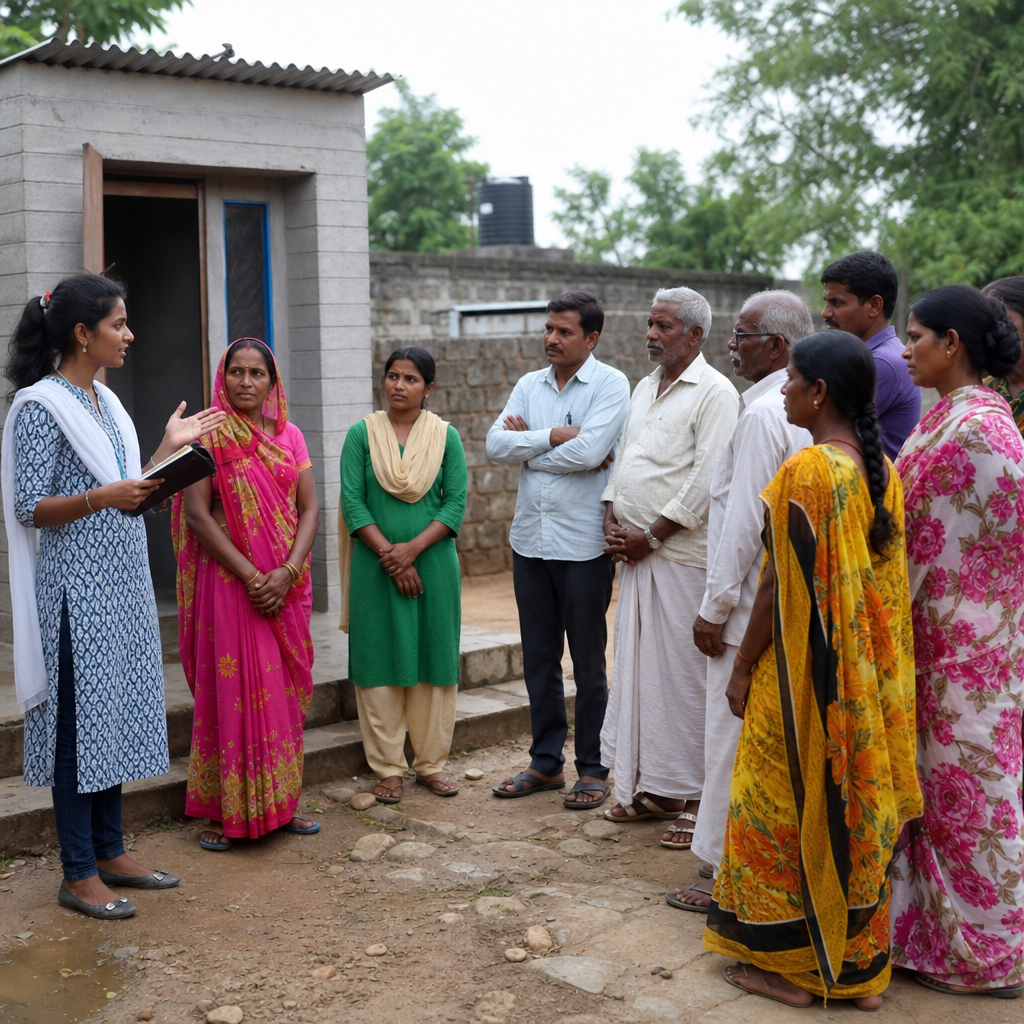
The most effective EcoSan education begins with listening. Before any curriculum, facilitators should map local sanitation practices, water access, farming patterns, beliefs about waste, school attendance, disability access needs, and decision-making structures. I have found that a rapid technical presentation on composting toilets rarely works if people first need to discuss privacy, smell, cost, child use, or fears about handling excreta. Participatory rural appraisal tools, household interviews, focus groups, and transect walks help educators understand whether the main barrier is knowledge, trust, labor burden, or design mismatch. These findings shape the educational strategy and prevent generic messaging.
Good baseline work also reveals who influences behavior. In some communities, women manage daily cleaning but men approve spending. In others, schoolchildren are the fastest adopters and become household messengers. Faith leaders may affect acceptance of reuse practices, while agricultural extension officers may be more trusted than sanitation officers on nutrient recovery. Inclusive EcoSan education identifies these local authority patterns early. It also distinguishes between users, operators, and beneficiaries. A landlord, for example, may never empty a vault but still controls whether a household gets a functional facility. Training only end users in that context is incomplete.
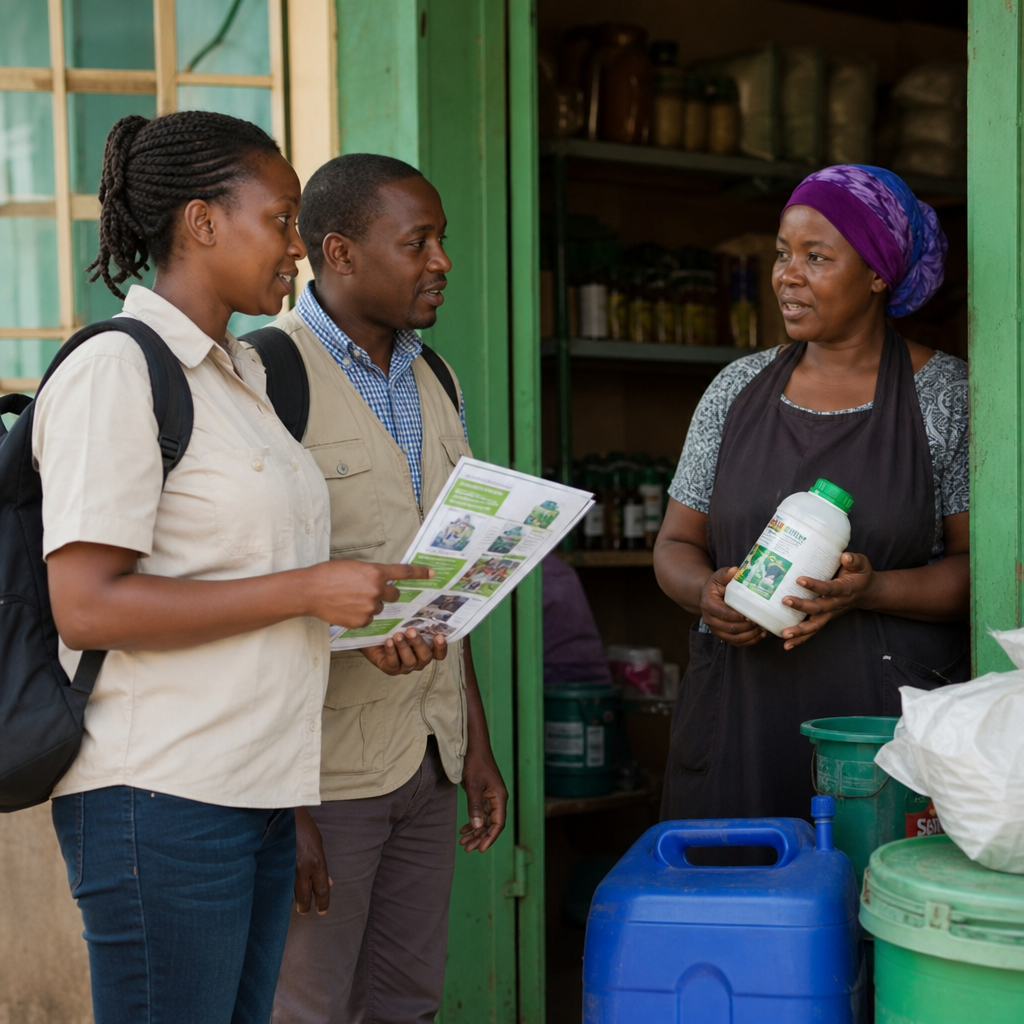
Language and literacy must be assessed as seriously as engineering conditions. If instructions are text heavy, many users will miss essential steps such as adding dry cover material, keeping urine and feces separate, or waiting for the recommended storage period before reuse. Visual communication, demonstration units, color coding, and peer explanation often outperform printed manuals. In multilingual areas, relying on a national language can unintentionally exclude elders, women, migrants, or people with limited schooling. Community realities should therefore determine formats, timing, and trainers from the beginning.
Design inclusive learning for every audience
Inclusive education means matching content to the people who need it. EcoSan systems involve several user groups with different knowledge requirements, so one training package is rarely enough. Households need practical use instructions. Caretakers need maintenance routines. Masons need correct construction details, including slope, ventilation, urine diversion alignment, and vault sealing. Farmers need guidance on nutrient value, storage, application timing, and crop restrictions. Local officials need monitoring indicators and budgeting basics. Teachers need age-appropriate lesson plans that connect sanitation, health, soil fertility, and environmental stewardship.
Accessibility should be built into every session. Venues need ramps or level access, seating, shade, and audible facilitation. Visual aids should use large symbols and high contrast. Demonstrations should include hand contact points, transfer space, and child-scale examples. Gender-responsive planning matters equally. Women and girls often raise concerns around menstrual hygiene, safety at night, water for cleansing, and cleaning responsibilities that mixed groups may overlook. Separate discussion groups can help surface sensitive issues. At the same time, men need direct engagement so sanitation labor does not default entirely to women.
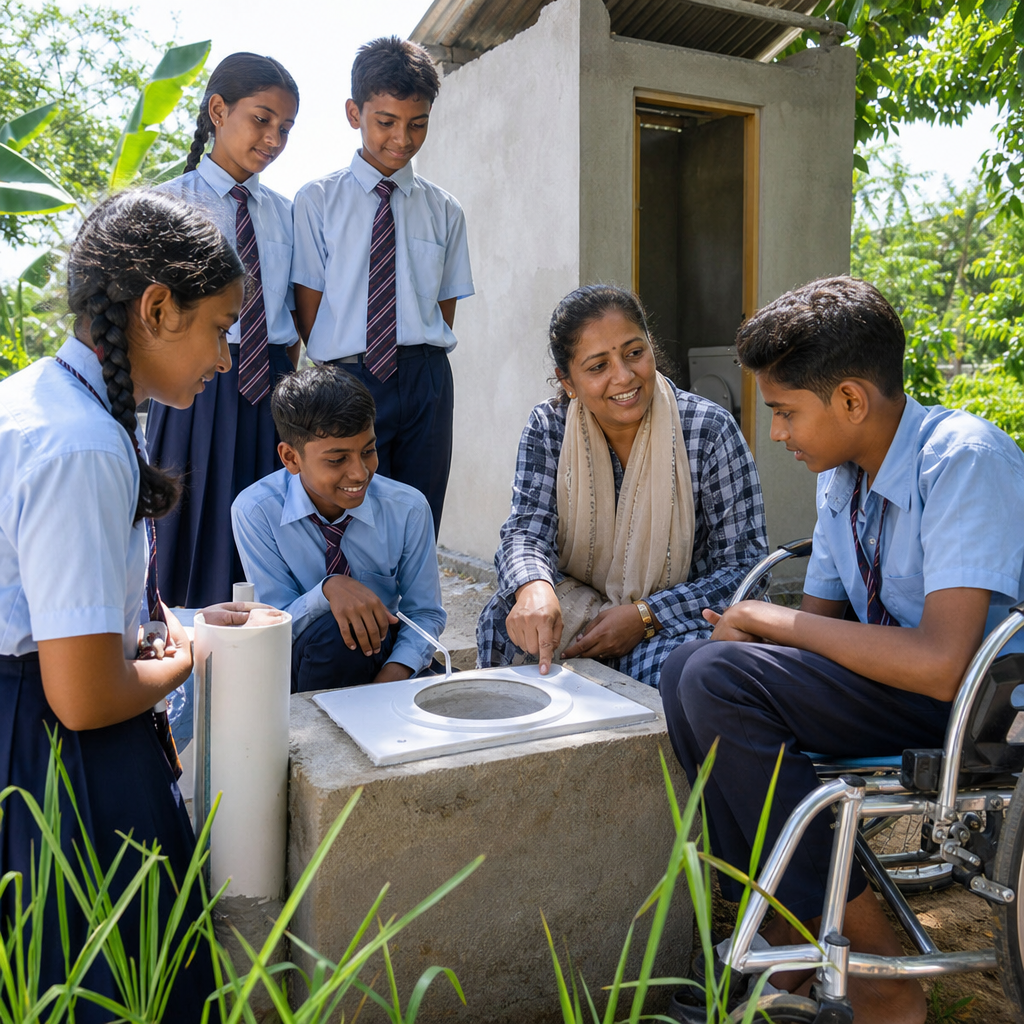
Age inclusion is especially important. Children can learn daily use routines quickly, but they need hardware adapted to size and supervision. Older adults may understand the value of nutrient recovery from farming experience, yet struggle with squat pans, stairs, or complex operating steps. Persons with disabilities are frequently excluded from sanitation consultations despite having the clearest insight into design barriers. Universal design principles improve both access and learning: stable handrails, clear pathways, easy-to-open doors, understandable signage, and simple maintenance instructions reduce exclusion while improving usability for everyone.
| Audience | What they need to learn | Best teaching method |
|---|---|---|
| Households | Daily use, cover material, cleaning, safe storage | Home visits and live demonstrations |
| Schoolchildren | Correct use, handwashing, why separation matters | Games, posters, supervised practice |
| Masons | Construction accuracy, drainage, ventilation, accessibility | Hands-on build training |
| Farmers | Nutrient recovery, pathogen risk reduction, application timing | Field plots and extension sessions |
| Local leaders | Oversight, budgeting, community mobilization | Briefings with clear indicators |
Teach the science in plain language
Communities do not need diluted information; they need understandable information. The science behind EcoSan should be explained clearly enough that users can make sound decisions. That includes basic concepts such as pathogens, dehydration, composting, storage time, ammonia effects in urine, and nutrient value, especially nitrogen, phosphorus, and potassium. I usually explain source separation as a safety and efficiency measure: keeping urine apart can reduce odor, preserve nutrients, and make treatment easier, while keeping feces dry can speed dehydration and improve vault conditions. When people grasp cause and effect, compliance improves.
Risk communication must be direct and balanced. EcoSan is not automatically safe simply because it is environmentally friendly. Safety depends on correct design, proper storage, handling practices, and local climate conditions. WHO guidance and many national standards stress multiple barriers: treatment, time, protective equipment, hygiene, and careful application. Communities should know that fresh excreta can transmit disease, that treatment performance varies, and that crops eaten raw may require stricter precautions than tree crops or soil-incorporated applications. Clear education prevents both panic and false confidence.
Demonstration is often more persuasive than explanation alone. Side-by-side models showing a properly functioning urine-diverting toilet and a poorly maintained one make technical points visible. So do moisture tests, compost temperature logs, and crop comparisons using treated nutrients. In one training sequence, farmers became far more receptive after seeing maize growth differences from controlled nutrient application than after hearing a lecture on nutrient cycles. Plain language does not reduce rigor. It translates rigor into decisions people can actually use in homes, schools, farms, and community facilities.
Build trust through participation, demonstration, and local champions
Trust is the hinge between awareness and adoption. Many EcoSan concerns are reasonable: Will it smell? Is it safe for children? What happens in the rainy season? Will people really reuse the output? The best answer is visible proof combined with community participation. Demonstration toilets in schools, health centers, markets, or model households create places where people can inspect design details, ask questions, and see maintenance routines in action. Open days, guided walkthroughs, and user testimonials help replace rumor with observation.
Local champions are indispensable when they are chosen carefully. A respected teacher, mason, farmer, health volunteer, or caretaker can translate technical guidance into local terms and model desired behaviors. I have seen projects improve dramatically once a trained female caretaker explained menstrual hygiene adaptations and cleaning protocols to mothers and adolescent girls in language they trusted. Peer educators are especially effective because they normalize questions that outsiders may never hear. However, champions should not become gatekeepers. Their role is to broaden knowledge, not monopolize it.
Participation also means involving communities in problem solving. If urine diversion bowls clog because users prefer water for cleansing, education should address design adaptations, drainage practices, and realistic maintenance instead of blaming users. If school toilets are clean at opening but fail during the term, students and staff should help redesign cleaning rosters, refill systems for cover material, and reporting channels for repairs. Participation creates better technical decisions because it captures operational reality. It also creates trust because people can see their experience reflected in system improvements.
Create continuous learning systems, not one-off training events
EcoSan adoption is a process, so education should be staged over time. Initial orientation should cover why the system exists, how to use it, and immediate do and do not rules. Follow-up sessions should address emerging issues such as odor, insect control, vault switching, urine storage, and safe emptying. Refresher training is essential after staff turnover, school holidays, seasonal labor shifts, or expansion to new households. In my experience, the biggest educational mistake is assuming a successful launch meeting equals long-term understanding.
Continuous learning works best when it is embedded in local structures. Schools can integrate EcoSan into science, health, and environmental clubs. Community health workers can include toilet checks and safe handling messages during household visits. Farmer field schools can add nutrient recovery trials. Water and sanitation committees can review maintenance logs and user feedback monthly. Municipal officers can support this with simple inspection tools and repair reporting channels. These routines create internal linking between sanitation, agriculture, education, and governance rather than treating EcoSan as an isolated project.
Monitoring should measure understanding, not just infrastructure counts. Useful indicators include correct use rates, availability of cover material, handwashing compliance, cleanliness scores, user confidence, accessibility performance, treatment storage times, and safe reuse practices. Short quizzes, observation checklists, and community scorecards can reveal where education is weak. If children still urinate in the feces vault, instructions are unclear or hardware is unsuitable. If farmers apply insufficiently treated material to leafy vegetables, risk communication needs reinforcement. Learning systems improve because they use evidence from real behavior, not assumptions about attendance.
Connect EcoSan knowledge to livelihoods, dignity, and local governance
People sustain sanitation practices when they see broader value. Inclusive EcoSan education should therefore connect technical use with tangible outcomes: fewer contaminated surroundings, lower water demand, improved school attendance for girls when facilities are usable, reduced fertilizer expenditure where reuse is permitted and safe, and stronger local capacity to manage services. These benefits should be explained honestly, with context. Nutrient recovery can reduce input costs, but transport, storage, labor, and regulatory limits still matter. Dry systems can save water, but they require disciplined operation and maintenance.
Governance education is often overlooked. Communities need to know who supplies materials, who approves repairs, who monitors safety, and who is accountable when facilities become unusable. Public institutions should define roles clearly for caretakers, school administrators, sanitation committees, and local government. Budget literacy matters too. A toilet that appears inexpensive at construction can fail if no one has planned for containers, ash or sawdust supply, training refreshers, protective gear, and periodic repairs. Transparent management education supports long-term confidence because people understand how decisions and costs are handled.
As a hub for empowering communities through knowledge, this topic points to every related article on school sanitation, behavior change communication, disability-inclusive WASH, menstrual hygiene, farmer training, participatory monitoring, and community-led governance. The central lesson is consistent: EcoSan works best when knowledge is shared widely, adapted locally, and reinforced continuously. Start by listening, teach the science clearly, include every audience, and build systems for ongoing support. Communities that understand their sanitation systems protect health, strengthen dignity, and manage resources more responsibly. If you are planning an EcoSan initiative, begin with the education strategy first, then let the technology follow the people it is meant to serve.
Frequently Asked Questions
What does “EcoSan for all” mean in practice?
“EcoSan for all” means ecological sanitation education is designed so that everyone in a community can participate, not just the people who already have technical knowledge, high literacy, or decision-making power. In practice, this includes explaining how ecological sanitation systems work in clear, everyday language, using visuals, demonstrations, local examples, and hands-on training so people of different ages, education levels, and abilities can understand the concepts. It also means presenting sanitation as more than toilet use alone. People need to understand the full cycle: safe collection, separation, treatment, storage, reuse, maintenance, hygiene, and long-term system care.
In an inclusive EcoSan approach, communities are not treated as passive recipients of information. They are invited to ask questions, raise concerns, test ideas, and shape how systems are introduced and maintained. For example, women, older adults, children, people with disabilities, renters, farmers, and sanitation workers may all interact with the same system in different ways. If education only reaches one group, the system is less likely to be used properly or accepted over time. Inclusive EcoSan education therefore builds shared understanding across the whole community, helping people use sanitation safely, challenge misinformation, and improve local practices together.
Why is inclusive education so important for ecological sanitation programs?
Inclusive education is essential because EcoSan systems depend on correct daily use, community trust, and long-term behavior change. Ecological sanitation often involves practices that may be unfamiliar, such as urine diversion, dehydration, composting, or nutrient recovery. If only a few people understand why waste is separated, how treatment reduces health risks, or when treated material is safe to handle, mistakes can happen. Those mistakes may reduce system performance, create odor or maintenance problems, increase contamination risks, and weaken public confidence in the entire program.
Inclusive education also improves fairness and sustainability. Sanitation systems affect everyone, but barriers to learning are not distributed equally. Some people may be excluded because of low literacy, disability, language differences, social status, gender norms, or limited mobility. Others may avoid participation because training times are inconvenient or because they do not feel comfortable speaking in public meetings. When education strategies are inclusive, programs are more likely to identify these barriers early and respond with practical solutions such as multilingual materials, accessible venues, separate discussion groups, home visits, visual learning tools, or peer educators. The result is stronger adoption, safer operation, better maintenance, and greater community ownership.
What teaching methods make EcoSan education accessible to people with different ages, literacy levels, and abilities?
The most effective EcoSan education uses multiple teaching methods rather than relying on lectures or written instructions alone. Visual tools are especially valuable. Diagrams, posters, color coding, icons, flip charts, and step-by-step illustrations can show how to use a toilet correctly, where urine and feces go, how treatment works, and what hygiene practices are required. Demonstrations are equally important. When people can see a real toilet, treatment container, composting chamber, or handwashing station in action, abstract ideas become easier to understand. Role-play, storytelling, local examples, and guided practice also help learners connect sanitation concepts to daily life.
Accessibility improves further when educators adapt content to different audiences. Children may learn best through games, songs, school gardens, and practical routines. Adults may prefer problem-solving discussions, field visits, and demonstrations tied to household needs, farming benefits, or cost savings. People with low literacy may need oral instruction, visual reminders, and repetition rather than text-heavy manuals. People with hearing, visual, mobility, or cognitive disabilities may require sign language support, tactile materials, audio content, ramps, accessible seating, slower-paced instruction, or one-on-one coaching. Strong programs also invite feedback throughout the process, checking not just whether people attended training, but whether they truly understood and can confidently apply what they learned.
How can communities address cultural concerns, stigma, or resistance around using human waste as a resource?
Cultural concerns and stigma should be expected in EcoSan education, not dismissed. Many people have been taught to view human waste only as something dangerous and shameful, so the idea of treatment and reuse can feel uncomfortable at first. The best response is respectful, evidence-based dialogue. Educators should explain that EcoSan does not mean handling raw waste carelessly. It means managing waste through controlled processes such as separation, storage, dehydration, composting, and pathogen reduction so it can be handled more safely and, where appropriate, returned to productive use. Clear explanations of health safeguards, storage periods, treatment standards, and restricted use are essential for building confidence.
Community acceptance grows when education is rooted in local values and trusted voices. Religious leaders, health workers, teachers, farmers, women’s groups, and sanitation workers can all play important roles in discussing what is acceptable, what concerns remain, and what protections are required. Demonstration sites, pilot projects, and transparent monitoring can help people see results for themselves. It is also important not to pressure communities into immediate agreement. Inclusive EcoSan education creates space for questions, skepticism, and gradual trust-building. When people understand both the risks of poor sanitation and the benefits of safe nutrient recovery, they are more likely to make informed decisions and support systems that fit their context.
How do you measure whether inclusive EcoSan education is actually working?
Measuring success requires more than counting how many people attended a workshop. Effective evaluation looks at whether people understood the information, whether they can use the system correctly, and whether the education reached groups that are often excluded. This means tracking who participates by age, gender, language, disability, livelihood, and location, while also observing practical outcomes. For example, are users separating waste correctly? Are handwashing and cleaning routines being followed? Do households know when treated materials are safe to handle or reuse? Are maintenance responsibilities clear? Are users reporting fewer problems with odor, misuse, or confusion?
Good evaluation also combines numbers with community feedback. Surveys, interviews, focus groups, household visits, and participatory review meetings can reveal whether people feel informed, respected, and confident using the system. It is especially important to ask who still faces barriers. A program may seem successful overall while still leaving out older adults, people with disabilities, non-dominant language speakers, or those unable to attend central meetings. Inclusive EcoSan education is working when understanding is broad, practices are safe, adoption is consistent, and people feel able not only to follow instructions but also to question, adapt, and improve the system over time. In other words, success is not just knowledge transfer; it is shared capacity, safe behavior, and lasting community ownership.