EcoSan in healthcare facilities is the disciplined application of ecological sanitation principles to hospitals, clinics, maternity wards, laboratories, and community health posts, with one nonnegotiable goal: protect patients, staff, visitors, and surrounding communities while managing human waste, wastewater, and hygiene systems safely. In practice, EcoSan goes beyond toilets. It includes source separation, pathogen control, handwashing infrastructure, water-efficient cleaning, sludge treatment, odor management, menstrual hygiene support, drainage, and the safe reuse or disposal of byproducts under tightly controlled conditions. In healthcare settings, those systems must perform at a higher standard than in schools, offices, or homes because the waste stream may contain enteric pathogens, blood, pharmaceutical residues, antimicrobial-resistant organisms, and sharp increases in load during outbreaks. That is why prioritizing health in EcoSan is not a design preference; it is the operating principle that determines whether ecological sanitation reduces risk or unintentionally creates it.
I have worked on sanitation improvement projects where attractive low-water systems were proposed for clinics before anyone mapped infection pathways, patient volume, cleaning routines, or sludge handling capacity. That sequence is backwards. In healthcare, best practice starts with risk assessment, then technology selection, then operations. The World Health Organization, UNICEF, and WaterAid have all reinforced this approach in their guidance on water, sanitation, hygiene, waste, and environmental cleaning in healthcare facilities. The central questions are practical: Can the toilet be cleaned quickly between heavy uses? Can staff segregate urine, feces, and wash water without confusion? Is there a hand hygiene point within a few steps? Can fecal sludge be treated to a standard that breaks disease transmission? Can the system keep functioning during water shortages, floods, and power cuts? A healthcare EcoSan system is only successful when the answers are yes in daily use, not only on a design drawing.
This matters because sanitation failures in healthcare spread illness inside the very places meant to heal. Poorly managed toilets and sludge systems contribute to diarrheal disease, helminth transmission, healthcare-associated infections, and environmental contamination of groundwater and surface water. They also undermine dignity, especially for women, older adults, people with disabilities, and caregivers. The hub topic of prioritizing health in EcoSan therefore connects engineering, infection prevention and control, environmental health, occupational safety, and facility management. A well-run system reduces exposure at every contact point: toilet use, cleaning, containment, transport, treatment, and final reuse or disposal. It also supports resilience. During cholera surges, conflict displacement, or prolonged drought, facilities that already have clear sanitation protocols and robust treatment barriers are far better positioned to maintain safe services. The best practices below reflect that reality and provide a practical framework for healthcare leaders planning, upgrading, or auditing EcoSan systems.
Start with infection prevention and control, not just toilet technology
The first best practice is to align EcoSan planning with infection prevention and control requirements. Healthcare facilities generate multiple waste streams, and not all can enter the same sanitation pathway. Blackwater from toilets, graywater from handwashing and cleaning, placental waste from maternity areas, laboratory discharges, and wastewater with chemical contaminants require different controls. In many facilities, the safest approach is to keep hazardous healthcare waste entirely separate from ecological sanitation loops intended for fecal or urine treatment. For example, sharps, infectious dressings, and pharmaceutical waste should never be mixed into toilet systems or composting streams. A risk-based sanitation plan identifies the sources, users, pathogen loads, and exposure routes in each department, then selects barriers appropriate to that level of risk.
Patient populations also shape design. An outpatient clinic with high turnover and relatively stable users can often operate urine-diverting dry toilets or low-flush systems more reliably than an emergency department, where users are unfamiliar, stressed, and may have mobility limitations. Pediatric wards need smaller fixtures, easier cleaning access, and closer caregiver support. Isolation units need stricter cleaning frequencies and transport controls for excreta. In one district facility I advised, the original EcoSan pilot failed because attendants emptied collection chambers using inconsistent personal protective equipment and no standard disinfection steps. The redesign succeeded only after the sanitation process was folded into the infection control committee’s routine oversight, with written SOPs, staff training, supervision logs, and incident reporting.
Good EcoSan in healthcare is therefore a systems problem. It must be integrated with hand hygiene, environmental cleaning, vector control, drainage, laundry flows, and occupational health. If a composting or dehydration unit is technically sound but cleaners cannot access water, detergent, gloves, masks, and disinfectant at the point of work, the facility is not practicing safe sanitation. Likewise, if patients avoid toilets because of smell, darkness, distance, or poor privacy, open defecation or unsafe alternatives will appear. The lesson is simple: sanitary outcomes depend as much on user behavior and management as on infrastructure.
Choose EcoSan technologies that match the facility’s risk profile and capacity
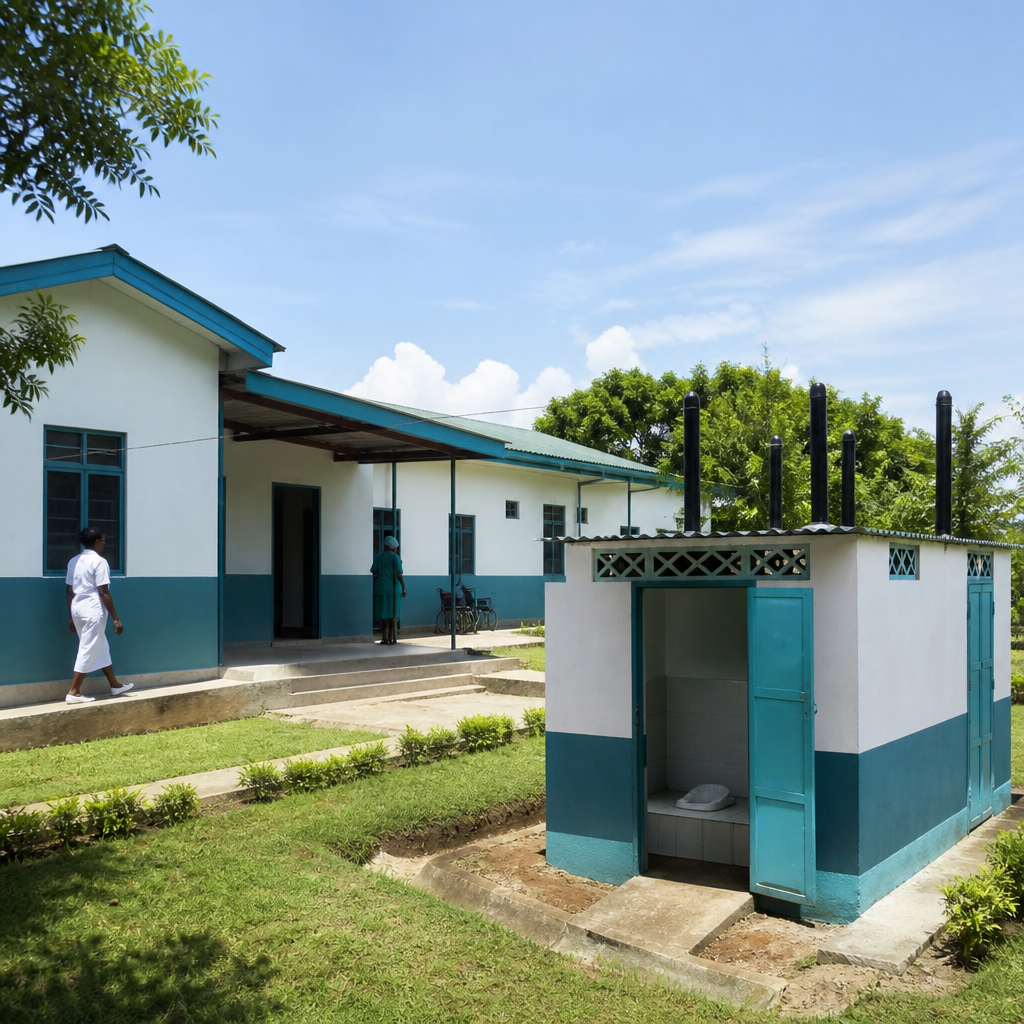
There is no universally best EcoSan technology for healthcare facilities. The right choice depends on water availability, land, climate, user load, maintenance skill, sludge treatment options, and regulatory requirements. Urine-diverting dry toilets can reduce water demand and simplify nutrient separation, but they require excellent user instruction, consistent cleaning, and reliable management of feces vaults. Container-based sanitation can work in constrained sites or temporary health posts if collection frequency is disciplined and transport chains are secure. Pour-flush or low-flush systems linked to septic tanks, anaerobic baffled reactors, planted drying beds, or fecal sludge treatment units may fit larger facilities where water is limited but not absent. The decisive issue is not novelty; it is whether the facility can operate the full chain safely.
In healthcare, source separation can be useful, but only when contamination control remains robust. Urine is often lower risk than feces, yet in medical settings it may still contain pathogens or pharmaceuticals, so any reuse must follow conservative storage and application rules. Feces require strong treatment barriers before agricultural use is considered, and in many facilities the safer endpoint is treated disposal rather than reuse. Dehydration, composting, alkaline treatment, thermal drying, and co-treatment with fecal sludge can all play a role, but each has limits. Composting, for instance, depends on temperature, moisture, carbon balance, and retention time; it is not a magic label for sanitation safety. If the facility cannot verify process control, it should not claim pathogen-safe compost.
| EcoSan option | Best fit in healthcare | Main strengths | Critical limitations |
|---|---|---|---|
| Urine-diverting dry toilet | Small clinics, low-water settings | Minimal water use, nutrient separation | User error, vault management, odor if poorly ventilated |
| Container-based sanitation | Temporary sites, dense compounds | Rapid deployment, controlled collection | Needs strict logistics and worker protection |
| Low-flush to septic plus sludge treatment | Medium facilities with some water | Familiar use, easier acceptance | Desludging failures can create major exposure |
| Anaerobic baffled reactor with polishing | Larger sites with wastewater flows | Improved solids reduction, modular treatment | Requires design expertise and routine monitoring |
When comparing options, I look for five signs of suitability. First, the user interface must be intuitive under stress. Second, cleaners must be able to restore hygiene rapidly. Third, containment must prevent leakage to soil and groundwater. Fourth, emptying and transport must minimize direct contact. Fifth, the treatment endpoint must be realistic for the local operator, climate, and budget. If any of those five fail, the technology is mismatched, no matter how sustainable it appears on paper.
Design for hand hygiene, environmental cleaning, and inclusive access
Toilets do not protect health on their own. They must be paired with hand hygiene and cleaning infrastructure placed exactly where behavior happens. Every toilet block in a healthcare facility should have a functioning handwashing or hand hygiene point at exit, dependable soap or alcohol-based hand rub where appropriate, drainage that prevents standing water, and surfaces that tolerate frequent cleaning. Floors should be smooth but slip resistant, corners should minimize dirt traps, and cubicles should have adequate lighting and ventilation. These details matter because cleaners and users interact with them dozens or hundreds of times each day. Rough surfaces, inaccessible joints, and poor drainage quickly become microbial reservoirs and raise labor time.
Inclusive access is also a health requirement, not an optional amenity. Patients using wheelchairs, crutches, walkers, or caregiver assistance need enough maneuvering space, handrails, stable ramps, and seats at suitable height. Women and girls need privacy, menstrual hygiene provisions, water or cleansing materials consistent with local practice, and disposal routes for menstrual waste that do not clog toilets or contaminate reuse streams. Older adults and post-operative patients need toilets close to wards to reduce falls and incontinence events. For nighttime use, lighting and visibility are directly linked to safety and utilization. In several rural clinics, we saw that simply relocating handwashing stations from outside the block to the toilet exit increased use because the action became unavoidable and socially visible.
Environmental cleaning should be planned with the sanitation system, not after commissioning. That means defining cleaning frequencies by risk area, choosing detergents and disinfectants compatible with surfaces, stocking color-coded tools where possible, and training staff on contact times and sequence. A maternity toilet serving high-volume labor rooms may need cleaning far more often than an administrative block, and the schedule must reflect that. Facilities should monitor not only whether cleaning occurred, but whether supplies, water, and supervision supported effective cleaning. A spotless-looking toilet with no soap and no sludge management plan is not a safe sanitation asset.
Manage sludge, effluent, and reuse with verified treatment barriers
The most common EcoSan failure in healthcare is not the toilet interface. It is what happens after the toilet. Fecal sludge, urine, and effluent become dangerous when collection chambers overflow, when workers empty them manually without protection, when transport containers leak, or when partially treated material is reused too early. Best practice is to establish a complete sanitation service chain with named responsibilities, schedules, equipment lists, emergency procedures, and documented treatment parameters. If the facility cannot demonstrate safe handling beyond containment, it has not solved sanitation; it has only moved the hazard.
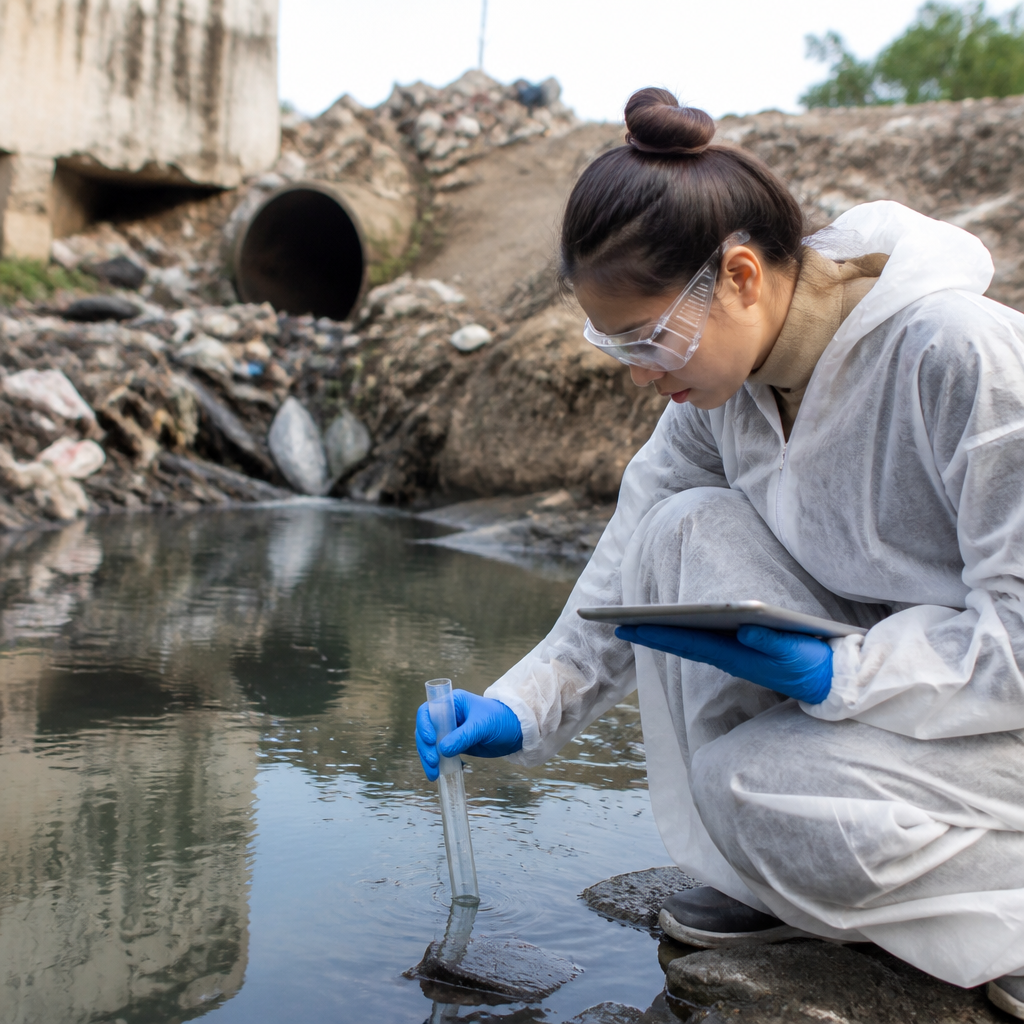
Treatment barriers should be selected based on likely pathogens and operational reality. Storage alone may reduce risk in separated urine under certain conditions, but healthcare settings justify more caution because of variable contamination. Fecal material may require dehydration with verified retention time, thermophilic composting with temperature records, alkaline stabilization to achieve pathogen reduction, or transfer to an authorized fecal sludge treatment plant. Wastewater may need sedimentation, anaerobic treatment, filtration, and disinfection before discharge, depending on local regulation and receiving environment. The Sanitation Safety Planning approach is useful here because it maps hazards from source to end use and defines control measures at each step.
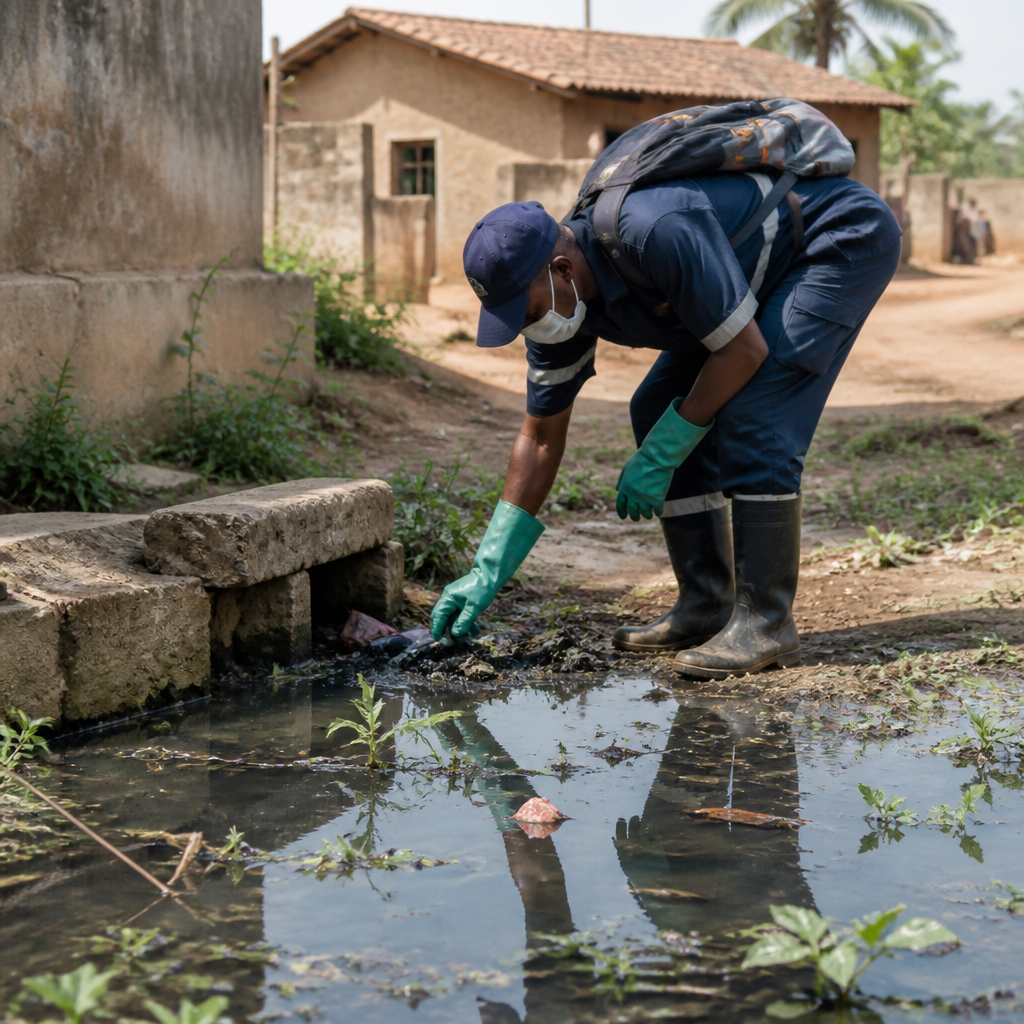
Worker safety is inseparable from public health. Staff involved in emptying, transport, and treatment need gloves, boots, masks or respirators as indicated by task, eye protection for splash risk, hand hygiene facilities, immunization where recommended, and clear reporting pathways for exposure incidents. Mechanized emptying is preferable whenever feasible. If manual handling cannot be avoided, tools should reduce direct contact and aerosol generation. Reuse, if pursued, must remain conservative. Soil application near food crops, patient areas, or water sources should be restricted unless treatment performance is proven and local standards permit it. In many healthcare compounds, landscaping with nonfood plants is the highest prudent level of reuse for treated outputs.
Build governance, monitoring, and outbreak resilience into daily operations
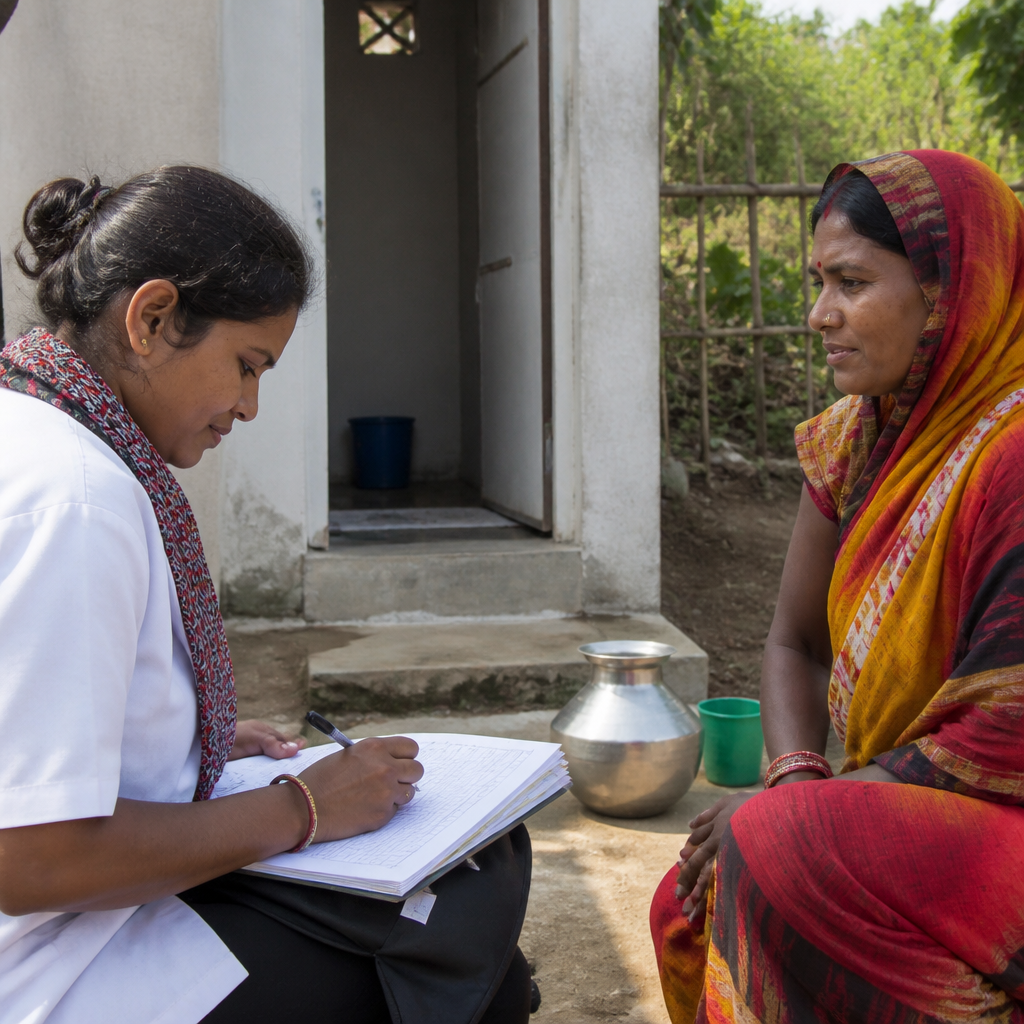
EcoSan performance in healthcare depends on management discipline. The strongest facilities treat sanitation as a governed service with budgets, indicators, audits, and accountability. A written sanitation management plan should define who inspects toilets, who replenishes soap, who records vault fill levels, who authorizes desludging, how complaints are logged, and what triggers corrective action. Digital tools can help, but paper checklists still work if supervisors review them consistently. Useful indicators include toilet functionality rate, hand hygiene station uptime, cleaning compliance, overflow incidents, desludging timeliness, odor complaints, and staff training completion. Facilities can also track patient feedback because perceived cleanliness strongly influences actual use.
Outbreak resilience deserves special attention. During cholera, viral gastroenteritis, or flooding, sanitation loads and pathogen risks change rapidly. Facilities should have surge protocols for increased cleaning frequency, temporary toilets, extra hand hygiene supplies, emergency desludging contracts, and isolation area excreta management. Power outages may disable pumps or lighting, so contingency plans should cover manual water access, backup illumination, and safe after-hours cleaning. Climate resilience matters as well. Flood-prone sites need raised structures, sealed pits or tanks, stormwater diversion, and protection against groundwater intrusion. Drought-prone sites need low-water fixtures, storage, and cleaning methods that preserve hygiene without excessive consumption.
The main benefit of prioritizing health in EcoSan is reliability under real conditions. When infection control, inclusive design, treatment verification, and routine management are built together, the sanitation system protects people instead of merely containing waste. For healthcare leaders, the next step is straightforward: audit the full sanitation chain, identify the highest-risk failure points, and upgrade the system around safe daily operations. That is how EcoSan supports health and safety in practice.
Frequently Asked Questions
1. What does EcoSan mean in healthcare facilities, and how is it different from standard sanitation?
EcoSan in healthcare facilities means applying ecological sanitation principles in a highly controlled, safety-first environment such as hospitals, clinics, maternity wards, laboratories, and community health posts. Unlike standard sanitation approaches that may focus mainly on removing waste from the premises, EcoSan looks at the entire sanitation chain: containment, source separation where appropriate, safe handling, treatment, reuse or disposal, wastewater management, hygiene infrastructure, and environmental protection. In healthcare settings, this approach must always support one nonnegotiable priority: preventing infection and protecting patients, staff, visitors, waste handlers, and nearby communities.
What makes EcoSan different in a medical context is the level of risk management involved. Human waste in healthcare facilities can contain higher concentrations of pathogens, antimicrobial residues, blood contamination, and other hazardous materials. That means any ecological sanitation strategy must be built around infection prevention and control standards, reliable segregation, strict cleaning and disinfection protocols, safe sludge and wastewater treatment, and continuous supervision. EcoSan is not simply about installing alternative toilets. It includes handwashing access, water-efficient but hygienic cleaning practices, menstrual hygiene support, maintenance planning, odor and vector control, staff training, and emergency preparedness during outbreaks or service interruptions.
In short, EcoSan in healthcare facilities is a systems-based sanitation model. It aims to reduce environmental impact and improve resource efficiency, but never at the expense of clinical safety. When done correctly, it creates cleaner, safer, more resilient health environments while reducing contamination risks inside and outside the facility.
2. What are the best practices for implementing EcoSan safely in hospitals and clinics?
The best EcoSan programs in healthcare facilities start with a risk assessment, not with a product choice. Facility managers should first map patient volumes, toilet demand, wastewater flows, handwashing coverage, high-risk zones, cleaning routines, waste segregation practices, drainage weaknesses, and local treatment or disposal options. Different areas of a healthcare facility have different sanitation demands. A maternity ward, outpatient clinic, isolation area, laboratory, and staff housing block cannot all be treated the same way. Good implementation depends on matching sanitation infrastructure to real clinical workflows and infection risks.
Source separation is often a key practice, but it must be used carefully. Urine-diverting systems, fecal sludge containment, or decentralized wastewater solutions can improve efficiency and reduce treatment loads, but only if users understand the system and maintenance teams can keep it functional. In healthcare environments, toilets and collection points must be easy to clean, accessible for all users, resistant to leakage, and designed to prevent splashing, direct contact, odors, and pest access. Handwashing stations with soap and reliable water or approved alternatives must be located immediately where needed, especially outside toilets, near patient care points, and in procedure areas.
Safe cleaning and maintenance are just as important as design. Best practice includes standard operating procedures for toilet cleaning, drain inspection, sludge removal, surface disinfection, spill response, and personal protective equipment for sanitation workers. Wastewater and sludge should never be discharged untreated in ways that expose communities or contaminate groundwater. Facilities should also establish monitoring indicators such as toilet functionality rates, hand hygiene compliance, cleaning frequency, blockage events, odor complaints, and treatment performance. Successful EcoSan implementation is practical, trainable, maintainable, and fully integrated into the healthcare facility’s infection prevention system.
3. How should healthcare facilities manage human waste, sludge, and wastewater under an EcoSan approach?
Managing human waste, sludge, and wastewater in healthcare settings requires a barrier-based approach that prevents pathogens from moving from toilets and drains into people, water sources, food systems, or the surrounding environment. Under EcoSan, the process begins with safe containment. Toilets, holding tanks, pits, urine-diversion systems, septic units, or other collection technologies must be structurally sound, leak-free, easy to inspect, and protected from overflow during heavy use or storms. Facilities should know exactly where waste goes after flushing or collection; if the sanitation chain is unclear, it is not safe.
Sludge management is a particularly important issue. Fecal sludge from healthcare facilities may present a higher health risk than domestic sludge because it can contain disease-causing organisms and residues from medical activities. Emptying should only be performed by trained personnel using suitable protective equipment, controlled transfer methods, and approved transport routes. Open dumping, informal emptying, and untreated discharge are unacceptable because they can rapidly spread contamination. Depending on local infrastructure, treatment options may include composting under controlled conditions, drying, stabilization, co-treatment in regulated plants, anaerobic treatment, or other approved pathogen-reduction methods. The key requirement is verified treatment that reduces biological risk before reuse or disposal.
Wastewater also needs close attention. Not all healthcare wastewater is the same. Flows from toilets, handwashing, laundries, wards, laboratories, and cleaning operations may carry different contaminants. Facilities should avoid mixing hazardous liquid waste streams with ordinary wastewater unless treatment systems are designed to handle them. Drains must be maintained, inspection chambers kept accessible, and final effluent monitored where required. An effective EcoSan strategy treats wastewater management as part of public health protection, not as a hidden utility issue. The safest systems are those that are documented, monitored, routinely maintained, and backed by contingency plans for blockages, floods, or outbreaks.
4. Why are handwashing, cleaning, and hygiene infrastructure central to EcoSan in healthcare facilities?
Handwashing, cleaning, and hygiene infrastructure are central because sanitation in healthcare is not just about waste removal; it is about interrupting disease transmission at every point of contact. A facility may have technically advanced toilets or treatment systems, but if staff, patients, and visitors cannot wash their hands easily and consistently, infection risks remain high. EcoSan works best when toilets, hand hygiene stations, drainage, cleaning supply storage, and waste handling areas function as one coordinated hygiene network.
Best practice is to place handwashing stations exactly where behavior needs to happen: at toilet exits, points of care, treatment rooms, maternity areas, food preparation spaces, isolation zones, and waste handling stations. These stations should be reliable, easy to use, accessible to children and people with disabilities, and stocked with soap or other approved hand hygiene materials. In low-resource settings, water-efficient designs can support continuity, but they must still meet hygiene standards. A nonfunctional sink or an empty soap dispenser undermines the entire sanitation system.
Cleaning systems matter just as much. Toilets, floors, touch surfaces, drains, and wash areas must be cleaned on a schedule that reflects actual use and risk. Staff need written protocols that explain what to clean, how often, with which products, and with what protective equipment. Color-coded tools, safe dilution practices, and proper storage of chemicals help reduce cross-contamination. EcoSan encourages efficient water use, but not superficial cleaning. The goal is hygienic performance with responsible resource management. When hygiene infrastructure is strong, healthcare facilities become safer, more dignified, and more resilient during periods of high patient load or infectious disease pressure.
5. What common mistakes should healthcare facilities avoid when adopting EcoSan systems?
One of the most common mistakes is treating EcoSan as a toilet installation project instead of a full sanitation management system. Facilities sometimes invest in new units or technologies without planning for cleaning, user training, spare parts, sludge removal, wastewater treatment, accessibility, or supervision. In healthcare environments, that gap can quickly turn a promising system into a health hazard. A design is only successful if it remains safe under daily clinical use, high occupancy, and emergency conditions.
Another major mistake is underestimating infection control. Some facilities adopt ecological approaches to save water or reduce disposal costs but fail to account for the higher pathogen risks associated with healthcare waste streams. Poor segregation, inadequate disinfection, unsafe emptying, and weak handwashing infrastructure can all cancel out the intended benefits. It is also a mistake to ignore user behavior. Staff, patients, caregivers, and cleaners need clear instructions, visible signage, and systems that are intuitive to use. If source separation or special operation steps are confusing, compliance will drop and contamination risks will rise.
Facilities should also avoid neglecting maintenance and monitoring. Blocked urine lines, damaged slabs, leaking tanks, broken taps, foul odors, and overflowing pits are warning signs of system failure. Without regular inspection and accountability, small problems become infection risks. Finally, healthcare managers should never assume that environmentally friendly automatically means clinically appropriate. The right EcoSan solution is the one that protects health first, complies with regulations, fits the local context, and can be operated safely over time. Strong governance, training, budgeting, and performance tracking are what make EcoSan truly effective in healthcare settings.