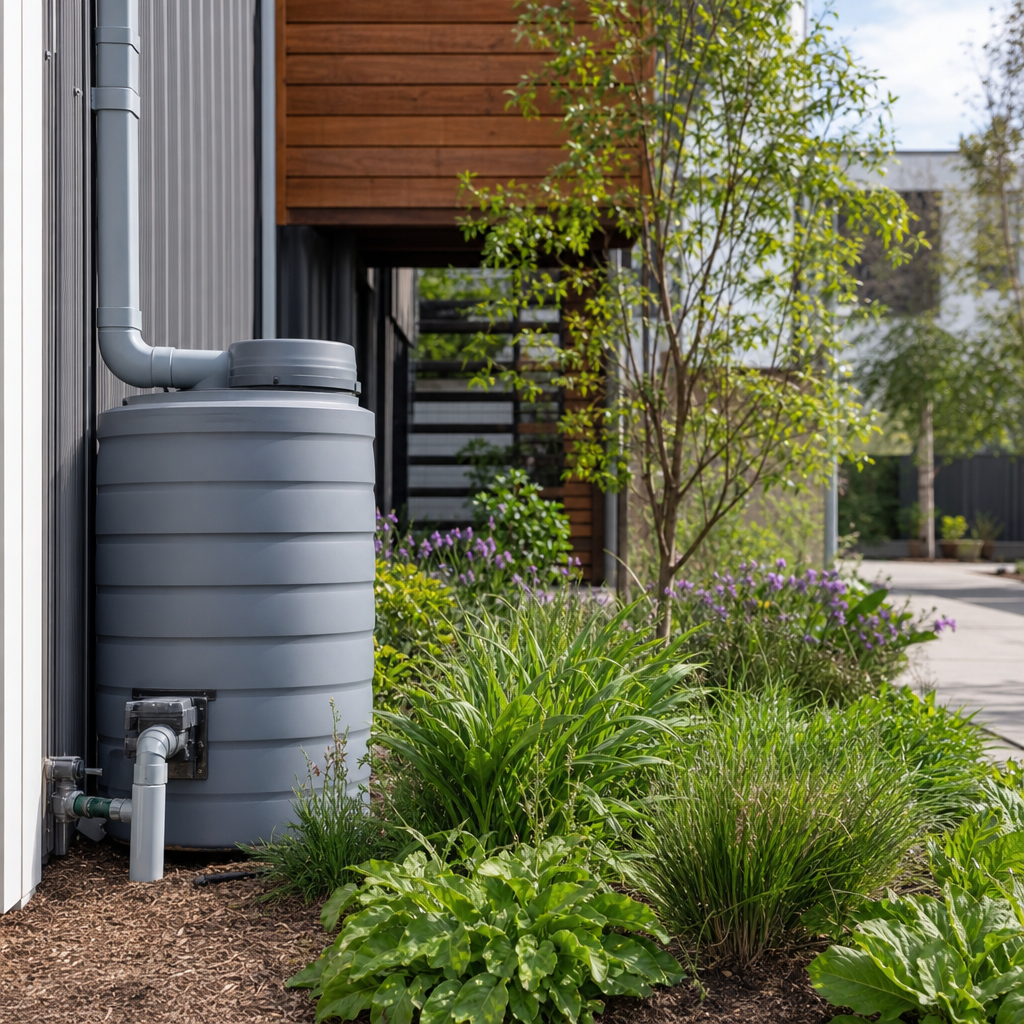
Greywater systems are becoming a practical cornerstone of sustainable practices in sanitation, especially in dense cities where every gallon of potable water, every square foot of soil, and every utility dollar matters. Greywater is gently used household water from showers, bathtubs, bathroom sinks, and laundry machines; it excludes toilet waste and is different from blackwater, which contains sewage and requires far more intensive treatment. In urban landscapes, this distinction matters because greywater can often be captured, filtered, and reused for irrigation, toilet flushing, or other nonpotable needs without demanding the energy, chemistry, and infrastructure associated with full wastewater recycling.
I have worked on water-efficiency planning for multifamily properties and mixed-use sites, and the same pattern appears repeatedly: landscapes suffer first when drought restrictions tighten, yet outdoor green space remains essential for cooling, stormwater control, public comfort, and property value. Greywater systems help close that gap. They reduce demand on municipal drinking water supplies, cut wastewater discharge volumes, and support healthier planting strategies in courtyards, streetscapes, rooftops, and community spaces. For cities facing hotter summers, stricter water budgets, aging pipes, and rising utility rates, this is not an experimental idea. It is a scalable sanitation strategy that links buildings and landscapes in a more circular water cycle.
As a hub topic within environmental impact, sustainable practices in sanitation goes beyond fixture efficiency or sewer treatment alone. It includes source separation, water reuse, public health safeguards, soil performance, decentralized infrastructure, and the policy frameworks that let reuse happen safely. Greywater sits at the center of that discussion because it is one of the few measures that can lower potable water use while directly improving urban landscape resilience. Understanding how these systems work, where they deliver the most value, and what design limits apply gives planners, property managers, designers, and homeowners a realistic roadmap for action.
How Greywater Systems Work in Urban Landscapes
A greywater system starts with identifying suitable source flows inside a building. Shower and bath water are usually the most reliable because they are generated regularly and contain relatively low solids. Laundry water can also be useful, though detergent chemistry needs closer review because sodium-heavy products can damage soil structure over time. Bathroom sink water is sometimes included, but in some jurisdictions it is excluded or treated more cautiously because of higher concentrations of toothpaste residue, hair, and grooming products. Kitchen sink and dishwasher water are usually left out because fats, oils, grease, and food particles increase pathogen risk and clogging potential.
From those fixtures, water is diverted through dedicated plumbing to a treatment or distribution component. In simple laundry-to-landscape systems, water may pass through a coarse filter and flow directly to subsurface mulch basins around trees and shrubs. In larger residential or commercial systems, water often moves into a settling tank, screen filter, surge tank, disinfection unit, or membrane package before being pumped to irrigation lines or toilet flushing storage. The design depends on local code, intended end use, and retention time. Because untreated greywater can turn septic quickly, most codes limit storage to under twenty-four hours unless additional treatment is provided.
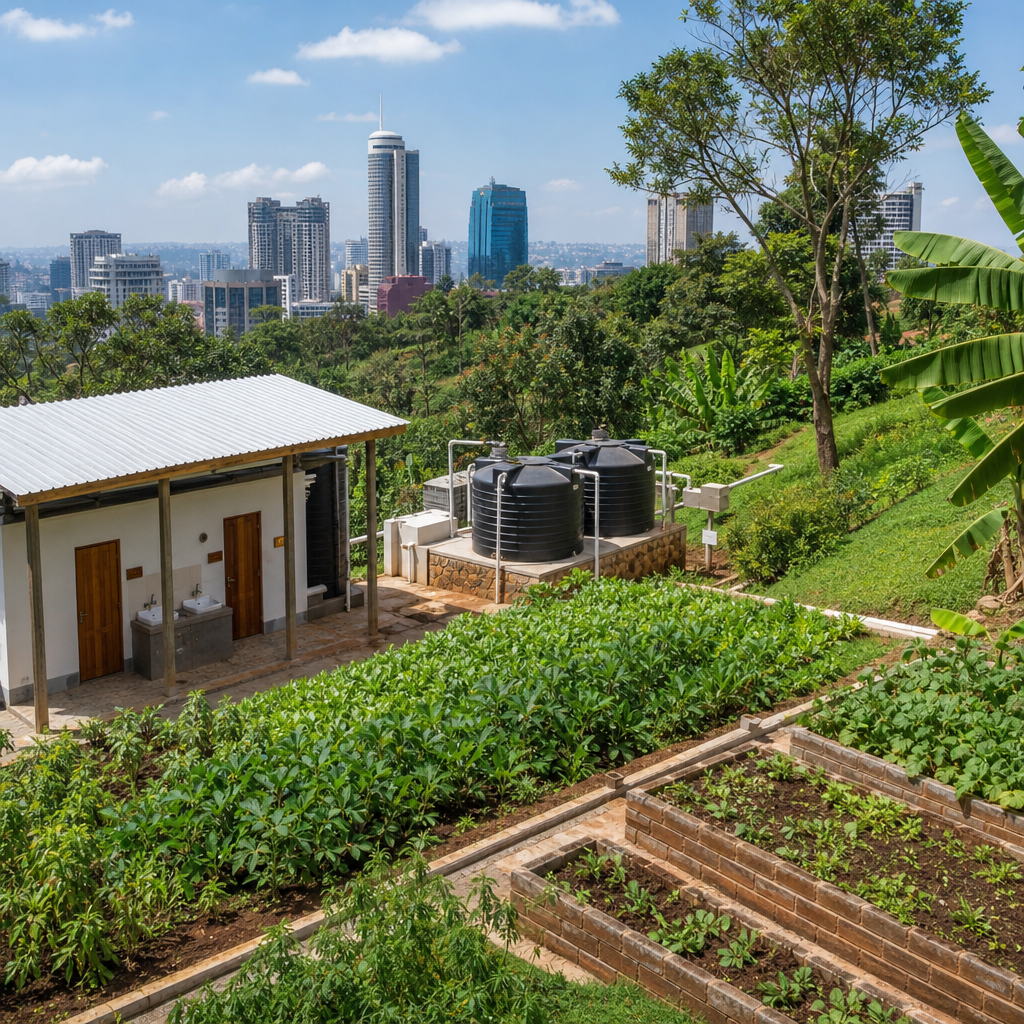
For urban landscapes, subsurface distribution is the standard best practice. Delivering reused water below the surface reduces human contact, limits odor, avoids aerosol formation, and targets root zones efficiently. Drip irrigation designed specifically for reclaimed or filtered greywater is common in planters, medians, and podium landscapes. In high-rise or mixed-use projects, packaged systems can integrate with building management controls, allowing operators to balance incoming greywater volumes with irrigation demand, seasonal weather, and storage capacity. The result is not just water reuse; it is coordinated sanitation infrastructure serving landscape performance.
Why Greywater Matters for Sustainable Practices in Sanitation
Sanitation is often discussed only in terms of waste removal, but sustainable practices in sanitation aim for a wider outcome: protecting public health while reducing resource consumption and ecological damage. Greywater systems support that goal in four direct ways. First, they offset potable water demand. In many homes, showers and laundry together account for a substantial share of indoor water use, making them ideal reuse sources. Second, they reduce flows entering sewers or septic systems, which can lessen pumping energy and peak load pressure. Third, they enable landscapes to survive drought without relying entirely on drinking water. Fourth, they create a visible link between household behavior, water infrastructure, and urban ecology.
The sanitation value becomes even clearer in water-stressed cities. Cape Town’s drought crisis, California’s recurring restrictions, and Australia’s long history with water reuse have shown that centralized systems alone cannot provide all resilience. Distributed reuse at building scale helps diversify supply. It also complements low-flow fixtures, smart irrigation controllers, rainwater harvesting, compost amendments, permeable paving, and native planting. None of those measures replaces the others. The strongest urban water strategies layer them together so demand falls while landscapes remain functional and sewer systems face fewer unnecessary flows.
There is also an equity dimension. Utility costs rise faster than many household budgets, and common-area irrigation can be a major expense in apartment complexes, schools, and affordable housing developments. When designed properly, greywater can preserve shade trees and shared green areas that improve thermal comfort and public health in lower-income neighborhoods that often have less canopy cover. Sustainable sanitation is not only about engineering efficiency. It is about maintaining safe, livable environments with fewer inputs.
Key Benefits for Urban Landscapes
The most immediate benefit is irrigation supply. Urban landscapes need reliable moisture in conditions that are increasingly hotter, windier, and less predictable. Greywater provides a steady source that aligns surprisingly well with plant demand in residential and multifamily settings: people shower year-round, do laundry regularly, and generate water even when rainfall disappears. Trees, shrubs, and perennial beds benefit most because they can handle slower, subsurface delivery and do not require the spray patterns often used on turf.
A second benefit is reduced stormwater stress through healthier soils and vegetation. Reused water supports root growth, which improves infiltration, stabilizes planting areas, and helps landscapes capture runoff during heavy rain events. On compact urban sites, the same planting beds that receive greywater can contribute to cooling, habitat, and erosion control. Green infrastructure performs better when plants are not chronically water-stressed.
Third, greywater can lower operating costs. Savings vary by climate, rates, and system complexity, but on properties with high outdoor water demand, the reduction in potable irrigation use can be meaningful. I have seen simple systems make the most sense where landscapes are permanent and water prices are high, while larger treatment systems justify themselves in multifamily or hospitality settings that can reuse water for both flushing and irrigation. The economics improve further when municipalities offer rebates or when projects are pursuing green building certifications such as LEED.
Finally, greywater supports urban heat mitigation. Vegetation cools through shade and evapotranspiration, but it cannot deliver those benefits when irrigation is cut. Keeping canopy trees and dense planting alive has measurable environmental value, especially in neighborhoods dominated by pavement and reflective surfaces. In that sense, greywater is not just a plumbing upgrade. It is an urban climate adaptation tool.
System Types, Use Cases, and Performance Tradeoffs
Not every greywater system fits every site. The right choice depends on building type, available space, maintenance capacity, code requirements, and the quality needed for the intended reuse. The comparison below reflects the options most often evaluated in urban projects.
| System type | Typical source | Best urban use case | Main advantages | Main limitations |
|---|---|---|---|---|
| Laundry-to-landscape | Clothes washer | Single-family homes with yard trees | Low cost, simple retrofit, no storage tank required | Limited flow, detergent sensitivity, uneven supply |
| Branched drain gravity system | Showers and tubs | Low-rise homes with slope to planting areas | No pump energy, direct subsurface distribution | Needs careful grading, hard to retrofit in dense buildings |
| Packaged filtered irrigation system | Multiple bathroom and laundry sources | Multifamily courtyards and podium landscapes | More controllable quality, broader irrigation coverage | Higher capital cost, filter maintenance, pump reliance |
| Treated reuse for toilet flushing and irrigation | Whole-building greywater stream | Hotels, apartments, mixed-use developments | Largest potable water savings, year-round demand match | Complex permitting, operator oversight, monitoring needs |
In practice, simpler systems often outperform complicated ones when owners lack maintenance staff. A gravity-fed distribution line serving fruitless trees and ornamental shrubs may deliver dependable long-term value with little intervention. By contrast, membrane bioreactors and disinfection systems can achieve excellent water quality but require service contracts, alarms, and replacement parts. The tradeoff is not whether advanced treatment works; it does. The real question is whether the site can operate it consistently for years.
Performance also depends on matching water supply with demand. A household may generate more greywater in winter than the landscape can absorb, while a commercial site may produce steady flows that pair well with toilet flushing all year. Designers use water budgets, fixture counts, occupancy assumptions, and irrigation coefficients to right-size systems. Oversizing is a common mistake because it raises costs without increasing actual reuse.
Design, Health, and Regulatory Considerations
Public health protection is nonnegotiable. Greywater may contain soaps, skin cells, hair, lint, trace pathogens, and household chemicals, so safe design focuses on source control, limited storage, filtration, and avoidance of direct contact. Subsurface irrigation, purple pipe identification where required, backflow prevention, and air-gap separation from potable systems are standard safeguards. Many jurisdictions reference the International Plumbing Code, Uniform Plumbing Code, or local amendments, and those details can differ significantly. Some allow simple residential systems with minimal permitting, while others require engineered drawings and inspections for nearly all installations.
Plant and soil compatibility matter just as much as plumbing. High sodium adsorption ratios can degrade soil structure, reducing infiltration and harming roots. Boron, chlorine, bleach, and harsh cleaning agents can accumulate, especially in arid climates with little leaching rain. The practical response is straightforward: choose biodegradable, low-sodium, low-boron products and direct greywater toward established ornamentals, trees, and robust perennials rather than delicate edibles or root crops. Mulch basins help filter particulates and buffer moisture swings, while routine observation can catch surfacing water, odors, or emitter clogging before they become larger problems.
Maintenance is where many otherwise good projects succeed or fail. Filters need cleaning, pumps need inspection, valves need exercising, and users need clear instructions about what can go down the drain. I advise clients to treat greywater systems like any other building utility: assign responsibility, create a maintenance log, and review performance seasonally. That discipline prevents the common decline in which a system technically exists but is bypassed because no one is accountable for keeping it operational.
Greywater as the Hub of a Broader Sanitation Strategy
Because this topic sits within environmental impact, it helps to view greywater as the hub connecting several sustainable practices in sanitation rather than as a standalone device. Low-flow showerheads and efficient washers reduce incoming volumes but can still provide enough reusable water when landscapes are designed efficiently. Smart irrigation controllers prevent overwatering, ensuring reused water is applied only when plants need it. Rainwater harvesting can supplement seasonal shortfalls, while compost-enriched soils store more moisture and improve treatment through biological activity. Permeable surfaces, bioswales, and tree trenches then extend the benefit by managing runoff and supporting urban cooling.
This integrated approach reflects how resilient systems actually work in the field. A multifamily courtyard that combines drought-tolerant planting, drip irrigation, soil moisture sensors, and treated greywater will almost always outperform a conventional landscape dependent on potable spray irrigation. It will use less drinking water, generate fewer runoff problems, and remain healthier under restrictions. That is the larger lesson for sustainable sanitation: the best outcomes come from linking water efficiency, safe reuse, landscape design, and long-term operations into one coherent plan.
Greywater systems offer urban landscapes a rare combination of environmental, operational, and public-value benefits. They conserve potable water, reduce wastewater burdens, support vegetation that cools and stabilizes cities, and strengthen sustainable practices in sanitation at building scale. The most successful projects are not the most elaborate; they are the ones sized correctly, permitted properly, maintained consistently, and integrated with soil, plant, and irrigation decisions from the start.
For property owners, designers, and municipal planners, the path forward is clear. Begin with a site water audit, identify feasible greywater sources, review local code, and match reuse goals to realistic maintenance capacity. Then connect that plan to the wider sanitation strategy of efficient fixtures, smart irrigation, and climate-appropriate planting. Done well, greywater turns wastewater from a disposal problem into a local resource. If you are building or upgrading an urban landscape, make greywater evaluation part of the first design conversation, not an afterthought.
Frequently Asked Questions
What is a greywater system, and how is it different from blackwater in urban settings?
A greywater system collects and reuses gently used household water from sources such as showers, bathtubs, bathroom sinks, and washing machines. This water is then redirected for beneficial non-potable uses, most commonly landscape irrigation. Greywater does not include water from toilets, kitchen sinks, or dishwashers in most residential applications, because those sources typically contain higher concentrations of grease, food waste, and pathogens. That distinction is essential in urban environments, where health protections, building codes, and limited space all influence how water reuse systems are designed and managed.
Blackwater, by contrast, contains sewage and requires much more intensive treatment before it can be reused or discharged. Because blackwater presents greater contamination risks, it demands more complex infrastructure, permitting, and treatment processes. Greywater systems are often more practical for dense cities because they offer a simpler way to reduce potable water demand without requiring the same level of processing as wastewater streams that include toilet waste. In short, the separation between greywater and blackwater is what makes greywater reuse one of the most accessible and scalable water-saving strategies for urban landscapes.
What are the main benefits of greywater systems for urban landscapes?
Greywater systems provide a range of advantages that are especially valuable in cities, where water supplies are under pressure and outdoor space must be managed efficiently. One of the biggest benefits is reduced demand on potable water. Instead of using treated drinking water for irrigation, property owners can reuse water that has already served a household purpose. This helps conserve municipal water supplies, lowers utility bills, and supports broader sustainability goals in areas facing drought, population growth, or aging infrastructure.
Urban landscapes also benefit because greywater can help keep plants, trees, and soil healthier when used appropriately and consistently. In many cities, small planted areas such as courtyards, parkways, rooftop planters, community gardens, and foundation beds can suffer from inconsistent watering due to restrictions or cost concerns. Greywater offers a dependable supplemental source that can improve plant resilience and reduce water stress. At the same time, redirecting water on-site can reduce strain on sewer systems, which matters in dense neighborhoods where stormwater and wastewater infrastructure may already be overloaded. Taken together, these benefits make greywater systems a practical tool for creating more resource-efficient, climate-responsive urban landscapes.
Is greywater safe to use for irrigating plants in cities?
Yes, greywater can be safe for landscape irrigation when the system is properly designed, installed, and maintained according to local regulations. Safety depends on using appropriate water sources, applying the water in the right way, and avoiding human contact where possible. In most urban applications, greywater is distributed below the soil surface or directly into mulch basins so it can be absorbed by the root zone rather than sprayed into the air. This reduces exposure risks, limits odors, and helps prevent runoff onto sidewalks, neighboring properties, or public spaces.
It is also important to use household products that are compatible with greywater reuse. Harsh chemicals, high-salt detergents, and products containing boron can damage soil and plants over time. Homeowners and property managers should choose biodegradable, plant-friendly soaps and laundry products whenever possible. In addition, greywater is generally best used soon after it is generated rather than stored for long periods, since storage can lead to odors and bacterial growth. When those basic principles are followed and local code requirements are met, greywater can be a safe and effective irrigation source for many ornamental urban landscapes.
What types of urban properties and landscapes are best suited for greywater systems?
Greywater systems can work well in a wide variety of urban properties, from single-family homes to multi-unit residential buildings, mixed-use developments, and certain commercial sites, depending on local rules and plumbing configurations. The best candidates are properties that generate a reliable amount of reusable water and have landscaped areas that can benefit from regular irrigation. Even relatively small urban planting zones can make good use of greywater if they are thoughtfully designed, especially in places where outdoor water use represents a meaningful share of utility costs.
Landscapes that respond particularly well include trees, shrubs, perennial beds, and other established ornamental plantings. These areas often benefit from steady, low-volume irrigation delivered close to the roots. Properties with enough grade for gravity-fed distribution may be able to use simpler systems, while more complex sites may require pumps, filtration, or surge tanks. Rooftop gardens, courtyards, narrow side yards, and compact backyard landscapes can all potentially benefit, but success depends on layout, soil conditions, drainage, and code compliance. The most effective installations are tailored to the property’s water generation patterns and the landscape’s actual irrigation demand.
What should homeowners and property managers consider before installing a greywater system?
Before installing a greywater system, the first step is to understand local building codes, health regulations, and permitting requirements. Greywater rules vary significantly by city and state, and urban properties may face additional considerations related to lot size, setbacks, occupancy type, and proximity to neighboring buildings. It is also important to evaluate which indoor fixtures can be connected, how much greywater is available on a typical day, and whether the landscape can absorb and use that water effectively without causing pooling or runoff.
Beyond compliance, long-term performance should be part of the planning process. A well-designed system should match water supply with landscape demand, include accessible components for maintenance, and account for seasonal changes in irrigation needs. Property owners should also think about filtration needs, plumbing access, product selection for soaps and detergents, and whether professional installation is advisable. In many cases, the best results come from working with qualified designers, plumbers, or water reuse specialists who understand both urban site constraints and sustainable landscape practices. When planned carefully, a greywater system can become a durable investment that reduces water waste, supports healthier urban planting, and improves overall resource efficiency.