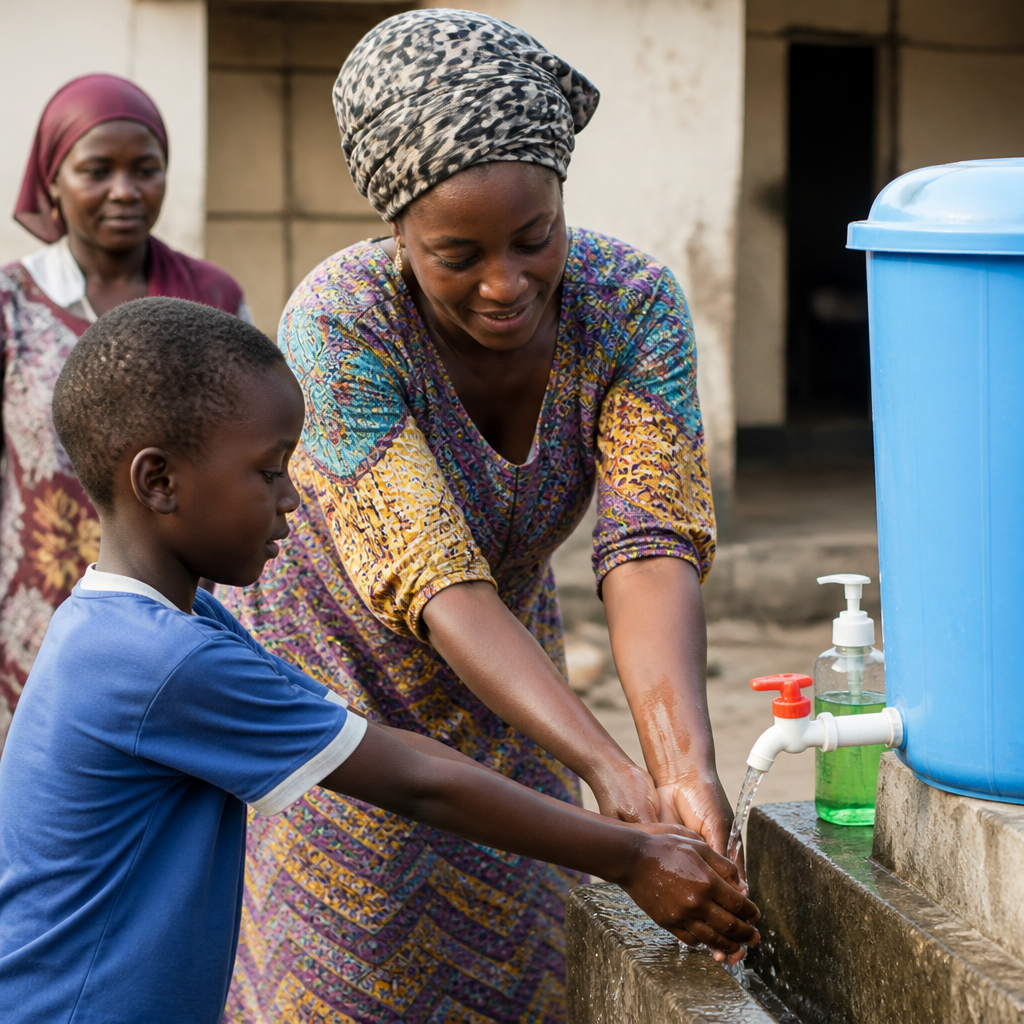
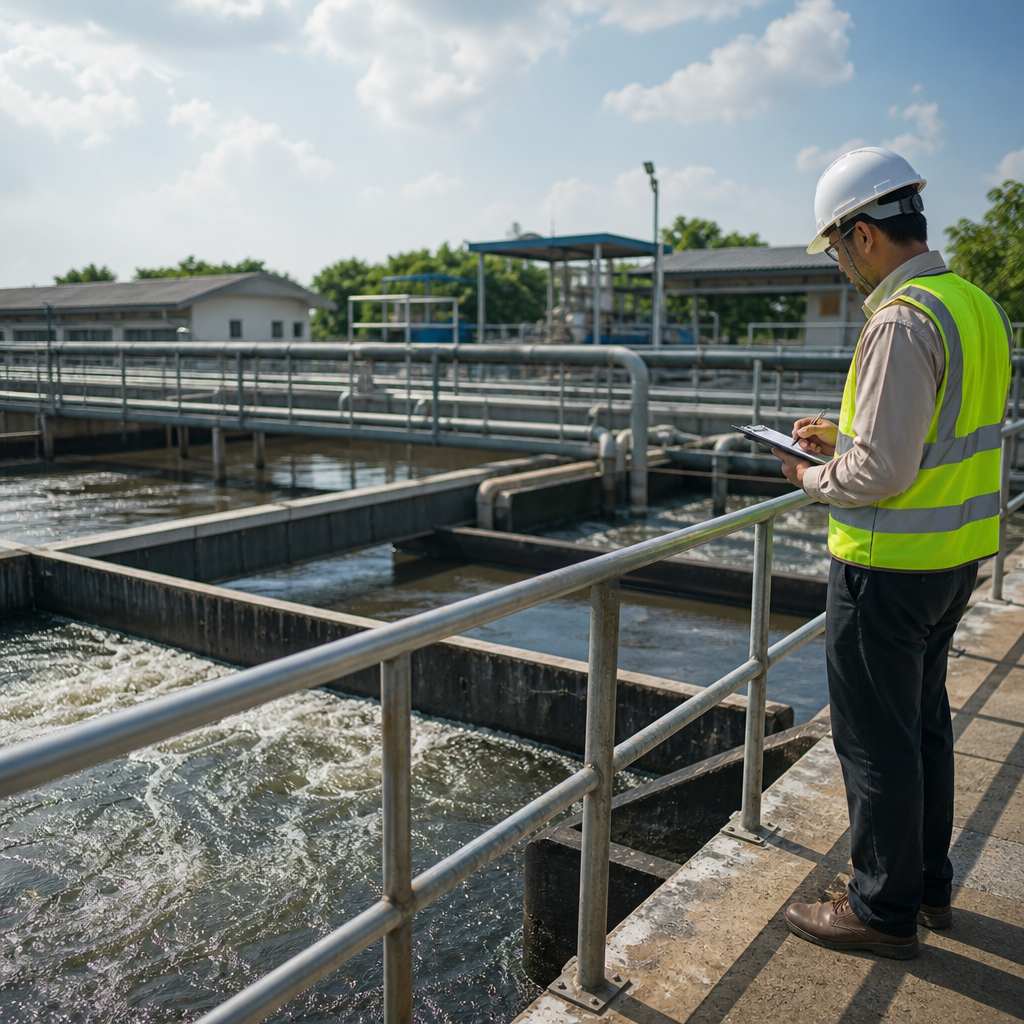
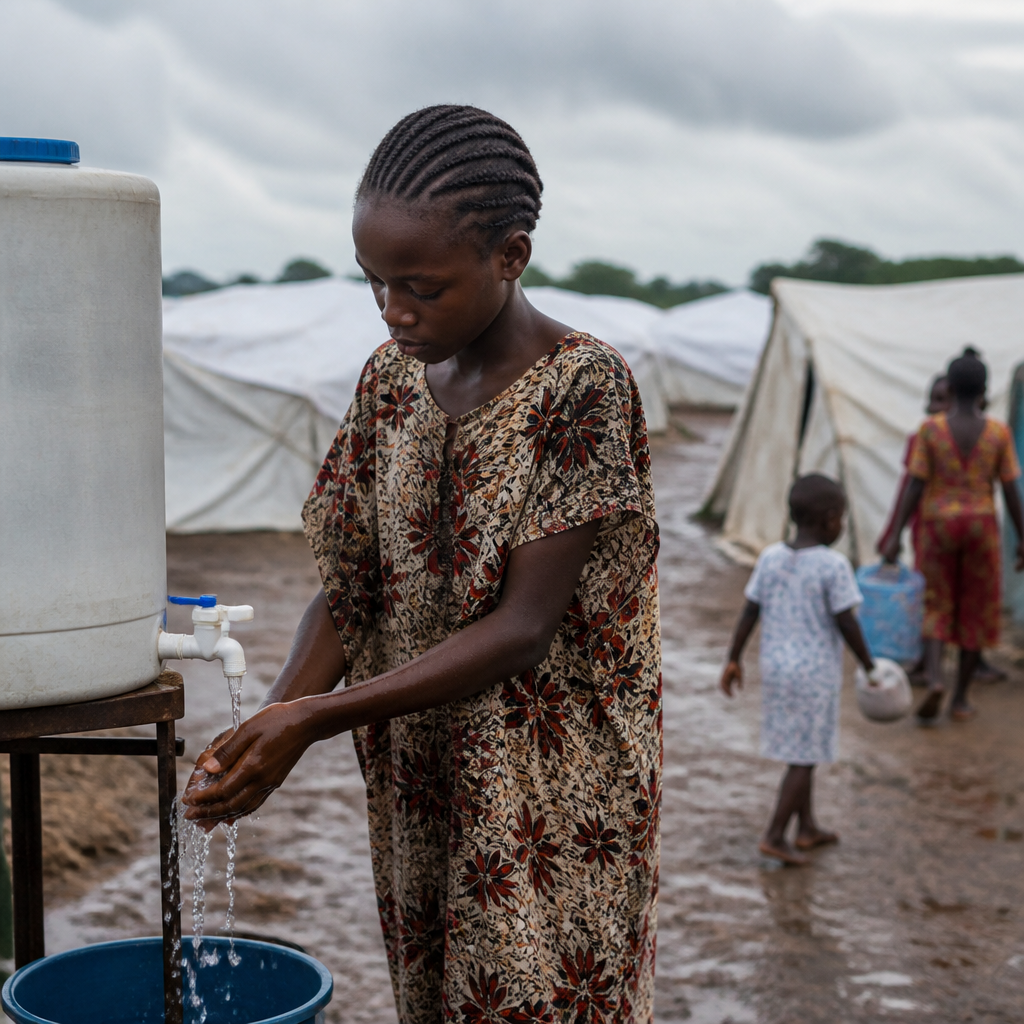
Public health education in sanitation projects determines whether EcoSan systems protect communities, conserve resources, and remain trusted over decades. In this context, public health education means the structured teaching, coaching, and reinforcement that help households, schools, operators, and local leaders use sanitation facilities safely. EcoSan, or ecological sanitation, is a sanitation approach that treats human waste as a resource stream rather than something to hide and dump. It includes urine diversion, composting toilets, dehydration vaults, container-based systems, and reuse pathways for nutrients and organic matter. Safety and sustainability in EcoSan depend on behavior as much as hardware. A well-built urine-diverting dry toilet can still spread disease if users mix waste streams, store compost for too little time, or handle ash incorrectly. I have seen projects fail for exactly these reasons, not because the engineering was poor, but because training stopped at handover.
This matters because sanitation is both a public health barrier and a daily service. The World Health Organization links inadequate sanitation to diarrheal disease, helminth infection, environmental contamination, and loss of dignity, especially for women, children, older adults, and people with disabilities. Sustainable Development Goal 6 calls for safely managed sanitation, which means excreta are contained, transported, treated, and reused or disposed of without creating health risks. EcoSan can support that goal while reducing water demand, recovering nutrients, and lowering pressure on sewer networks. Yet none of those benefits happen automatically. Public health education is what turns a toilet into a preventive health system. It explains why handwashing matters after ash addition, how storage time reduces pathogen survival, when personal protective equipment is needed, and what signs indicate misuse or maintenance failure.
As a hub topic under health and safety, Safety and Sustainability in EcoSan requires a practical view. The core questions are simple: what hazards exist, who faces them, how are they controlled, and how do communities keep systems functioning year after year? The best sanitation education answers these questions in plain language and repeats them through demonstrations, school programs, operator manuals, visual cues, and community monitoring. It also respects local beliefs, agricultural practices, climate conditions, and literacy levels. Effective programs do not lecture people about hygiene in the abstract. They show a farmer how to apply treated urine at the right dilution, teach a caretaker how to identify vector access points, and help a municipality plan desludging, recordkeeping, and incident response. When education is designed this way, EcoSan becomes safer, more acceptable, and more durable.
Why public health education is central to EcoSan safety
EcoSan systems create a chain of control that starts at the user interface and continues through collection, storage, treatment, transport, reuse, and final management. At each point, human decisions affect risk. Users decide whether urine and feces stay separated. Caretakers decide whether dehydration chambers remain dry. Operators decide whether storage periods meet recommended treatment targets. Farmers decide whether biosolids are applied to edible crops, tree crops, or soil restoration areas. Public health education gives every actor the knowledge to make the safe choice consistently.
The main hazards in EcoSan are well known. Feces may contain bacteria, viruses, protozoa, and helminth eggs. Fresh urine is often lower risk, but cross-contamination and poor storage can change that. Additional hazards include ammonia exposure in enclosed spaces, slips and falls around wash areas, sharps in collected waste, and social risks such as stigma or exclusion when facilities are poorly explained. In my field work, the highest practical risks usually come from three failures: inadequate hand hygiene, premature handling of partially treated material, and confusion over operation and maintenance responsibilities. These are educational problems before they become technical failures.
Good education also protects sustainability. Systems last longer when households know how much cover material to add, how to keep vents clear, and why moisture management matters. Municipal staff budget better when they understand service intervals and replacement parts. Schools maintain cleaner toilets when students participate in hygiene routines and teachers reinforce them. Education is not an optional awareness campaign at the end of a construction project. It is part of the safety case for the entire sanitation system.
Core health risks and the controls every EcoSan project should teach
Every sanitation project should teach a small set of nonnegotiable controls. First, separate waste streams exactly as designed. In urine-diverting systems, mixing liquids into fecal chambers raises moisture, slows dehydration, increases odor, and can preserve pathogens. Second, add the specified cover material, often ash, lime, sawdust, or dry soil, because it controls moisture, reduces smell, and can raise pH. Third, wash hands with soap after toilet use, child feces handling, and any maintenance task. Fourth, store or treat collected material for the full recommended period before reuse. Fifth, use gloves, boots, and tools for handling, and clean them afterward. Sixth, restrict reuse practices to those validated by local guidance, crop type, and treatment performance.
The educational message should be tied to named standards and risk frameworks. The Sanitation Safety Planning approach promoted by the World Health Organization is especially useful because it maps hazards, exposure groups, and control measures across the sanitation chain. Hazard Analysis and Critical Control Point thinking is also helpful for identifying steps where failure has the biggest consequence, such as vault emptying or transfer to storage. In practical training, I translate these frameworks into site checklists: Is the chamber dry? Is the urine line clear? Is the storage date written down? Are children able to use the interface correctly? Can vectors enter? Is handwashing water available today, not just at launch?
| EcoSan stage | Main health risk | Essential education point | Example control |
|---|---|---|---|
| User interface | Cross-contamination and exposure | Use the correct opening and add cover material every time | Color-coded toilet markings and live demonstrations |
| Storage and treatment | Pathogen survival | Respect drying, pH, and storage-time requirements | Dated chamber logs and supervisor checks |
| Emptying and transport | Worker exposure | Wear gloves, boots, masks as needed, and use dedicated tools | Standard operating procedures and PPE kits |
| Reuse in agriculture | Crop contamination | Apply only treated material to suitable crops and soils | Restricted-use guidance and application training |
Designing education for households, schools, and service providers
Different users need different messages. Households need short, repeatable instructions focused on daily behavior. They benefit from pictograms, neighbor champions, and follow-up visits after one week, one month, and one season. Schools need age-appropriate hygiene teaching, supervised cleaning routines, menstrual hygiene support, and child-friendly hardware dimensions. Service providers need technical manuals, incident reporting processes, vaccination policies where relevant, and refresher training on confined spaces, manual handling, and disinfection.
One lesson from implementation is that one-time training rarely works. People forget details, family members change, and early misunderstandings become habits. The strongest EcoSan programs build education into commissioning and long-term support. At handover, users practice the full routine instead of just listening to a speech. During the first months, staff check moisture balance, odors, cover material availability, and user compliance. If a community has seasonal migration or school holidays, training is timed around those realities. When literacy is low, visual job aids outperform written manuals. When stigma is high, demonstrations by respected local adopters matter more than posters.
Public health education should also address inclusion. Toilets that are safe for a healthy adult may still be risky for a child, pregnant user, older person, or wheelchair user. Training therefore covers assisted use, child feces management, railing use, lighting, and cleaning arrangements that preserve dignity. Sustainability improves when systems are usable by everyone who depends on them.
Building trust in reuse without compromising safety
Resource recovery is one of EcoSan’s strongest advantages, but it is also where trust can break down. Communities understandably ask whether treated excreta are truly safe, whether food crops will be contaminated, and whether odors or insects will return. Education must answer these questions directly and honestly. The correct message is not that all treated material is harmless under all conditions. The correct message is that reuse is safe only when treatment targets, storage time, handling rules, and crop restrictions are followed.
For urine reuse, training often includes storage periods, dilution practices where appropriate, soil application methods, and timing that avoids contact with edible plant parts. For composted or dehydrated fecal material, education explains maturation, moisture limits, pathogen die-off, and why some applications are safer than others. In many projects, the first acceptable uses are tree planting, landscaping, or soil improvement for nonfood crops. As monitoring data and user confidence grow, programs may expand carefully. Demonstration plots help here. Farmers trust what they can see: healthier soil tilth, reduced fertilizer spending, and crops grown under clear handling rules.
Transparency is essential. If a treatment process is inconsistent, educators should say so and restrict reuse rather than overpromise. If local regulations prohibit certain uses, that rule is the boundary. Trust grows when project teams share monitoring results, label storage dates, and explain both benefits and limits. That is how sanitation education supports health and long-term adoption.
Operations, monitoring, and community governance for lasting results
Safe EcoSan does not depend only on user behavior. It also depends on routine management, documented checks, and clear accountability. Every project should define who supplies cover material, who empties chambers, where treated outputs are stored, who keeps records, and what happens if a facility is damaged. In successful programs, these duties are assigned before construction is complete, not after complaints begin.
Monitoring should be simple enough to sustain. Useful indicators include toilet usability, handwashing availability, odor complaints, vector presence, moisture condition, chamber fill level, storage dates, emptying frequency, PPE use, and reuse compliance. Larger projects may also track pathogen indicators, pH, temperature, and user satisfaction. Digital tools such as KoboToolbox, ODK, and GIS dashboards can support municipal oversight, but a paper logbook at facility level still works when it is used consistently.
Community governance matters because sanitation behavior is social. Neighborhood committees, school health clubs, women’s groups, and local agricultural extension officers can reinforce correct practice far better than a contractor who leaves after installation. I have seen communities maintain high-performance EcoSan systems for years when they held monthly inspections and visible scorecards. I have also seen technically sound units abandoned because no one knew who should replace a blocked urine hose. Sustainability is usually won or lost in these ordinary management details.
Common failures, climate pressures, and how to improve project outcomes
The most common failures in EcoSan are predictable: poor user orientation, weak follow-up, inadequate supplies of cover material, designs unsuited to local habits, and unrealistic assumptions about who will maintain the system. Climate conditions add pressure. High humidity can slow dehydration. Flood-prone sites can compromise storage areas. Cold temperatures may reduce biological activity. Water scarcity may limit handwashing unless projects plan for reliable supply. Public health education should therefore be linked to local environmental conditions, not copied from another region.
Improvement starts with diagnosis. If odor rises, check moisture intrusion, vent blockage, or misuse before blaming the concept. If school toilets stay dirty, examine supervision, cleaning tools, and child-friendly design. If reuse rates are low, look at trust, transport distance, and agricultural timing. The best hub strategy for Safety and Sustainability in EcoSan is to connect these issues clearly: technology choice, behavior change, worker safety, monitoring, reuse rules, and governance all interact. Strong sanitation outcomes come from managing that full system, not one component in isolation.
Public health education in sanitation projects is the bridge between EcoSan promise and EcoSan performance. It defines safe use, turns treatment rules into daily habits, and gives communities the confidence to sustain resource-recovering sanitation without compromising health. The central lesson is straightforward: sanitation hardware alone does not deliver safety or sustainability. People do, when they are trained, supported, and included.
For this hub topic, the priority areas are clear. Teach the hazard controls at every stage of the sanitation chain. Tailor messages for households, schools, operators, and farmers. Use practical demonstrations, repeat training, and simple monitoring tools. Be transparent about reuse limits and local regulations. Build management systems that assign responsibilities and track performance over time. These steps reduce disease risk, improve user acceptance, and protect the environmental benefits that make EcoSan valuable.
If you are planning, funding, or managing an EcoSan program, review your project through a public health education lens today. Check whether users know the daily routine, whether workers have standard procedures, and whether reuse practices are documented and supervised. Strengthen those foundations first. Safer sanitation and longer-lasting sustainability will follow.
Frequently Asked Questions
Why is public health education so important in sanitation projects, especially EcoSan systems?
Public health education is what turns a sanitation project from a piece of infrastructure into a lasting public health service. In EcoSan systems, success depends not only on building toilets, collection systems, or treatment components, but on making sure people understand how to use them safely, consistently, and with confidence. Because ecological sanitation treats human waste as a resource stream rather than simply something to be removed, users need clear guidance on hygiene, separation practices, storage, maintenance, and the safe handling of by-products. Without that knowledge, even a well-designed system can be misused, mistrusted, or abandoned.
Education also helps reduce disease transmission by reinforcing behaviors that protect households and communities every day. These include handwashing, correct toilet use, keeping facilities clean, managing children’s sanitation needs, and knowing what should and should not go into the system. In schools, neighborhoods, and public facilities, repeated teaching helps users build habits that lower the risk of contamination and support healthier surroundings. This is especially important where sanitation practices are changing from familiar systems to newer approaches that require more active participation from users.
Just as importantly, public health education builds trust. People are far more likely to adopt and maintain EcoSan systems when they understand why the system works, how it protects health, and what their role is in keeping it effective. It gives local leaders, operators, and families a shared language for discussing safety, maintenance, odors, reuse practices, and long-term responsibilities. Over time, that trust supports consistent use, stronger community ownership, and better outcomes for public health, environmental protection, and resource conservation.
What should public health education in sanitation projects teach households, schools, and community leaders?
Effective public health education should teach more than basic toilet use. It should explain how disease spreads, how sanitation interrupts that spread, and why each user’s behavior matters. For households, this often includes correct use of the toilet, handwashing with soap, cleaning routines, menstrual hygiene support, safe child feces disposal, and what materials should never be put into the system. In an EcoSan setting, households may also need instruction on urine diversion, dry cover material use, safe storage periods, ventilation, odor control, and the health precautions required before any treated outputs are handled or reused.
For schools, education should be practical, age-appropriate, and repeated regularly. Students need to know how to use facilities properly, wash hands effectively, report maintenance issues, and respect shared sanitation spaces. Teachers and school staff should also be trained to supervise use, support inclusive access, maintain hygiene supplies, and respond when systems are misused or damaged. Sanitation education in schools is especially powerful because it shapes lifelong habits and often carries messages back into households and the wider community.
Community leaders, operators, and local decision-makers need a broader level of training. They should understand system design basics, public health risks, maintenance schedules, emergency procedures, monitoring indicators, and how to communicate with residents about safety and expectations. They may also need guidance on addressing stigma, responding to complaints, organizing refresher sessions, and supporting vulnerable users such as children, older adults, and people with disabilities. When leaders are well informed, they can reinforce accurate messages, encourage accountability, and help the project remain functional and trusted for the long term.
How does public health education improve the long-term sustainability of EcoSan projects?
Public health education improves sustainability by helping communities use sanitation systems correctly from the start and continue using them correctly over time. Many sanitation failures are not caused by poor engineering alone, but by gaps in understanding, inconsistent maintenance, or behavior patterns that undermine the system. In EcoSan projects, where user actions directly affect hygiene, treatment effectiveness, and resource recovery, education helps prevent avoidable problems such as blocked components, contamination, odor issues, insect breeding, or unsafe handling of materials. That protection extends the life of the infrastructure and reduces costly repairs or early system abandonment.
It also supports financial and operational sustainability. When users and operators understand routine tasks, they are more likely to carry them out on schedule and less likely to rely on emergency fixes. Communities that receive good health education are often better prepared to organize cleaning responsibilities, maintenance contributions, supply management, and safe service chains. This matters because sanitation systems need ongoing care, not one-time installation. Education creates realistic expectations about that responsibility and makes it easier for local institutions to manage the system effectively.
Another major sustainability benefit is social acceptance. EcoSan projects can face hesitation if people are unfamiliar with concepts such as waste separation, storage, or agricultural reuse. Structured education addresses misconceptions, explains safety barriers, and demonstrates how the system conserves water, protects soil, and can recover nutrients when managed properly. When people understand both the health protections and the practical benefits, they are more likely to value the system, defend it, and continue investing in it. That combination of behavior, trust, and local ownership is what allows sanitation projects to remain effective over decades rather than only during the early implementation phase.
What are the biggest challenges in delivering public health education for sanitation projects?
One of the biggest challenges is assuming that information alone is enough. People do not always change sanitation behaviors simply because they have heard a health message once. Habits, convenience, privacy concerns, social norms, gender roles, literacy levels, and prior experiences with poorly maintained facilities all influence whether education leads to real practice change. In EcoSan projects, this challenge can be greater because the system may require behaviors that are unfamiliar, more precise, or more actively managed than conventional sanitation methods. That means education must be practical, repeated, and tied closely to daily routines.
Another challenge is communication quality. Technical sanitation concepts are often explained in ways that are too abstract, too complicated, or not adapted to local language and culture. If users do not clearly understand why they must separate waste streams, add cover material, wait through treatment periods, or avoid unsafe reuse, they may improvise in ways that create health risks. Education must therefore be designed for the audience, using demonstrations, visual aids, local examples, and opportunities for questions. It should also involve trusted community voices, not only outside project staff.
There are also institutional and logistical barriers. Projects sometimes underfund education, treating it as a one-time awareness campaign rather than an ongoing part of system management. Staff turnover, weak follow-up, lack of school engagement, inconsistent supply chains, and unclear roles for operators or local authorities can all weaken results. In addition, stigma around human waste may make open discussion difficult. Successful programs address these barriers by budgeting for long-term engagement, training multiple local champions, monitoring understanding and behavior, and normalizing conversations about hygiene, safety, and system performance. In short, the challenge is not just teaching people once; it is building a durable support system for safe sanitation behavior.
How can sanitation projects measure whether public health education is actually working?
Sanitation projects can measure effectiveness by looking at both what people know and what they actually do. Knowledge indicators might include whether households can explain proper facility use, whether schoolchildren know key handwashing moments, or whether operators understand maintenance and safety procedures. But knowledge alone is not enough. Projects should also track observable behaviors such as correct toilet use, availability of handwashing supplies, cleanliness of facilities, proper waste separation, safe emptying practices, and whether users follow treatment and storage guidance in EcoSan systems. These direct observations often reveal whether education has truly taken root.
Health and system performance indicators also matter. A strong education program should contribute to fewer contamination events, fewer user complaints, better maintenance records, lower misuse rates, and more consistent functionality over time. Depending on the setting, projects may also monitor absenteeism in schools, trends in diarrheal disease reporting, safe reuse compliance, or environmental indicators linked to leakage and improper disposal. While many factors influence these outcomes, combining them with behavior data gives a more realistic picture of whether education is supporting public health goals.
The best measurement systems are continuous, not one-time. Follow-up visits, refresher trainings, user interviews, operator logs, school checklists, and community feedback sessions can all show where messages are working and where confusion remains. It is also important to disaggregate findings by group, because households, students, maintenance staff, and local leaders may each need different support. When projects treat monitoring as a learning process rather than just a reporting requirement, they can adapt educational content, improve communication methods, and strengthen long-term outcomes. That is how public health education becomes a measurable driver of safer sanitation, stronger trust, and more resilient EcoSan systems.