Safe management of greywater sits at the intersection of public health, water conservation, sanitation engineering, and household practicality. In EcoSan systems, where the goal is to recover resources while protecting people and ecosystems, greywater deserves the same disciplined attention often given to toilets, sludge, and drinking water. Greywater is wastewater from showers, handwashing basins, laundry, and sometimes kitchen sinks, but it does not include toilet waste. That distinction matters because greywater usually carries lower pathogen loads than blackwater, yet it is never risk free. I have seen well-meaning reuse projects fail because users assumed “not sewage” meant “safe enough.” It does not. Greywater can contain bacteria, viruses, helminth eggs, detergent residues, oils, food particles, salts, microfibers, and chemicals from cleaning products. If it is stored too long, applied carelessly, or allowed to pond near homes, it becomes a direct exposure route for skin infections, gastrointestinal illness, mosquito breeding, odors, and soil degradation.
For households, schools, clinics, and decentralized sanitation programs, managing greywater safely matters for three reasons. First, freshwater scarcity is intensifying in many regions, making reuse attractive for irrigation and flushing. Second, poor drainage around sanitation facilities undermines the health gains of improved toilets by creating slippery surfaces, contaminated play areas, and standing wastewater. Third, sustainability in EcoSan depends on closing loops without creating new hazards. Safe greywater management means understanding the source, reducing contaminants at the point of use, selecting appropriate treatment, matching water quality to end use, and maintaining systems consistently. This article serves as the hub for safety and sustainability in EcoSan, covering risks, treatment options, design choices, operation practices, and the standards that should guide decisions.
What greywater contains and why source matters
Greywater quality varies dramatically by source, and that variation determines both risk and treatment needs. Bathroom greywater from showers and hand basins usually contains soap, skin cells, hair, and moderate microbial contamination. Laundry water often carries surfactants, suspended solids, bleach residues, optical brighteners, and high sodium when powdered detergents are used. Kitchen greywater is typically the most difficult stream because it includes fats, oils, grease, food scraps, and higher organic loading. In practice, I separate kitchen flows from other greywater whenever possible because grease clogs filters quickly and pushes simple household systems beyond their design limits.
Several water quality indicators help explain the safety profile. Biochemical oxygen demand and chemical oxygen demand reflect organic pollution and the likelihood of odor and oxygen depletion. Total suspended solids indicate clogging potential. Electrical conductivity and sodium adsorption ratio reveal salinity and sodicity risks for soils. Thermotolerant coliforms or E. coli are used as fecal indicators, even though many pathogens may be present beyond what indicator counts capture. Phosphorus and nitrogen may benefit plants in moderation, but they can also drive eutrophication when greywater is discharged to drains, ponds, or streams without treatment.
Source control is the first and cheapest intervention. Choosing low-sodium detergents, biodegradable soaps, and phosphorus-free cleaning products improves reuse safety immediately. Avoiding solvent-based cleaners, disinfectants containing quaternary ammonium compounds, and boron-rich laundry powders protects both soil biology and crops. Where infants’ nappies, heavily soiled work clothes, or cleaning water from sickrooms are washed, I treat that laundry greywater as higher risk and do not recommend direct reuse without stronger treatment. The practical lesson is simple: there is no single greywater quality, so no single safe use rule fits every system.
Health risks from unsafe greywater management
The main health risks from greywater arise from contact, inhalation of aerosols, vector breeding, and contamination of food, soil, or groundwater. Although greywater generally contains fewer fecal organisms than toilet wastewater, studies have repeatedly found enteric pathogens in household greywater due to handwashing after defecation, bathing of small children, washing reusable diapers, and cross-connections in plumbing. Organisms of concern can include E. coli, Salmonella, Campylobacter, norovirus, rotavirus, Giardia, and helminths, especially where sanitation coverage is incomplete.
Direct exposure happens when people walk barefoot through pooled water, children play in wet yard areas, or workers clean filters without gloves. Aerosol exposure becomes relevant when untreated greywater is used in sprinklers or high-pressure hoses; droplets can be inhaled or land on skin and surfaces. Food chain exposure occurs when greywater touches edible plant parts, especially leafy vegetables and herbs eaten raw. I have also seen repeated dermatitis linked to household reuse systems using strong detergents and alkaline wash water on small garden plots. The issue was not infection alone but chronic chemical irritation.
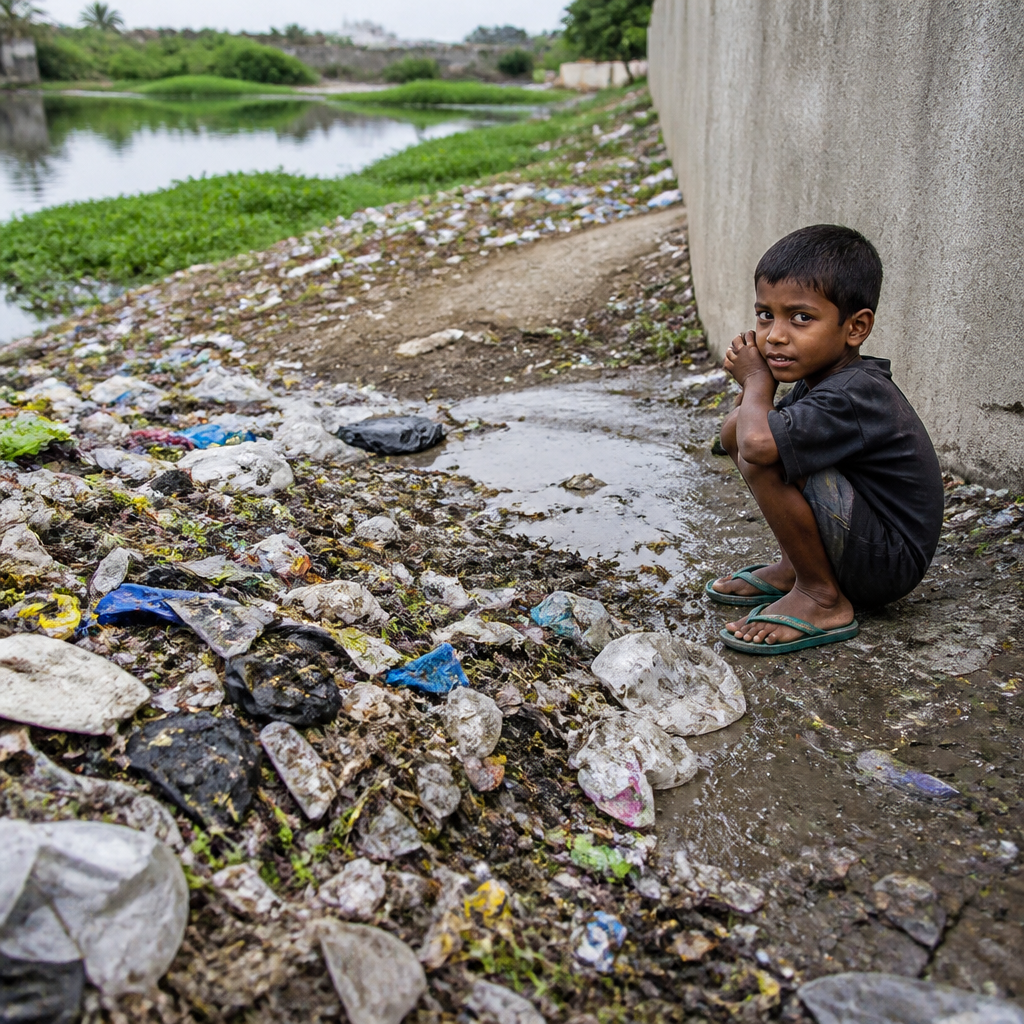
Environmental health risks matter just as much. Ponding greywater attracts flies and mosquitoes, contributes to foul smells, and creates slip hazards around toilets and bathing areas. Repeated discharge to one location can saturate soils, mobilize nutrients, and contaminate shallow wells, particularly in sandy ground or fractured rock. Long-term use of high-sodium laundry water can disperse soil structure, reducing infiltration and harming plant growth. Safe management therefore requires a public health lens and a soil-and-water lens at the same time.
Fit-for-purpose treatment in EcoSan systems
The safest approach to greywater treatment is fit for purpose: treat only to the level required for the intended reuse or discharge, but do it reliably. In decentralized EcoSan, common treatment stages include screening, grease removal, settling, filtration, biological treatment, and disinfection where necessary. Screening removes hair, lint, and coarse solids. Grease traps are essential for kitchen water. Settling tanks reduce suspended solids, but they should not be oversized because long storage encourages septic conditions and odor. As a rule, untreated greywater should be used within 24 hours or treated promptly rather than stored.
For households and institutions, simple media filters can work well when influent is controlled. Sand filters, gravel filters, mulch basins, and textile filters remove solids and support biofilms that degrade organics. Constructed wetlands provide robust polishing if they are correctly sized and protected from overloading. Recirculating vertical-flow wetlands usually perform better than stagnant pits because they improve oxygen transfer and reduce odor. Where higher quality is needed for toilet flushing or subsurface irrigation near occupied buildings, membrane bioreactors, package treatment units, or compact aerobic biofilters offer stronger and more consistent treatment, though they require power, trained maintenance, and closer monitoring.
| System type | Best use | Main strengths | Main limitations |
|---|---|---|---|
| Simple branched drain to mulch basin | Low-risk subsurface landscape irrigation | Low cost, no pumping, easy for households | Needs good source control, not suitable for storage or spray use |
| Sand or gravel filter | Pre-treatment before irrigation or wetland | Removes solids, reduces odor, familiar materials | Can clog without screening and regular cleaning |
| Constructed wetland | Households, schools, small institutions | Biological treatment, visual amenity, good polishing | Requires land, hydraulic design, plant management |
| Aerobic package unit or membrane system | Toilet flushing, higher-demand reuse settings | High effluent quality, compact footprint | Higher capital cost, energy demand, skilled operation |
Disinfection is often misunderstood. Chlorine, ultraviolet, and ozone can reduce microbial risk, but only after solids and turbidity are controlled. If water is cloudy, disinfection performance falls sharply. Chlorine can leave residual protection in storage tanks, but it may form by-products and requires dose control. UV avoids chemical residuals but depends on clean water and functioning lamps. In most EcoSan contexts, disinfection should be the final barrier, not the only barrier. Multiple barriers, source control, treatment, safe distribution, and restricted end uses provide the strongest protection.
Safe reuse pathways and design rules
Not every reuse option is equally safe. The lowest-risk pathway for most homes is subsurface irrigation of ornamental plants, trees, fodder crops, or perennial shrubs. Delivering treated or lightly treated greywater below the surface minimizes human contact, reduces aerosol formation, and protects edible plant parts. Drip lines designed for reclaimed water or perforated distribution pipes in mulch trenches are preferable to flood irrigation, which creates ponding and odor when soils are overloaded. Where food crops are irrigated, best practice is to avoid contact with leaves, fruits, and roots that will be eaten raw.
Reuse inside buildings, particularly for toilet flushing, can save significant water, but it raises the bar for design and operation. Cross-connection control is non-negotiable. Reclaimed water lines must be clearly labeled, color coded where regulations require it, and physically separated from potable plumbing. Backflow prevention devices should be installed and tested. Storage tanks need screened vents, access for cleaning, and turnover that prevents stagnation. Pumps and controls must be matched to demand; oversized tanks with low daily turnover are a common reason for odor and microbial regrowth.
Site conditions shape safety outcomes. Infiltration systems should be located away from wells, foundations, and steep slopes. Clay soils need larger dispersal areas because infiltration is slow, while coarse sands may require extra caution to protect groundwater. High water tables, flood-prone plots, and dense informal settlements limit the feasibility of soak pits and trenches. In those cases, lined wetlands, above-ground planter systems, or off-site conveyance may be safer. The design rule I rely on most is hydraulic realism: if the daily greywater volume, peak flow, and maintenance capacity are not honestly assessed, even technically sound systems fail in practice.
Operations, maintenance, and monitoring that prevent failure
Most greywater failures are not caused by exotic pathogens or advanced chemistry; they result from neglected maintenance. Filters clog, grease traps fill, pumps fail, valves are mis-set, and users start pouring bleach or paint wash water into systems not built to handle them. A safe system therefore needs a maintenance plan from day one. Screens may need weekly cleaning. Grease traps often need frequent emptying in kitchens. Sand filters require surface scraping or media replacement when flow drops. Wetlands need vegetation management, inlet inspection, and mosquito control. Storage tanks must be cleaned on a schedule, not after complaints begin.
Monitoring does not have to be laboratory-heavy to be useful. At the household and facility level, the most important routine checks are odor, clarity, flow distribution, standing water, leaks, and plant health in irrigated areas. Sudden odors usually signal anaerobic conditions, overloading, or stagnant storage. Uneven wet patches indicate blockage or poor leveling. Slimy surfaces around outlets point to solids carryover. For larger programs, periodic testing of pH, electrical conductivity, turbidity, biochemical oxygen demand, and E. coli provides evidence that barriers are working. If toilet flushing reuse is involved, residual disinfectant or UV intensity should also be verified according to the treatment technology used.
User training is part of operations, not an optional extra. People need clear instructions on what can enter the system, how to recognize warning signs, and when to call for service. In schools and shared compounds, assigning responsibility is critical; a well-designed system with no accountable operator degrades fast. I have found that laminated checklists posted beside treatment units prevent more failures than complex manuals stored in an office. Safety depends on routine action.
Policy, standards, and sustainability in EcoSan
Greywater management works best when it follows recognized health-based targets and local regulations. The World Health Organization’s guidance on safe wastewater use emphasizes multiple barriers, exposure reduction, and matching water quality to intended use rather than relying on a single universal limit. Many national plumbing and water reuse codes also distinguish between unrestricted and restricted irrigation, indoor non-potable reuse, and discharge to the environment. Designers should use those categories because they connect treatment performance to actual exposure pathways.
Sustainability in EcoSan means more than saving water. It means reducing freshwater demand without shifting risk to women managing household chores, maintenance staff cleaning clogged units, or neighbors living next to poorly drained plots. It also means accounting for energy, materials, and lifecycle cost. A low-tech wetland may outperform a sophisticated packaged unit in a rural school if spare parts are unavailable. Conversely, a dense urban building may need compact treatment and monitored disinfection because land is scarce and indoor reuse offers the greatest benefit. The sustainable choice is the option that can be safely operated for years, not the one that looks most innovative at installation.
The core lesson across EcoSan projects is that greywater is a resource only when managed as a controlled flow, not as waste that happens to be reused. Start with source separation, choose appropriate products, select fit-for-purpose treatment, design for the site, and commit to maintenance and monitoring. Done well, safe greywater management cuts water use, protects soils and groundwater, reduces stagnant wastewater around sanitation facilities, and supports resilient local sanitation systems. If you are planning or upgrading an EcoSan program, audit your greywater sources and risks first, then build reuse around health protection rather than convenience.
Frequently Asked Questions
1. What is greywater, and why does it need careful management if it does not contain toilet waste?
Greywater is wastewater generated from showers, bathtubs, bathroom handwashing basins, laundry, and in some cases kitchen sinks, depending on the definition used in a household or local regulation. It is distinct from blackwater, which includes toilet waste. That difference matters, but it should not create a false sense of safety. Greywater can still contain soap residues, detergents, skin cells, hair, grease, food particles, oils, cleaning chemicals, and significant numbers of microorganisms. In homes with children, elderly residents, or people who are ill, greywater may also carry pathogens from fecal traces on clothing, diapers, body washing, or contaminated surfaces.
Careful management is essential because untreated or poorly handled greywater can create direct and indirect health risks. If it is stored too long, it quickly becomes septic, producing foul odors and encouraging bacterial growth. If it is discharged into open drains, puddles, or poorly designed soak areas, it can attract insects, create breeding grounds for mosquitoes, contaminate soil and shallow groundwater, and expose people through skin contact or aerosols. In EcoSan systems, the objective is not simply to move wastewater away from the house, but to handle it in a way that protects human health while recovering value where possible. That means greywater should be treated as a managed waste stream with clear rules for collection, filtration, treatment, reuse, or infiltration.
2. What are the main health and environmental risks associated with unsafe greywater disposal?
The main health risks come from microbial contamination, chemical exposure, and unsafe contact patterns. Even though greywater contains lower pathogen loads than toilet wastewater, it is not sterile. Laundry water may carry fecal bacteria from underwear, reusable diapers, or soiled bedding. Bathing water can contain pathogens shed from skin infections, respiratory secretions, or poor personal hygiene. Kitchen greywater often has the highest organic load and may contain food waste, fats, and grease, which make treatment more difficult and increase odor and pest problems. When people dispose of greywater directly onto the ground surface or into open ditches, children, animals, and household members can come into contact with it repeatedly.
Environmental risks are equally important. Greywater with high organic matter can deplete oxygen in receiving soils or water bodies, leading to nuisance conditions and ecosystem stress. Detergents may contain salts, surfactants, boron, and other compounds that accumulate in soil, affecting soil structure and plant health over time. Sodium-heavy laundry water can reduce infiltration by dispersing soil particles, especially in clay-rich soils. If greywater is allowed to pond, it can damage foundations, create slippery surfaces, and generate chronic dampness near homes. Where the water table is shallow or soils are highly permeable, repeated discharge of untreated greywater may also contribute to groundwater contamination. Safe management is therefore not just about avoiding bad smells; it is about controlling long-term public health and environmental impacts.
3. Can greywater be safely reused at home, and what are the safest ways to do it?
Yes, greywater can often be safely reused at household level, but only when the system matches the water quality, the intended use, and the local health context. The safest and most practical reuse option in many settings is subsurface irrigation for non-food plants, trees, shrubs, or ornamental landscaping. Applying greywater below the soil surface reduces human contact, minimizes aerosol formation, and allows the soil to act as a natural treatment barrier. It is generally much safer than spraying greywater through sprinklers or using it on surfaces where children play. Direct reuse for flushing toilets can also work when plumbing is designed for dual-water systems and cross-connection risks are strictly controlled.
Good practice starts with source control. Households should minimize bleach, harsh disinfectants, solvent-based cleaners, and high-salt detergents if greywater will be reused. Systems should include at least basic screening or filtering to remove lint, hair, and coarse solids, especially from laundry water. Greywater should not be stored for long periods unless it is specifically treated, because water quality deteriorates rapidly, often within 24 hours. In most small-scale systems, the best approach is “collect and use quickly.” It is also wise to keep kitchen sink water separate where possible, since it usually contains grease and food residues that clog systems and increase microbial risk. Reuse should always avoid edible plant parts, open water containers, and situations where people are likely to touch untreated water. In short, greywater reuse can be a smart water-conservation strategy, but only when it is designed to reduce exposure at every step.
4. What treatment methods are most effective for managing greywater safely in homes and small communities?
The most effective treatment approach depends on the volume of water, its sources, the intended end use, local climate, and available maintenance capacity. At the household level, simple systems often begin with a grease trap for kitchen flows if those are included, followed by screening, settling, or a small filter to remove solids. From there, greywater may pass into a mulch basin, soak trench, sand filter, planted gravel bed, or constructed wetland. These systems help reduce suspended solids, organic matter, and some microbial contamination while distributing the water in a safer way. Where higher-quality effluent is needed, such as for toilet flushing or more controlled irrigation, a combination of filtration and disinfection may be required.
What matters most is not choosing the most complicated technology, but choosing one that can actually be operated reliably. A well-built infiltration trench that is cleaned and protected from clogging will outperform an advanced unit that is neglected. Designers should account for peak flows from laundry days, soap and lint loads, and the tendency of untreated greywater to turn septic if held too long. In small communities, decentralized treatment options such as baffled tanks followed by wetlands or biofilters can work well when land is available and maintenance roles are clear. Whatever the scale, treatment systems should be designed to prevent standing water, allow easy cleaning, and keep users from direct contact with untreated greywater. Safety in practice depends as much on operation and maintenance as it does on engineering design.
5. What are the most important design and maintenance rules for a safe greywater system?
A safe greywater system begins with separation, sizing, and simplicity. Greywater lines must be clearly separated from blackwater lines so toilet waste is never mixed into a reuse system by mistake. The system should be sized for realistic household water generation, including peak discharges from showers and laundry. Pipes should be laid to avoid stagnation, and distribution points should prevent surface pooling. If reuse is intended, the design should match the quality of water needed for that specific purpose rather than assuming one treatment level is suitable for everything. Clear labeling, especially in systems that also use freshwater plumbing, is critical to avoid accidental cross-connections.
Maintenance is where many systems succeed or fail. Filters and screens need regular cleaning, grease traps need desludging, and infiltration areas should be checked for clogging, odors, wet patches, and mosquito activity. Users should monitor what enters the system, including lint, grease, food scraps, and chemical cleaners, because source habits strongly affect performance. Any sign of persistent smell, ponding, slow drainage, or plant stress should be treated as a warning that the system is overloaded or blocked. In EcoSan thinking, greywater management is not separate from household hygiene and sanitation; it is part of the same chain of risk reduction. The safest systems are the ones that households understand, can inspect easily, and are willing to maintain consistently over time.