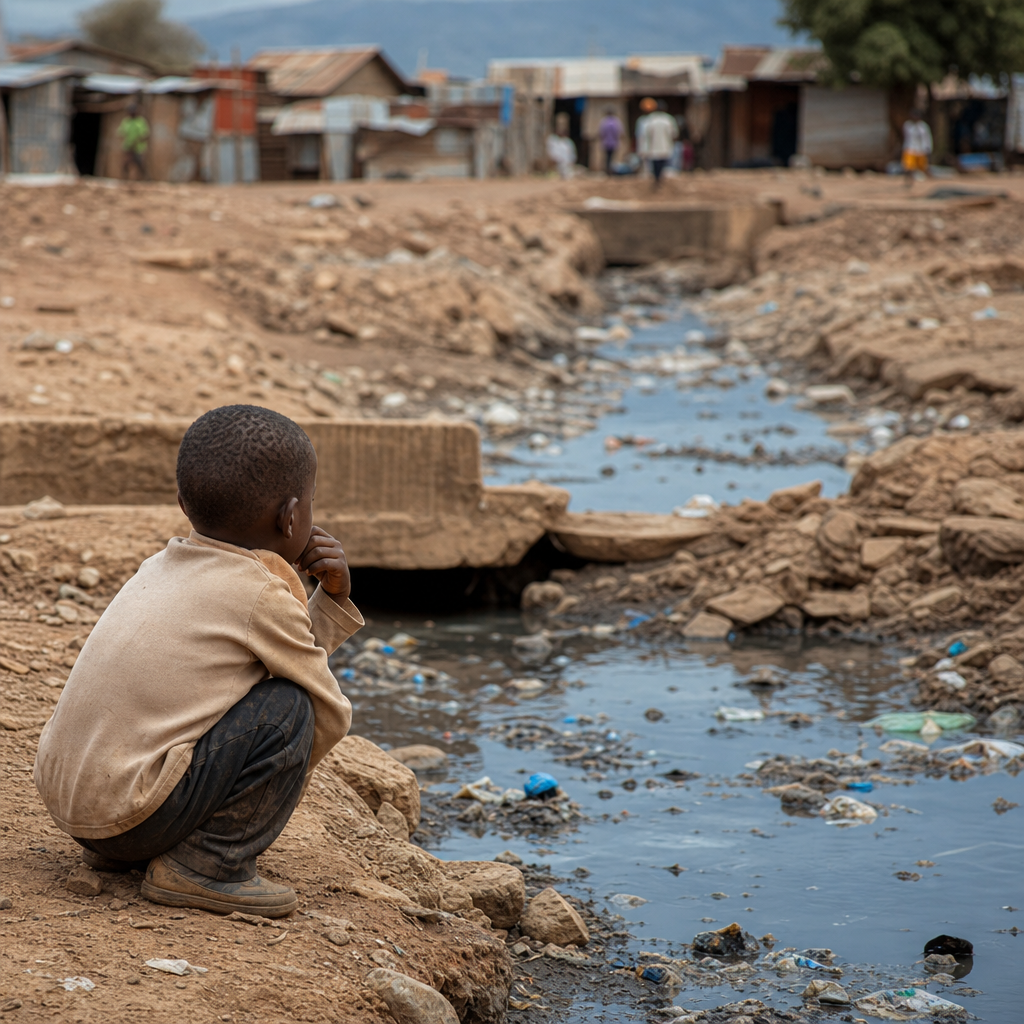
Sanitation shapes health, dignity, education, economic productivity, and environmental resilience, yet it remains one of the world’s most unevenly distributed public goods. The global sanitation challenge is not simply about building toilets. It is about safely managing human waste across entire service chains, from containment and collection to transport, treatment, reuse, or disposal. When that chain breaks, disease spreads, water sources are polluted, women and girls lose privacy and safety, and cities and villages absorb long-term social and financial costs that far exceed the price of prevention.
In practice, sanitation includes household toilets, sewer networks, septic systems, fecal sludge management, drainage, hygiene behavior, and the institutions that finance and regulate those services. The widely used benchmark is safely managed sanitation, defined by the WHO and UNICEF Joint Monitoring Programme as use of improved facilities not shared with other households, with excreta safely disposed of in situ or transported and treated off-site. This definition matters because access figures can look better than reality when countries count a toilet but ignore overflowing pits, failing septic tanks, or untreated discharge into rivers and coastal waters.
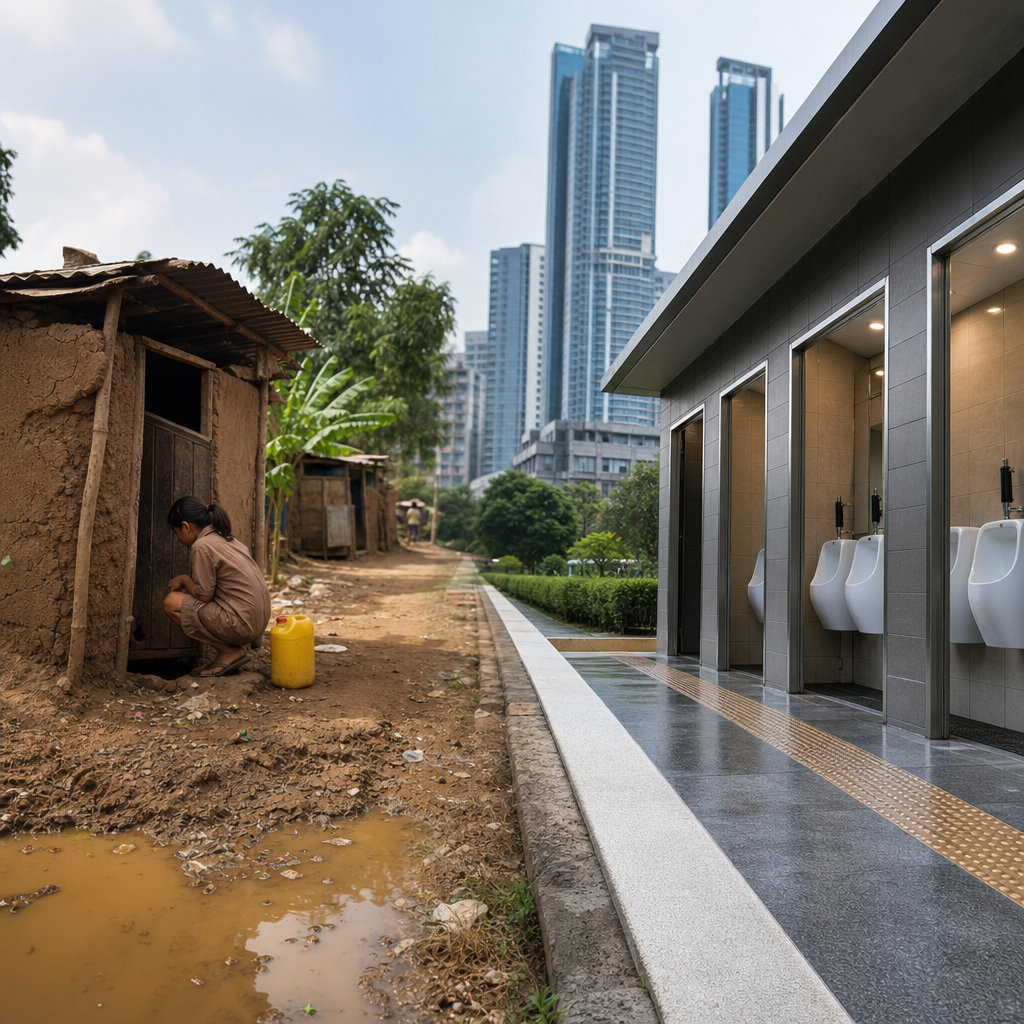
The rural-urban divide is central to the sanitation story. Rural households are more likely to rely on unimproved pits, open defecation, or informal emptying services, while urban households may have toilets but still live in neighborhoods without sewer connections, drainage, or treatment capacity. I have worked on sanitation planning where official maps showed near universal coverage, yet field visits found broken school latrines, illegal sewer outfalls, and septic tanks that had never been emptied. Bridging this divide requires global initiatives that combine infrastructure, governance, financing, behavior change, climate adaptation, and local accountability rather than treating sanitation as a narrow construction program.
Why sanitation remains a global development priority
Sanitation is a development multiplier because it affects nearly every major public policy goal at once. Poor sanitation contributes to diarrheal disease, intestinal worm infections, undernutrition, stunting, and outbreaks of cholera and typhoid. The World Bank has estimated that inadequate sanitation can cost countries several percentage points of GDP through healthcare spending, lost productivity, and premature death. For households, the costs include medical bills, missed workdays, and lower school attendance, especially for adolescent girls when facilities are unsafe or lack menstrual hygiene support.
Urbanization adds pressure. Fast-growing cities in sub-Saharan Africa and South Asia often expand faster than utility networks and municipal budgets. Informal settlements may sit beyond legal service boundaries, making it difficult for utilities to invest, bill, or maintain infrastructure. Rural areas face the opposite problem: low population density raises unit costs for networked systems, and scattered settlements complicate maintenance, monitoring, and supply chains for pit emptying or parts replacement. A realistic global sanitation strategy therefore has to support multiple technical models instead of pushing one template everywhere.
Climate change intensifies the challenge. Flooding can inundate pit latrines and septic systems, spreading fecal contamination into homes, fields, and water points. Drought can reduce water availability for pour-flush systems and increase reliance on unsafe sources. Coastal cities face salinity intrusion and treatment failures during storm surges. In fragile and conflict-affected settings, sanitation systems are disrupted by displacement, damaged infrastructure, and weak institutions. These risks explain why global sanitation initiatives increasingly connect public health, urban planning, humanitarian response, and climate resilience.
Global initiatives and collaborations in sanitation
The strongest international progress has come from collaborations that align standards, funding, political commitment, and country delivery systems. Sustainable Development Goal 6.2 set the shared target of achieving access to adequate and equitable sanitation and hygiene for all and ending open defecation, with attention to women, girls, and vulnerable groups. The SDG framework moved the sector beyond counting facilities toward measuring service quality and equity. Governments, donors, and implementing agencies now use this benchmark to compare progress and identify who is being left behind.
UNICEF, WHO, the World Bank, UN-Habitat, the African Development Bank, regional development banks, bilateral agencies, and specialist nonprofits have each shaped sanitation differently. UNICEF has driven rural sanitation, school WASH, and behavior change at scale. WHO has set health-based norms and monitoring guidance. The World Bank has supported sector reform, utility strengthening, and large investment programs. UN-Habitat has emphasized inclusive urban planning and informal settlements. Nonprofits such as WaterAid, Sanergy, WSUP, and the Toilet Board Coalition have tested service models that governments later adopted or adapted.
One lesson from these collaborations is that sanitation improves fastest when global support reinforces national systems rather than bypassing them. In countries such as Bangladesh, Ethiopia, and India, international finance and technical assistance were most effective where they strengthened local government planning, trained frontline workers, improved procurement, and established monitoring that could survive beyond donor cycles. Another lesson is that rural and urban sanitation need linked but distinct strategies, because policy failure often comes from assuming a village-led campaign can fix a megacity slum, or that a sewer investment can solve dispersed rural contamination.
How rural sanitation strategies differ from urban sanitation strategies
Rural sanitation initiatives usually focus on behavior change, affordable household facilities, local supply chains, and community accountability. Community-Led Total Sanitation, despite debate about quality and sustainability, changed the sector by proving that open defecation reduction requires social mobilization, not just subsidies. In places where I have reviewed program results, villages sustained gains best when local masons were trained, spare parts were available, and district governments monitored slippage after the initial campaign. Households need options that fit soil type, groundwater conditions, flood risk, and income, from lined pits to twin-pit systems and septic solutions for denser settlements.
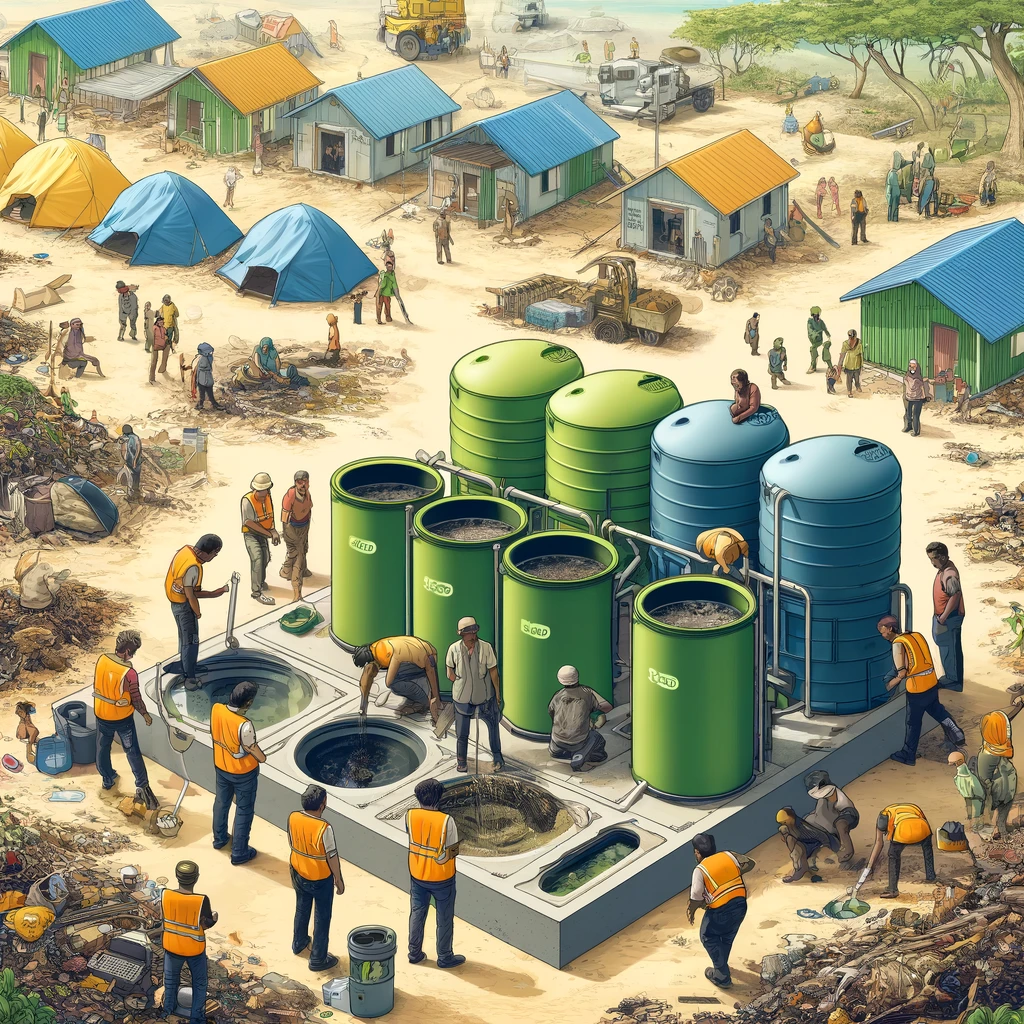
Urban sanitation is more complex because safe service depends on citywide systems. Even when households own toilets, waste must be collected, transported, treated, and discharged or reused safely. Many cities have partial sewer coverage, leaving most residents dependent on septic tanks or pits. This is why citywide inclusive sanitation has become an influential planning approach: it recognizes that sewers, non-sewered systems, public toilets, fecal sludge treatment plants, drainage, and regulation all have roles within one urban service framework. The goal is universal public health protection, not ideological preference for one technology.
| Dimension | Rural sanitation priorities | Urban sanitation priorities |
|---|---|---|
| Primary challenge | Open defecation, low affordability, weak supply chains | Dense settlements, unmanaged sludge, overloaded treatment systems |
| Common solutions | Twin pits, improved pits, behavior change, local mason training | Sewers, septic regulation, desludging services, fecal sludge treatment |
| Lead institutions | District governments, health workers, community leaders | Utilities, municipalities, regulators, private operators |
| Key risk | Slippage after campaigns end | Toilets without safe downstream treatment |
Bridging the rural-urban divide means planning the sanitation service chain around settlement patterns instead of administrative labels. Peri-urban areas often combine rural land tenure, urban density, and weak jurisdictional clarity, making them especially underserved. Successful collaborations map these transition zones carefully and assign responsibility for service delivery, tariffs, and capital maintenance before systems fail.
Financing, governance, and the role of partnerships
Sanitation rarely succeeds on household spending alone. The service has public health externalities, so public finance is justified even when private benefits exist. Capital subsidies may be appropriate for poor households, schools, health facilities, treatment plants, and network expansion, while operating costs can be recovered partly through tariffs, municipal budgets, cross-subsidies, or scheduled desludging fees. In my experience, sanitation programs become more durable when governments define who pays for construction, who pays for emptying, and who pays for treatment before infrastructure is rolled out.
Blended finance is increasingly important. Development banks may fund trunk infrastructure, climate funds may support resilient designs, donors may finance technical assistance, and local private operators may run emptying or treatment services under contract. Results-based financing has also gained traction, paying against verified outputs such as villages maintaining open-defecation-free status or cities delivering safe sludge treatment volumes. The risk is that incentives can distort behavior if indicators are weak. Counting toilets is easy; verifying safe management is harder but essential.
Governance matters as much as funding. Strong sanitation systems require clear mandates, enforceable standards, professionalized utilities, and data that decision-makers trust. Countries that improved fastest often established sector-wide monitoring platforms, service level benchmarks, and independent verification. India’s Swachh Bharat Mission demonstrated how high-level political leadership can mobilize resources and behavior change rapidly, while also showing the importance of post-construction verification, fecal sludge management, and attention to usage rather than declaration alone. Global partnerships are most valuable when they help countries solve these institutional details, not just announce targets.
Innovation, inclusion, and climate-resilient sanitation
Innovation in sanitation is no longer limited to hardware. It includes digital monitoring, container-based sanitation, scheduled desludging, nutrient recovery, circular economy models, and better service design for low-income communities. In dense informal settlements where trucks cannot enter, small-scale transfer stations, simplified sewers, or container-based systems can outperform conventional approaches. Enterprises such as Sanergy in Kenya have shown that waste streams can support compost or fuel products when quality control, logistics, and market demand are managed properly, though these models still require regulation and careful economics.
Inclusion is a practical requirement, not an add-on. Facilities must work for women, children, older adults, and people with disabilities. That means safe location, lighting, handwashing, menstrual hygiene management, ramps, grab bars, and dimensions that support mobility devices where feasible. Shared and public toilets, often dismissed in policy debates, are essential in many dense settlements and transport hubs, but only if management, cleaning, and fee structures are reliable. School and healthcare facility sanitation deserves special attention because service failure there amplifies infection risks and undermines education and care quality.
Climate resilience should now be standard in sanitation design. Flood-prone areas need raised latrines, sealed containment, drainage integration, and treatment sites outside inundation zones. Water-scarce areas benefit from low-water or dry systems where socially acceptable. Utilities need contingency plans for power loss, extreme rainfall, and emergency desludging. International collaborations increasingly support climate screening and risk-informed design because rebuilding failed assets is more expensive than adapting them upfront. The sanitation sector has learned that resilience is not a premium feature; it is basic asset protection.
What the next decade requires from global sanitation action
The next phase of global sanitation work must move from isolated projects to service systems that last. That means governments and partners should prioritize five actions. First, measure safely managed sanitation honestly, including treatment outcomes and equity gaps. Second, finance entire service chains, not just toilets. Third, give cities legal and budget tools to serve informal settlements and peri-urban growth areas. Fourth, strengthen rural markets and local government support so gains do not reverse. Fifth, integrate sanitation with health, water security, housing, and climate planning rather than leaving it in an administrative silo.
Bridging rural-urban divides also requires better collaboration across scales. Global institutions can set standards, compare data, and mobilize finance, but delivery happens through municipalities, districts, utilities, community organizations, and local enterprises. The most credible sanitation programs I have seen treat local operators as core partners, because they understand terrain, tenure, seasonality, customer behavior, and maintenance realities that are invisible in national dashboards. International initiatives work best when they bring discipline, evidence, and investment while leaving room for locally appropriate technology and management choices.
The global sanitation challenge is solvable, but only with persistent attention to quality, equity, and long-term operations. Toilets matter, yet safe sanitation is the whole chain behind the door. Readers using this hub to explore global initiatives and collaborations in sanitation should follow the links into financing, fecal sludge management, school WASH, urban service reform, and climate-resilient systems, because progress depends on connecting those pieces. The main benefit of that integrated view is simple: better decisions lead to healthier communities, cleaner water, and more resilient economies. Start by assessing sanitation as a service system, not a construction count.
Frequently Asked Questions
What does the global sanitation challenge really include beyond simply building more toilets?
The global sanitation challenge goes far beyond toilet construction. A toilet is only one point in a much larger sanitation service chain that includes safe containment, regular emptying or collection, transport, treatment, and the final reuse or disposal of human waste. If any step in that chain fails, the health and environmental benefits of sanitation can quickly disappear. For example, a household may have a latrine, but if it leaks into groundwater, overflows during floods, or is emptied unsafely into drains, rivers, or open land, communities remain exposed to contamination and disease.
This is why sanitation is best understood as a public health and infrastructure system, not just a household asset. Effective sanitation protects drinking water, reduces exposure to fecal pathogens, and supports cleaner neighborhoods, schools, healthcare facilities, and workplaces. It also intersects with urban planning, land use, drainage, waste management, housing quality, and climate resilience. In both rural and urban settings, sanitation must be designed to fit local realities, including population density, water availability, soil conditions, affordability, and the capacity of local institutions to maintain services over time.
In practical terms, solving the sanitation challenge means investing in complete systems that are safe, inclusive, and sustainable. That includes behavior change, hygiene education, financing models for poor households, support for sanitation workers, fecal sludge management, sewer and non-sewer solutions, and strong regulation to ensure waste is treated instead of simply moved out of sight. The real goal is not only access, but safe sanitation that protects people and the environment at every stage.
Why is there such a persistent sanitation divide between rural and urban areas?
The rural-urban sanitation divide persists because the barriers are different in each setting, and many policies have historically treated sanitation as a one-size-fits-all issue. In rural areas, households are often dispersed across large distances, which makes centralized sewer systems impractical and costly. Families may rely on self-built latrines, but these can be difficult to upgrade if incomes are low, construction materials are expensive, groundwater is shallow, or seasonal flooding damages structures. Rural sanitation programs also frequently struggle with limited technical support, weak monitoring, and insufficient financing for long-term maintenance.
Urban areas face a different set of challenges. Although cities may have more infrastructure and higher service coverage on paper, rapid urbanization often outpaces planning and investment. Informal settlements may be built on marginal land without legal tenure, drainage, or utility connections, making conventional sanitation solutions hard to install. High population density means that when sanitation systems fail, the health risks spread quickly. Shared toilets may be overcrowded, unsafe, or poorly maintained, while pit emptying and sludge transport can be expensive or unregulated. In many cities, sewer networks cover only select neighborhoods, leaving large populations dependent on on-site systems without adequate treatment services.
Governance also plays a major role. Rural areas may be underserved because they lack political visibility and budget priority, while urban poor communities can be excluded because they fall outside formal planning systems. Bridging the divide requires recognizing that equity is not achieved by applying the same technology everywhere. It requires tailored investments, stronger local institutions, and policies that specifically address the service gaps faced by remote villages, peri-urban communities, and informal urban settlements.
How does inadequate sanitation affect health, education, and economic productivity?
Inadequate sanitation has direct and far-reaching consequences for human development. From a health perspective, unsafe sanitation contributes to the spread of diarrheal disease, cholera, typhoid, intestinal worm infections, and other illnesses linked to fecal contamination. Repeated exposure to unsanitary environments can also contribute to undernutrition and stunting in children by impairing nutrient absorption and increasing disease burden. When waste enters water sources, floods carry contaminants into homes, or untreated sludge is released into the environment, entire communities face elevated risks, not just households without toilets.
The effects on education are especially serious for children and adolescents. Schools without adequate toilets, handwashing facilities, or menstrual hygiene support create barriers to attendance and learning. Girls are often affected most severely when sanitation facilities are unsafe, lack privacy, or are not designed for menstrual health needs. Children may miss school due to illness, embarrassment, or the simple absence of usable facilities. Over time, these disruptions can weaken educational outcomes and reinforce wider inequalities.
The economic costs are equally significant. Poor sanitation increases healthcare spending, reduces worker productivity, and causes lost income when people miss work to care for sick family members or recover from preventable illness. Time spent finding a safe place to defecate, collecting water for cleaning, or accessing distant facilities also has an economic impact, especially for women and girls whose unpaid labor is often overlooked. At a broader level, inadequate sanitation undermines tourism, strains public health systems, degrades water resources, and lowers resilience to climate shocks. Investing in sanitation is therefore not only a social priority but also an economic one, with returns that extend across households, communities, and national economies.
Why are women, girls, and vulnerable communities disproportionately affected by poor sanitation?
Sanitation is deeply connected to dignity, privacy, safety, and social inclusion, which is why its failures are rarely gender-neutral or evenly distributed. Women and girls often bear the heaviest burden when toilets are unavailable, unsafe, or too far from home. They may delay using the toilet, restrict food or water intake, or wait until dark to seek privacy, all of which can affect health and well-being. Poorly lit or isolated facilities increase the risk of harassment and violence. In schools, the lack of separate toilets or menstrual hygiene support can lead to absenteeism, discomfort, and disengagement from learning.
Vulnerable populations face additional layers of exclusion. People living in informal settlements may have no secure access to sanitation because landlords, utilities, or city authorities do not extend services to unplanned neighborhoods. Persons with disabilities may be unable to use standard latrines or toilets if facilities lack ramps, handrails, space, or accessible design. Older adults and people with chronic illnesses often struggle with steep steps, long distances, or poorly maintained communal toilets. Migrants, refugees, and people affected by disaster can face severe sanitation risks when emergency systems are overcrowded or underfunded.
Addressing these inequalities requires more than counting infrastructure. It means designing sanitation services around real users and real constraints. Safe sanitation should be affordable, accessible, culturally appropriate, and usable by everyone, including children, older adults, and people with disabilities. It should also be planned with community input, especially from women and marginalized groups whose needs are often overlooked. When sanitation systems are inclusive by design, they strengthen health outcomes while also advancing safety, education, gender equality, and social dignity.
What strategies can help bridge rural-urban sanitation divides in a lasting and sustainable way?
Bridging rural-urban sanitation divides requires a systems approach that combines infrastructure, service delivery, financing, regulation, and community engagement. The first priority is to move beyond narrow access targets and focus on safely managed sanitation. That means governments and service providers must plan for the full sanitation chain, including what happens after a toilet is built. In dense urban areas, this may involve expanding sewer networks where feasible, while also investing in fecal sludge management, transfer stations, treatment plants, and regulated emptying services for households using pits or septic tanks. In rural areas, durable on-site systems, local supply chains, trained masons, and support for maintenance are often more effective than imported urban models.
Targeted financing is also essential. Poor households, remote communities, and informal settlements often cannot afford the upfront or ongoing costs of safe sanitation without public support, subsidies, or flexible payment options. At the same time, sanitation providers need viable business models and clear incentives to deliver safe services consistently. Stronger monitoring can help ensure that progress is measured not just by the number of toilets installed, but by whether waste is safely contained and treated. Clear institutional roles, enforcement of environmental standards, and better coordination between health, water, education, housing, and urban development agencies are critical for long-term results.
Finally, sustainable progress depends on inclusion and resilience. Communities should be involved in planning and decision-making so solutions reflect local needs, preferences, and environmental conditions. Schools, clinics, and public spaces need adequate sanitation alongside households. Climate adaptation must also be built into system design, especially in flood-prone, drought-affected, and rapidly urbanizing areas where sanitation failures can intensify during extreme weather. The most successful strategies recognize that rural and urban sanitation challenges are interconnected. Waste, water, health risks, migration, and environmental pressures do not stop at administrative boundaries, so effective sanitation policy must be integrated, equitable, and built for the long term.