Training artisans and technicians in EcoSan construction is one of the most practical ways to turn sanitation goals into durable community assets, because systems only work when local people can build, adapt, repair, and explain them with confidence. EcoSan, or ecological sanitation, refers to sanitation approaches that safely separate, treat, and reuse human excreta and wastewater as resources rather than treating them only as waste. In field projects I have supported, the difference between a short-lived pilot and a functioning long-term service almost always came down to local training quality. Skilled masons, plumbers, slab makers, pit emptiers, supervisors, and community technicians determine whether urine-diverting toilets are installed at the correct slope, whether vaults remain watertight, whether ventilation works, and whether households trust the system enough to use it properly.
This matters far beyond construction technique. EcoSan construction sits at the intersection of public health, environmental protection, livelihoods, and behavior change. A poorly trained artisan can produce cracked vaults, leaking urine pipes, inaccessible superstructures, or unsafe emptying points that create contamination risks and damage public trust. A well-trained technician can reduce rework, improve user acceptance, support nutrient recovery, and create a local service market for maintenance and upgrading. For a community engagement and education strategy, this topic is a hub because participation and learning happen through every stage: identifying local sanitation needs, selecting technologies, demonstrating builds, mentoring apprentices, certifying quality, and reinforcing safe operation after handover. When training is designed well, communities do not simply receive toilets; they gain a workforce, a knowledge base, and the confidence to manage sanitation as an ongoing local system.
Why EcoSan Skills Training Is Central to Community Participation
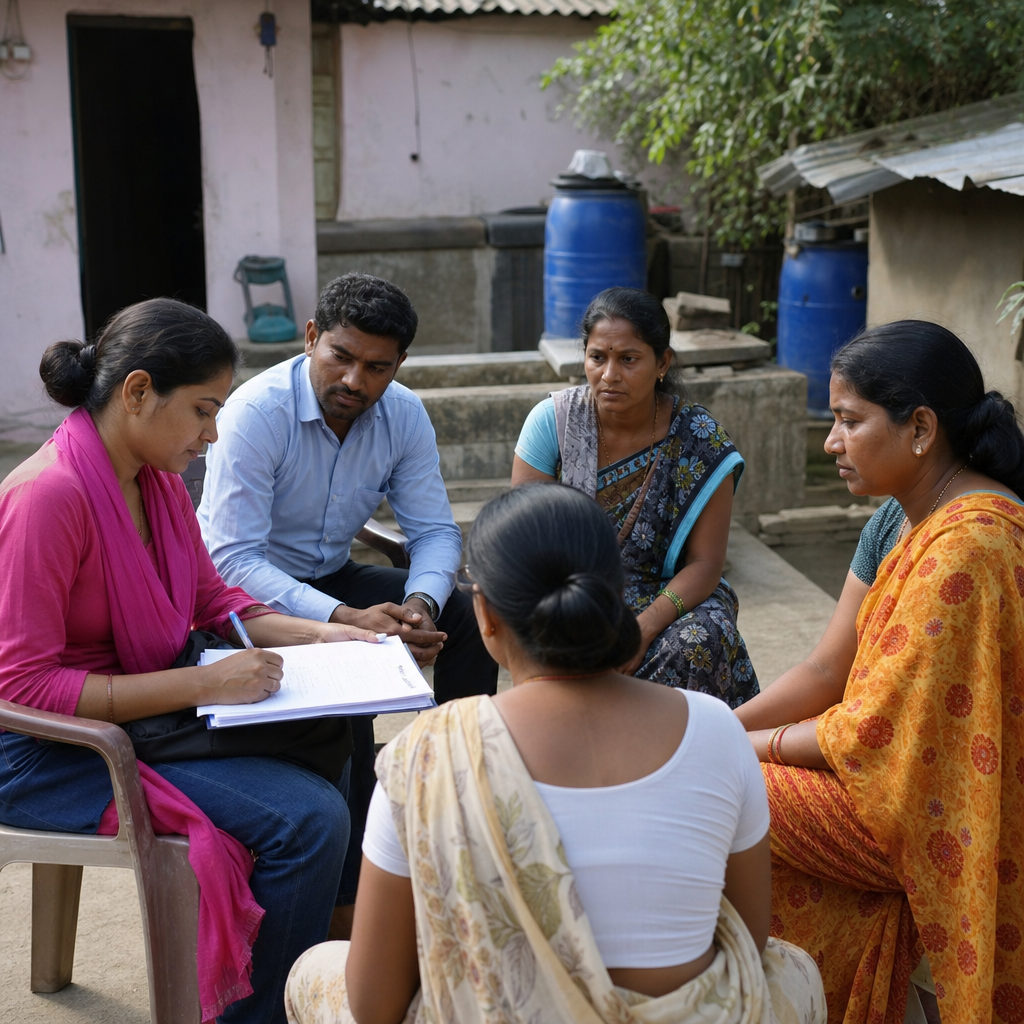
Fostering participation and learning starts by recognizing that EcoSan construction is not a specialist activity that should remain in the hands of outside contractors. Communities participate more actively when local artisans are involved in site selection, design adaptation, costing, and user education. In practice, households are far more likely to ask questions about vault size, anal cleansing water, child use, smell control, and emptying schedules when the builder is a known local craftsperson rather than a transient project team. That social proximity improves feedback loops. It also reduces the common implementation failure where technology choices are technically sound on paper but culturally or spatially mismatched on the ground.
Training programs should therefore target a mixed group, not only experienced masons. The strongest cohorts usually include masons, carpenters, plumbers, tile setters, metalworkers, public health assistants, community mobilizers, and local government technicians. Each contributes a necessary layer. Masons handle substructure strength and vault geometry. Plumbers and pipefitters manage urine diversion, venting, and drainage details. Carpenters fabricate doors, privacy screens, and sometimes pedestal or squat plate formwork. Health workers and mobilizers explain safe use and post-construction practices. Local government technicians link the work to inspection standards and procurement rules. When these roles learn together, construction quality and user education stop being separate tasks.
Participation also improves when training is tied to visible economic value. Artisans commit more seriously when EcoSan construction is presented as a marketable specialization with repeat work in schools, health centers, peri-urban compounds, and climate-vulnerable settlements. In several programs, we found that builders who received practical training plus standard drawings and bill-of-quantities templates won more contracts because they could explain lifecycle costs clearly. Communities benefit because a trained local workforce shortens response time for repairs and keeps spending within the local economy.
Core Competencies Every EcoSan Artisan and Technician Needs
Effective training must cover more than how to assemble a toilet. It needs a competency framework that links sanitation principles to construction execution. At minimum, artisans and technicians should understand pathogen barriers, excreta separation, dehydration or composting basics, groundwater protection, structural stability, accessibility, and operation and maintenance requirements. They should know why urine diversion demands accurate slope and smooth interior pipe surfaces to limit crystallization, why vault access doors must be secure yet serviceable, and why roof overhangs matter in keeping dehydration chambers dry.
Technical literacy should include the main EcoSan typologies used in the region, such as urine-diverting dry toilets, alternating twin-vault systems, arborloos, fossa alternas, and container-based variants where applicable. Each system has different construction tolerances and user management needs. For example, urine-diverting dry toilets require precise interface installation and dry cover material management. Twin-vault systems need clear changeover protocols and accessible removal doors. Arborloos can be simpler to build but depend on safe pit relocation and tree planting practices. Trainees should compare these options based on soil type, flood risk, water availability, household density, and expected maintenance capacity.
| Competency Area | What Trainees Must Learn | Common Failure if Missed |
|---|---|---|
| Site assessment | Flood risk, soil stability, groundwater considerations, access for users and emptying | Toilets flood, shift, or become inaccessible |
| Urine diversion | Correct pan placement, pipe slope, junction design, storage routing | Blockages, odor, mixing of waste streams |
| Vault construction | Watertight masonry, access doors, drying conditions, changeover design | Leakage, wet contents, difficult emptying |
| Ventilation and user comfort | Vent pipe sizing, fly screening, light, privacy, cleaning surfaces | Smell, insects, poor user acceptance |
| Safe reuse and maintenance | Storage periods, personal protective equipment, cleaning, handover guidance | Unsafe handling and abandonment |
Another essential competency is measurement discipline. EcoSan systems often fail because small dimensional errors create major operational problems. A few millimeters of reverse slope in a urine line can lead to standing liquid and mineral buildup. An oversized drop hole can make child use unsafe. A weakly sealed access hatch can admit rainwater or pests. For this reason, training should include repeated use of spirit levels, plumb lines, measuring tapes, and simple quality-control checklists. Standard operating procedures borrowed from construction quality management are useful here: inspect substrate, verify dimensions, test fit interfaces, document corrections, and sign off before moving to the next stage.
How to Design a Training Program That Produces Job-Ready Builders
The most successful EcoSan training programs combine classroom explanation, demonstration builds, supervised practice, and post-training mentoring. A common mistake is compressing everything into a two-day workshop heavy on presentations and light on hands-on work. That format may raise awareness, but it does not produce competent builders. A better model begins with a baseline assessment to identify existing trade skills and knowledge gaps. Experienced masons may need less support on blockwork and more on sanitation-specific interfaces, while community technicians may need more grounding in drawings, leveling, and material estimation.
Curricula should move in a practical sequence: sanitation principles, technology selection, reading drawings, setting out, foundation and vault works, interface installation, superstructure construction, finishing, safety, commissioning, and user handover. Every module should include a real task. When I train artisans, I insist that each participant physically sets levels, installs at least one urine pipe section, checks a vent screen, and rehearses the handover conversation they will later have with a household. That final step matters because construction quality declines when builders see user instruction as someone else’s job. A job-ready EcoSan builder must be able to explain ash or cover material use, vault switching, cleaning methods, and what never to put into the system.
Assessment should be performance-based. Written quizzes are useful for terminology and health concepts, but certification should depend on visible competence. Strong programs use scored practical tests: interpret a drawing, mark out a slab, cast or install a pedestal correctly, build a watertight chamber corner, or diagnose a defective mock-up. Photos, checklists, and supervisor comments create a training record that helps future contractors and local authorities verify who can perform the work. Where formal vocational systems exist, aligning EcoSan modules with technical and vocational education and training standards increases credibility and scale.
Teaching Methods That Strengthen Learning and Long-Term Adoption
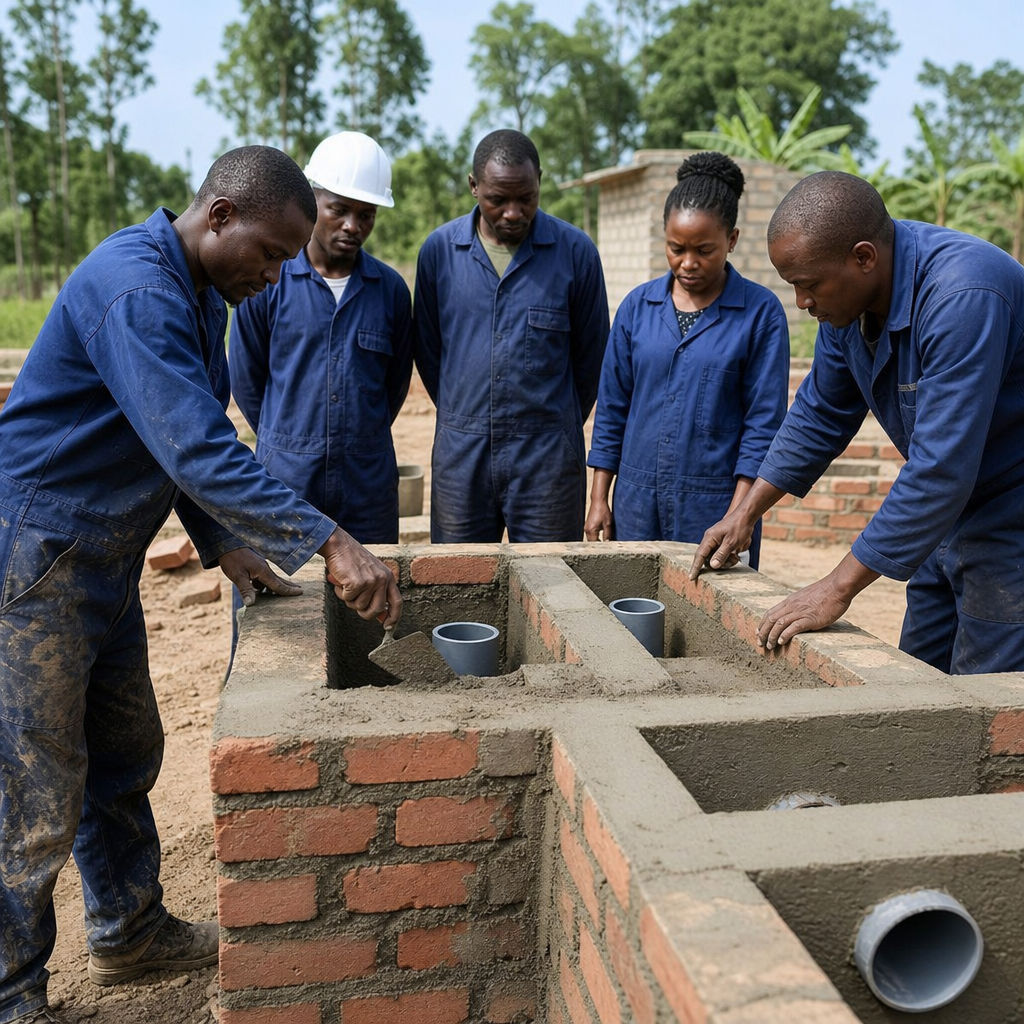
Adults learn construction by doing, repeating, correcting, and seeing direct results. For that reason, demonstration toilets are more than awareness tools; they are training laboratories. Building one unit from excavation to commissioning allows trainees to encounter the real constraints that drawings cannot fully convey, including uneven sites, material shortages, interface alignment, and user preferences about privacy or orientation. Demonstration sites at schools or training centers are especially effective because they can remain accessible for refresher sessions and public education visits.
Peer learning is another high-value method. Pairing an experienced mason with a younger apprentice or community technician accelerates transfer of tacit knowledge such as how to keep walls plumb in hot weather, how to protect curing concrete, or how to seal joints cleanly around prefabricated components. Structured mentorship over several builds is better than one-off shadowing. In one municipal rollout, supervisors used a simple red-amber-green rating on eight construction points, and apprentices had to achieve green twice in a row before working without close oversight. Defect rates dropped noticeably because feedback became immediate and specific.
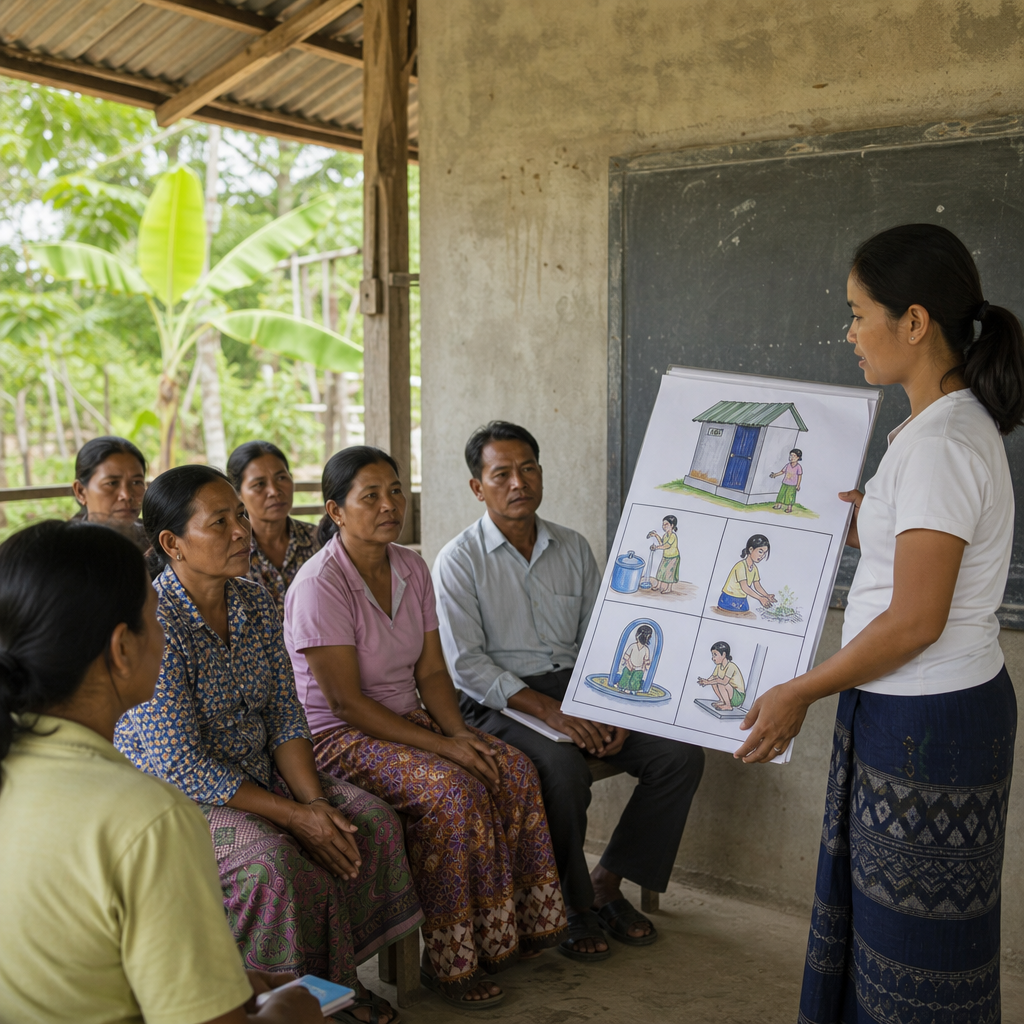
Training materials should use plain language, local terminology, and visuals that match the exact technologies being promoted. Generic sanitation manuals often fail because they do not show the local pan model, vault door type, brick size, or preferred roof system. Simple exploded diagrams, laminated site checklists, and short phone videos in local languages can dramatically improve retention. Digital support helps, but it should not replace site coaching. In low-connectivity areas, printed one-page job aids remain among the most reliable tools. Learning also improves when women, people with disabilities, and youth are intentionally included as trainees and reviewers, because they identify usability issues that homogeneous groups often miss.
Quality Control, Safety, and Common Construction Mistakes
Quality assurance in EcoSan construction must be systematic, because failures are expensive to correct after handover. The most frequent problems I see are poor vault waterproofing, incorrect urine pipe slope, inadequate rain protection, weak superstructure anchoring, and inaccessible emptying doors. These are not minor defects. They affect hygiene, user confidence, and service life. A practical quality-control system uses inspection points before foundations are covered, before slabs are fixed, before pipe chases are sealed, and before final handover. Local supervisors should sign against each stage rather than relying on a single final inspection.
Safety training is equally important. Construction teams need the same basics expected on any site: safe excavation, lifting technique, dust control, cement handling precautions, ladder safety, and proper tool use. EcoSan adds sanitation-specific safety requirements, especially around retrofits and emptying demonstrations. Personal protective equipment should include gloves, boots, coveralls where appropriate, handwashing supplies, and eye protection during mixing or cutting. Guidance from the World Health Organization on sanitation safety planning and resource recovery is valuable because it frames hazards across the full chain, not just at the point of construction.
Commissioning should include function tests, not just visual inspection. Pour a measured volume of water where water is part of the interface cleaning method, verify urine flow, confirm no leakage at joints, check that doors latch securely, and test whether a child, older person, or mobility-limited user can enter and use the facility safely. If a system depends on dry cover material, the handover package should include an initial supply and a clearly marked storage container. These small details determine whether the first week of use builds confidence or creates confusion.
Building a Local Ecosystem for Participation, Learning, and Scale
Training artisans and technicians in EcoSan construction has the greatest impact when it is embedded in a wider local ecosystem rather than treated as a stand-alone workshop. That ecosystem includes community leaders, schools, cooperatives, sanitation entrepreneurs, local government inspectors, suppliers of pans and pipes, microfinance providers, and public health educators. Each actor influences whether learning is sustained and whether trained people find enough work to keep their skills sharp. In practice, the hub function of this topic is to connect all related community engagement and education efforts: household sensitization, school sanitation clubs, mason directories, demonstration events, maintenance training, and feedback channels for users.
Procurement and market shaping matter more than many programs admit. If project tenders select the lowest bidder without verifying EcoSan competence, poor construction will erase the gains of training. Better procurement requires prequalified artisan lists, sample detail drawings, mandatory inspection stages, and defect liability periods. Supply chains also need attention. Builders cannot maintain standards if urine-diverting pans, fly screens, vent pipes, sealants, or access door hardware are inconsistent or unavailable. Mapping local suppliers and standardizing components where possible reduces improvisation that weakens performance.
Long-term learning depends on aftercare. Refresher training six to twelve months after initial construction allows artisans and technicians to review real defects, compare user feedback, and update methods. This is where participation becomes continuous improvement. Community meetings can surface recurring problems such as insufficient cover material, misunderstanding about urine use in agriculture, or fear of emptying dehydrated material. Those insights should flow back into training curricula. If you are building a strong community engagement and education program around EcoSan, start by investing in people who can build well, teach clearly, and stay available after the ribbon-cutting. That is how sanitation knowledge becomes local capacity, and local capacity becomes lasting service.
Frequently Asked Questions
Why is training artisans and technicians so important in EcoSan construction?
Training artisans and technicians is essential because EcoSan systems are not just structures to be installed; they are living service systems that must function safely, consistently, and in ways communities can understand and maintain. A well-designed toilet, urine-diverting system, dehydration vault, soak area, or greywater reuse feature can fail quickly if the people building it do not understand slope, sealing, ventilation, diversion, moisture control, material selection, user flow, and maintenance requirements. In practical terms, local artisans and technicians are the people who translate sanitation concepts into durable bricks, slabs, chambers, pipes, access covers, and service routines. When they are properly trained, they can build systems that are structurally sound, easier to maintain, and more acceptable to users.
Training also protects the long-term value of sanitation investments. In many communities, external contractors may complete a pilot installation, but once they leave, it is the local workforce that determines whether additional units are built correctly, whether repairs are made on time, and whether design mistakes are repeated or corrected. Skilled local builders can adapt EcoSan designs to local soils, water availability, climate, cultural preferences, and budget realities without compromising hygiene and safety. That flexibility matters because EcoSan is rarely a one-size-fits-all solution.
Just as important, trained technicians often become trusted educators. Households usually ask practical questions: how to use the toilet correctly, why urine and feces may need separation, what materials to add after use, how to keep vaults dry, when to empty chambers, and how treated outputs can be reused safely. A technician who understands both construction and system logic can answer those questions confidently. That combination of technical skill and communication is what turns a sanitation structure into a reliable community asset rather than a short-lived project.
What core skills should an EcoSan construction training program teach?
An effective EcoSan training program should go beyond basic masonry and include the full chain of technical, operational, and safety competencies needed for successful sanitation delivery. First, trainees need a clear understanding of EcoSan principles: source separation, containment, treatment, pathogen reduction, reuse pathways, water efficiency, and protection of groundwater and the surrounding environment. If builders do not understand why a system is designed a certain way, they are more likely to make changes in the field that undermine performance.
From a construction standpoint, trainees should learn site assessment, layout, excavation, foundation preparation, masonry, plastering, waterproofing where required, pipe installation, chamber construction, slab setting, superstructure building, and ventilation detailing. They also need to understand precise issues that strongly affect EcoSan performance, such as chamber dimensions, urine diversion angles, drainage control, ash or cover material storage, access for emptying, and methods for preventing stormwater intrusion. Small construction errors in these areas can create odor problems, contamination risks, or user frustration.
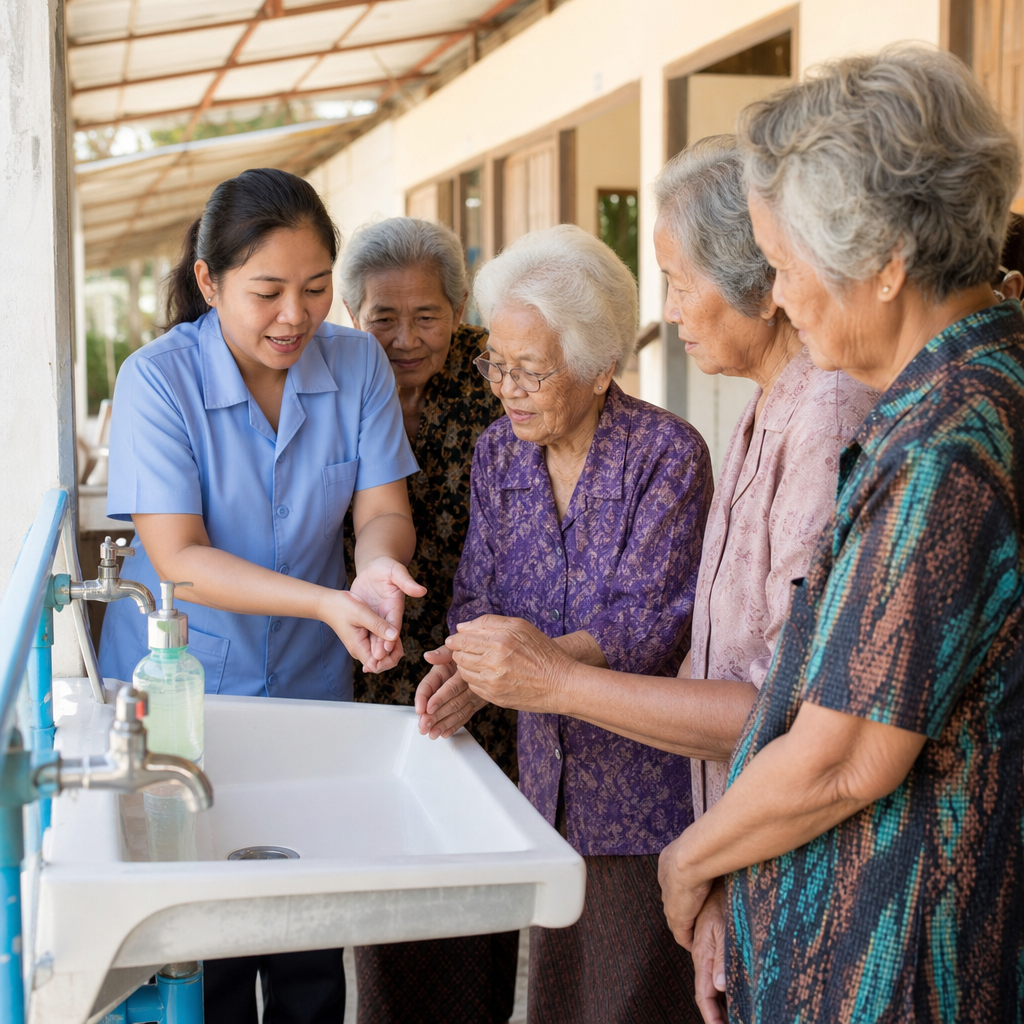
Good training should also include operation and maintenance topics. Technicians should know how to inspect systems, identify early signs of misuse or failure, advise households on cleaning and routine care, and safely support chamber emptying or product handling according to local health guidance. Occupational health and safety is especially important, including use of personal protective equipment, hand hygiene, safe material handling, and risk awareness when working near excreta or wastewater streams.
Finally, communication and problem-solving skills are indispensable. Builders need to explain the purpose of different components to clients, respond to concerns about smell, appearance, or reuse, and adapt designs responsibly for schools, markets, households, or public facilities. The best training programs combine classroom instruction, supervised hands-on practice, quality control checklists, and follow-up mentoring on real job sites. That is how technical knowledge becomes dependable field performance.
How can communities ensure EcoSan systems are built correctly and last over time?
Ensuring quality in EcoSan construction starts with selecting and training the right local workforce, but it must continue with supervision, standards, and accountability. Communities and implementing organizations should begin by using clear construction drawings, bills of quantities, material specifications, and step-by-step quality checklists. These tools help artisans and technicians understand exactly what is expected and reduce the risk of informal design changes that affect safety or usability. Quality control should not wait until the toilet is finished; it should happen at every stage, including foundation work, chamber formation, diversion installation, venting, finishing, and user access details.
Regular on-site supervision is equally important. Even experienced builders benefit from technical review, especially when they are working with unfamiliar EcoSan models. Supervisors can check chamber sealing, alignment of urine-diversion components, access hatch sizing, floor slope, roof runoff protection, and whether the design remains suitable for the actual site conditions. Catching mistakes early is far less expensive than rebuilding failed components later.
Durability also depends on using appropriate local materials and construction methods. In some settings, the issue is not lack of skill but mismatch between the design and what materials are actually available. Training should therefore include material substitution rules so technicians know what can be changed safely and what must remain exact. Communities should also budget for maintenance from the beginning. A durable EcoSan system is one that can be inspected, serviced, and repaired with local tools and local knowledge.
Perhaps most importantly, the users themselves should be included in the process. When households understand how the system works and what proper use looks like, they are more likely to protect key components and report problems early. Long-term success comes from linking trained builders, informed users, practical maintenance routines, and local oversight. When those pieces are in place, EcoSan facilities are much more likely to remain functional, safe, and accepted for years rather than months.
What are the most common mistakes in EcoSan construction, and how can training prevent them?
Some of the most common EcoSan construction mistakes are surprisingly small details with major consequences. Poor urine diversion is a frequent example. If the diversion pan or channel is installed at the wrong angle, blocked, or poorly connected, liquid can enter chambers meant to stay dry, leading to smell, insect problems, slow dehydration, and difficult emptying. Another common issue is inadequate protection from rainwater. If roofs, aprons, drainage, or access covers are poorly built, stormwater can flood or dampen chambers, weakening treatment performance and reducing system lifespan.
Ventilation problems are also common. Incorrect pipe sizing, bad placement, or poor airflow design can reduce odor control and user comfort. Weak masonry, poor plastering, undersized foundations, and low-quality slabs can create structural problems, especially where the soil is unstable or seasonal moisture is high. In addition, some builders omit practical user features such as handwashing proximity, proper footrests, privacy, child-friendly dimensions, or accessible access points for maintenance. These omissions may not seem serious during construction, but they often reduce user acceptance and proper use over time.
Training prevents these mistakes by making the “why” as clear as the “how.” Builders should not only memorize dimensions; they should understand the function of each component and what happens when it is built incorrectly. Demonstration units, mock-ups, supervised field practice, and post-construction inspections are especially effective because they allow trainees to see both good and bad outcomes. Checklists with critical control points can help reinforce standards, and refresher training is valuable after the first few installations, when real-world questions start to emerge.
A strong training approach also encourages feedback and troubleshooting rather than blame. When artisans and technicians are comfortable reporting challenges, they are more likely to ask for clarification before making errors on site. In EcoSan work, that culture of practical learning is extremely valuable because successful sanitation depends on consistent execution of many small but important details.
How does training local artisans and technicians support the broader success of sanitation programs?
Training local artisans and technicians strengthens sanitation programs far beyond the construction phase. At the most basic level, it builds local capacity, which means communities do not have to rely indefinitely on outside experts for every new installation, repair, or design adjustment. That local ownership improves resilience and reduces long-term costs. When sanitation systems need expansion, adaptation, or replacement, a trained workforce can respond more quickly and with a better understanding of local realities than an external team visiting only occasionally.
There is also a strong economic benefit. Training creates livelihood opportunities for masons, plumbers, fabricators, and sanitation service providers, helping sanitation become part of the local market rather than only a donor-driven activity. Once artisans see that there is demand for quality EcoSan construction and maintenance, they are more likely to promote good practice, maintain standards, and invest in their own skills. That can create a positive cycle in which better workmanship increases user satisfaction, which in turn increases adoption and trust.
From a public health and environmental perspective, trained technicians help ensure that sanitation systems actually achieve their intended outcomes. Poorly built toilets can contaminate groundwater, create unsafe handling conditions, discourage use, or fail prematurely. Properly trained local professionals are much better positioned to prevent those failures and to explain safe operation, maintenance, and reuse practices in ways that households understand. This is especially important in EcoSan, where the safe management of separated streams and treated outputs depends on both sound construction and informed use.
Ultimately, sanitation programs succeed when infrastructure, behavior, service, and local accountability all reinforce one another. Training artisans and technicians sits at the center of that