Mitigating respiratory health risks in sanitation work starts with recognizing that air quality is as critical to worker safety as gloves, boots, and vaccination. In sanitation settings, respiratory hazards include bioaerosols, dust, toxic gases, volatile chemicals, smoke, and oxygen-deficient atmospheres that can injure workers quickly or cause disease after years of repeated exposure. In EcoSan, or ecological sanitation, the aim is to manage human waste in ways that protect health, recover resources, conserve water, and reduce environmental damage. That broader mission only succeeds when the people collecting, transporting, treating, and reusing waste can work without preventable harm. I have seen sanitation programs focus heavily on infrastructure and overlook breathing hazards until a near miss, odor complaint, or worker illness forces attention. A stronger approach treats respiratory protection as part of daily operations, from toilet interface design to sludge handling, compost curing, and agricultural reuse. This hub on safety and wellness in EcoSan explains the main respiratory risks, how they arise across the sanitation chain, which controls work best, and how managers can build practical systems that protect workers in both formal utilities and community-scale operations.
What respiratory hazards sanitation workers face
Sanitation work exposes people to several categories of airborne danger. Biological hazards include bacteria, fungal spores, endotoxins, and viruses carried in droplets or dried particles disturbed during pit emptying, sweeping, screening, or compost turning. Chemical hazards include ammonia from urine breakdown, hydrogen sulfide from anaerobic decomposition, chlorine vapors from disinfection, and solvent-like fumes from some cleaning agents. Physical particulates include ash, lime, dried fecal dust, and soil particles generated during handling or cover material application. In enclosed spaces, oxygen can also be displaced by methane, carbon dioxide, or nitrogen, creating an asphyxiation risk even when no odor is obvious.
These hazards matter because the health effects range from irritation to fatal poisoning. Short-term outcomes include coughing, wheezing, headaches, eye irritation, dizziness, and breathlessness. Longer-term exposure can contribute to chronic bronchitis, asthma aggravation, reduced lung function, and persistent inflammation. Hydrogen sulfide is particularly dangerous: at low concentrations it smells like rotten eggs, but at higher levels it rapidly deadens the sense of smell, so odor cannot be relied on as a warning. That is one reason confined-space incidents in sewers, tanks, and pits remain among the deadliest sanitation accidents worldwide.
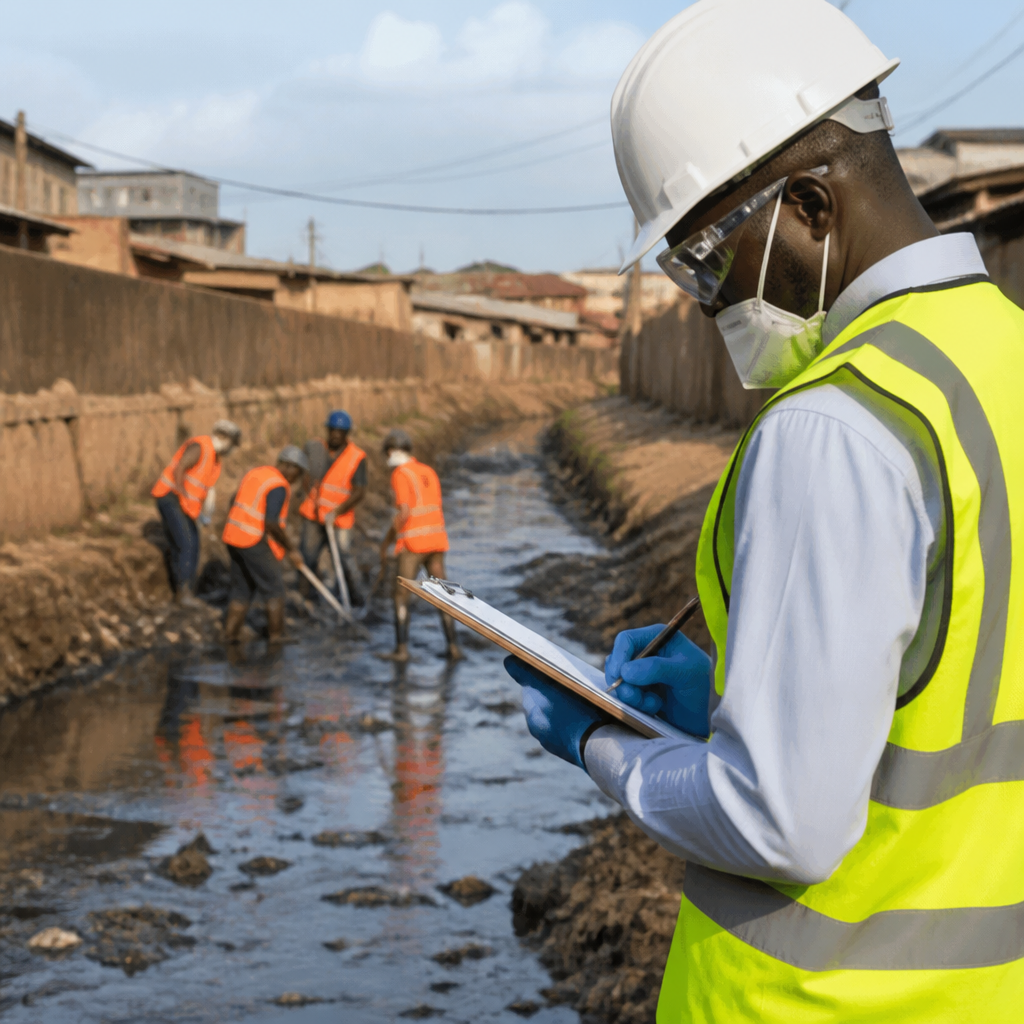
Exposure pathways differ by task. Manual pit emptiers often inhale aerosols released when crust layers are broken. Sewer crews may face sudden gas releases during opening and agitation. Workers at fecal sludge treatment plants can be exposed during receiving, dewatering, drying, and pelletizing. Compost operators may inhale spores and ammonia during turning and screening. Toilet attendants and cleaners can be exposed to bleach, acid cleaners, or mixed chemicals in poorly ventilated cubicles. On reuse sites, dried biosolids or compost can create dust clouds during bagging or spreading. Understanding the task is the foundation of prevention.
Why EcoSan creates distinct risks and opportunities
EcoSan systems are designed to separate, transform, and reuse waste streams, so their hazard profile differs from conventional flush-and-forget sanitation. Urine-diverting dry toilets, container-based sanitation, dehydrating vaults, composting units, and decentralized sludge treatment can reduce water use and support nutrient recovery, but they also increase the number of moments when workers interact directly with stored excreta, cover materials, and processing equipment. More touchpoints can mean more chances for inhalation exposure if systems are poorly designed or operated.
At the same time, EcoSan gives operators more control points for prevention. Dry systems can be built with passive vent stacks that improve airflow and reduce odor accumulation. Container handling can be standardized to minimize tipping and splashing. Composting processes can be managed for moisture, carbon-to-nitrogen ratio, and temperature so that decomposition is efficient and less odorous. Treatment layouts can separate dirty and clean zones, reducing cross-contamination. In well-run EcoSan programs, respiratory risk is not an unavoidable byproduct; it is something that can be engineered down through design, maintenance, and disciplined work practices.
That is why safety and wellness in EcoSan must be treated as a hub topic rather than a checklist item. Respiratory protection connects to toilet design, worker training, occupational health surveillance, confined-space procedures, chemical management, heat stress, hygiene, and even community acceptance. A site that smells strongly, produces visible dust, or leaves workers coughing is usually signaling wider operational weaknesses. Fixing air hazards often improves process performance too.
High-risk tasks across the sanitation chain
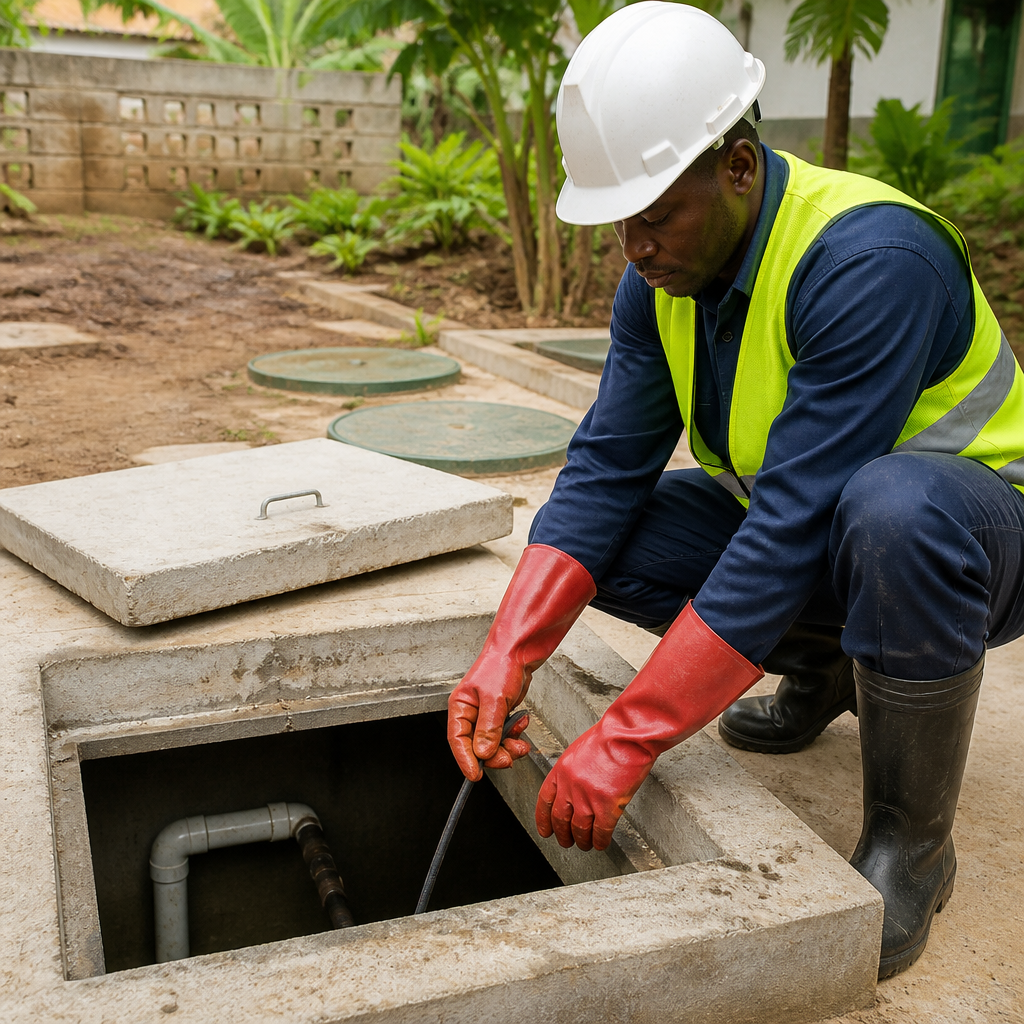
The highest-risk sanitation tasks are predictable. Emptying pits, vaults, and septic tanks creates intense short-term exposure because agitation releases trapped gases and aerosols. Entering manholes, tanks, or pump stations adds the danger of confined spaces, where hydrogen sulfide, methane, and oxygen deficiency can incapacitate workers within minutes. Transport and discharge at treatment plants can generate splashes and mists, especially if hoses leak or receiving bays lack shields. Mechanical drying, shredding, pelletizing, and compost screening can create sustained dust exposure if extraction is poor.
Cleaning work is often underestimated. I have investigated facilities where workers mixed bleach with acidic descalers in small toilet blocks and produced chlorine gas symptoms without realizing the cause. Another common scenario is using powdered lime or ash in dry toilets or sludge drying beds without controlling the dust plume. Even simple sweeping can re-aerosolize contaminated particles. Agricultural reuse introduces another set of tasks, including bag filling, loading, and field spreading, where wind conditions can turn a routine job into a heavy inhalation event.
Risk also changes with season and climate. Hot weather increases odor volatility and can drive workers to remove face coverings. Rain can trap workers in enclosed shelters with poor ventilation. In dry seasons, dehydration and fine dust become more severe. Programs that operate successfully year-round usually plan controls around these predictable shifts instead of reacting after complaints or incidents.
Controls that reduce respiratory exposure most effectively
The most reliable way to mitigate respiratory health risks in sanitation work is to follow the hierarchy of controls. Elimination and substitution come first: avoid unnecessary entry into pits and tanks, replace hazardous cleaning products with safer formulations where possible, and choose treatment methods that reduce manual disturbance. Engineering controls come next and usually deliver the biggest sustained benefit. Examples include vent pipes on dry toilets, local exhaust on screening or pelletizing equipment, splash guards at discharge points, enclosed conveyors, sealed containers, and forced-air ventilation for enclosed structures. For confined spaces, continuous gas monitoring and mechanical ventilation are non-negotiable.
Administrative controls shape how work is done. Standard operating procedures should define pre-task hazard checks, weather limits, chemical handling rules, and decontamination steps. Permit-to-work systems are essential for confined-space entry. Job rotation can reduce cumulative dust exposure during screening or bagging, although rotation does not make an unsafe task safe by itself. Training must cover symptom recognition, because workers who understand what dizziness, chest tightness, or eye burning mean are more likely to stop work early and seek help.
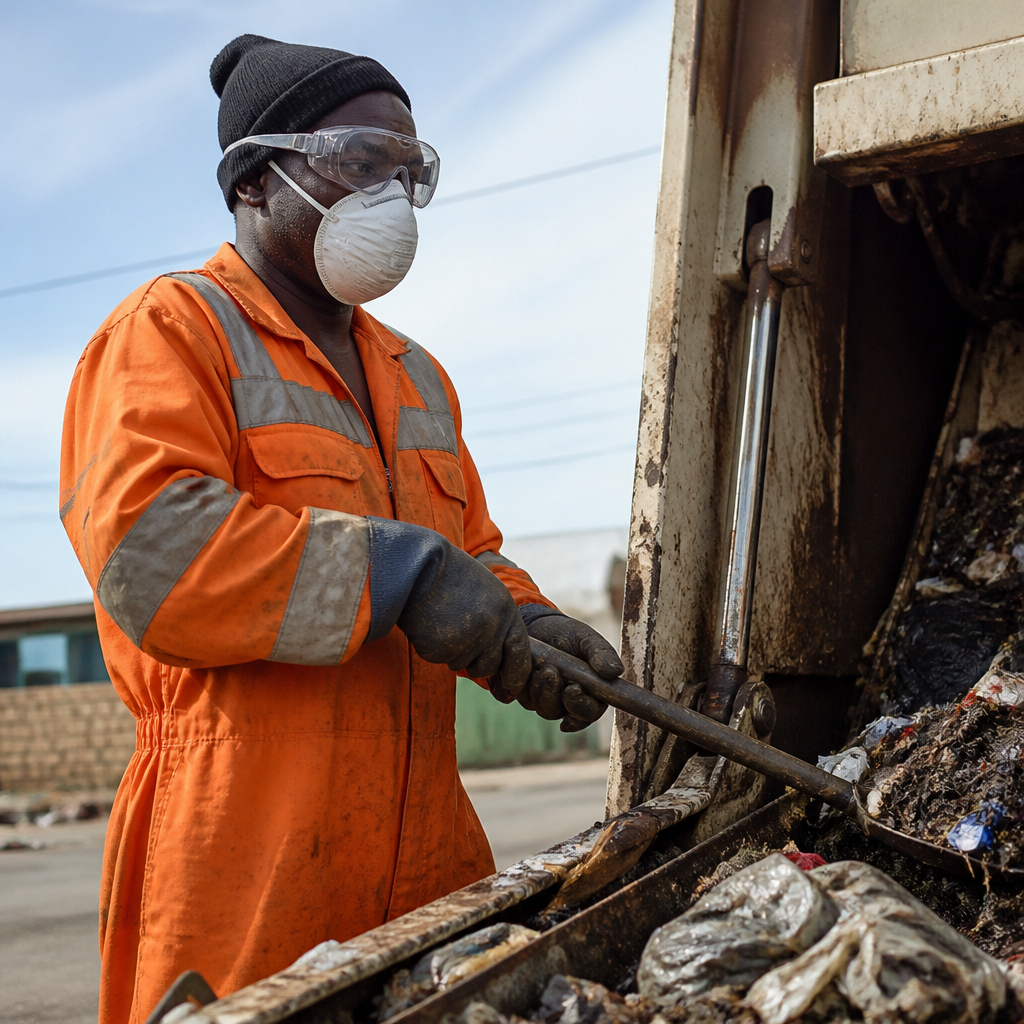
Personal protective equipment is the last layer, not the first. In practice, respirator choice should match the hazard. A simple cloth covering does not protect against toxic gases and offers limited control of fine aerosols. For dust and bioaerosols, a well-fitted particulate respirator such as an N95 or FFP2 level device is often appropriate, while gas and vapor hazards may require cartridge respirators or supplied-air systems depending on concentration and oxygen levels. Fit testing, seal checks, filter change schedules, and cleaning are what make respiratory protective equipment effective; without them, PPE becomes theater.
Practical controls for EcoSan operations
In EcoSan projects, a few operational changes consistently produce better air quality. Keep compost moisture in the target range so turning does not release excessive dry dust or anaerobic odors. Use tools with longer handles to increase distance from the source. Wet down dusty surfaces lightly before sweeping, but avoid creating contaminated runoff. Position workers upwind during bagging and spreading. Store cleaning chemicals separately and label them clearly to prevent dangerous mixing. Install simple wind-driven ventilators or solar-powered fans in enclosed toilet blocks and processing sheds where grid power is unreliable.
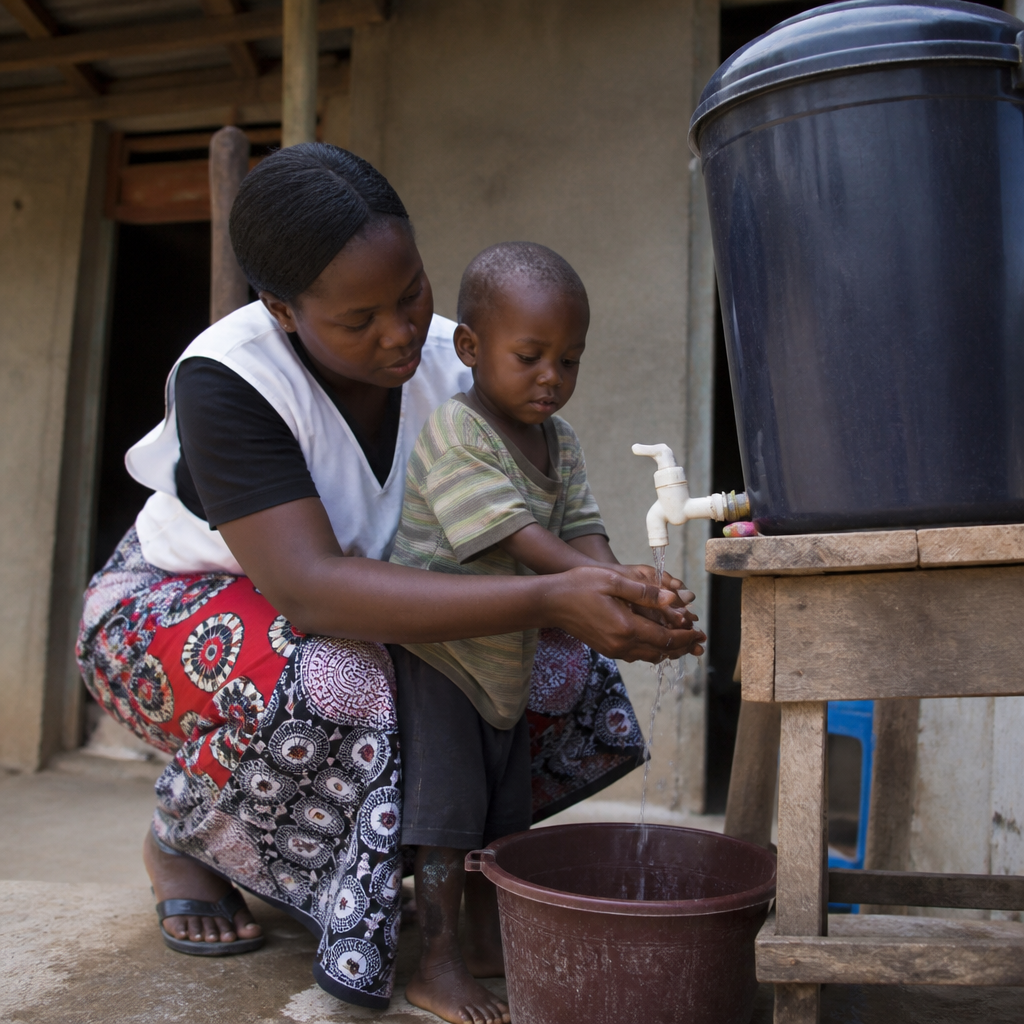
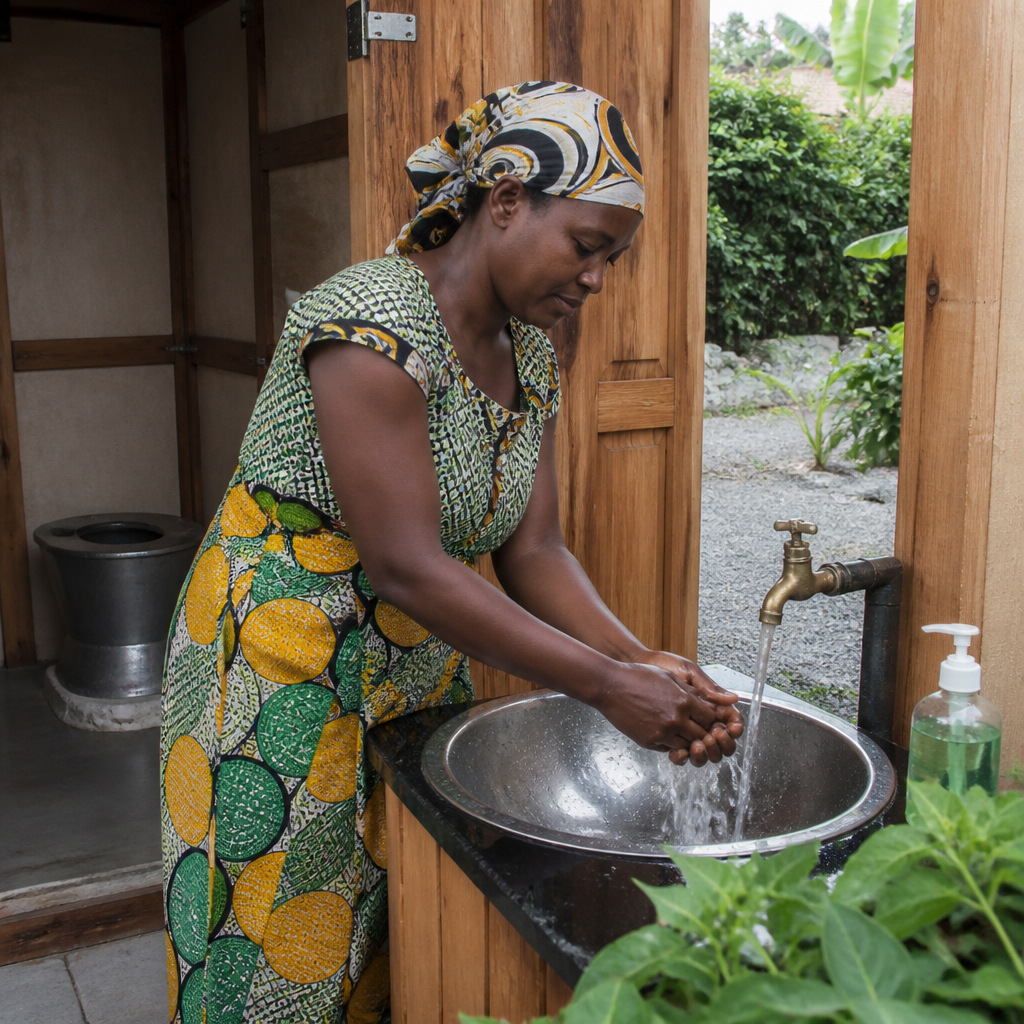
Design details matter. Receiving stations should allow quick hose connection and controlled discharge into below-grade or shielded inlets. Drying beds and curing piles need enough spacing to prevent congestion and allow loaders or workers to avoid standing in dust plumes. Handwashing stations should be placed at exit points so workers do not delay decontamination. Maintenance planning is equally important: clogged vents, broken seals, leaking hoses, and corroded fans turn good designs into failing ones. Many respiratory complaints trace back to deferred maintenance rather than inherently dangerous technology.
| Sanitation task | Main respiratory hazard | Most effective controls |
|---|---|---|
| Pit or vault emptying | Bioaerosols, ammonia, hydrogen sulfide | Remote emptying tools, ventilation, gas monitoring, exclusion zones, fitted respirators |
| Confined-space sewer or tank entry | Oxygen deficiency, hydrogen sulfide, methane | Entry permit, continuous multigas monitor, forced-air ventilation, standby rescue, no entry if unsafe |
| Compost turning and screening | Dust, fungal spores, endotoxins | Moisture control, local exhaust, upwind positioning, particulate respirators, enclosed screening |
| Toilet and facility cleaning | Chlorine and irritant vapors | Chemical substitution, dilution control, never mix products, room ventilation, training |
| Bagging and agricultural reuse | Dried particulate matter and odor gases | Low-drop bagging, dust suppression, weather planning, sealed storage, respiratory protection |
Monitoring, training, and health surveillance
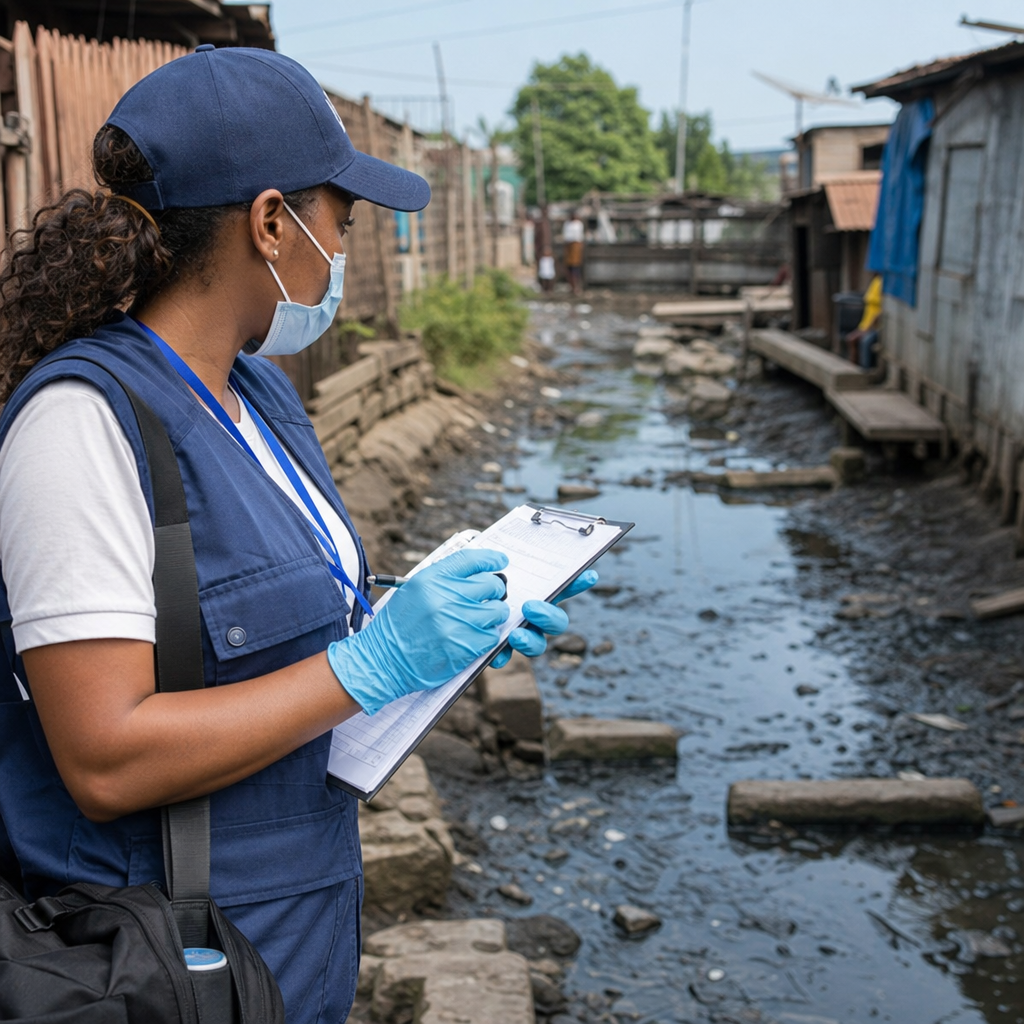
Good programs measure exposure instead of guessing. Portable four-gas meters that read oxygen, hydrogen sulfide, carbon monoxide, and combustible gases are standard for sewer and tank work. Dust monitoring can be done through task-based sampling, while ventilation performance can be checked using airflow measurements and smoke visualization. Incident logs, near-miss reports, and worker symptom reports are also valuable data. When a team records repeated headaches at one receiving bay or coughing during one compost task, that pattern usually points to a correctable control failure.
Training should be task specific and repeated. Workers need to know how gases behave, why some settle in low areas, why smell is unreliable, and how to perform a buddy check before hazardous tasks. Supervisors should be trained to stop work when controls are missing, not to normalize discomfort. I have found that short, scenario-based drills work better than lecture-heavy inductions. For example, present a case where a worker wants to enter a pit because the fan is broken and ask the crew what must happen next. If the team answers “no entry until ventilation and gas testing are restored,” training has stuck.
Health surveillance closes the loop. Baseline and periodic respiratory questionnaires, lung function testing where appropriate, vaccination review, and prompt medical evaluation after high exposures help identify problems early. Wellness in EcoSan is broader than avoiding acute injury. Fatigue, heat load, stigma, and poor access to washing facilities all reduce compliance with respiratory controls. Workers protect themselves better when equipment fits, breaks are realistic, and management treats safety concerns seriously.
Building a safety culture that lasts
Long-term improvement depends on culture as much as equipment. Leaders should set clear rules: no untested confined-space entry, no chemical mixing outside procedure, no damaged respirator use, and no punishment for reporting symptoms. Procurement policies should specify certified respiratory protection, replacement filters, calibrated gas detectors, and spare ventilation components. Contractors and informal workers need the same standards as permanent staff, because risk does not distinguish employment category.
Communication with communities matters too. In many EcoSan systems, households or user groups influence how toilets are operated, what cover materials are added, and when containers are exchanged. Poor user practices can increase odors, insect activity, and worker exposure downstream. Simple instructions on moisture control, accepted waste inputs, and safe handling reduce those burdens. The best sanitation programs connect design, operations, occupational health, and user education into one system.
Mitigating respiratory health risks in sanitation work is therefore both a technical and management discipline. Identify the task, measure the hazard, control it at the source, train people repeatedly, and verify that the system still works months later. For organizations building a health and safety approach to EcoSan, this hub should guide the next steps: review each stage of your sanitation chain, prioritize confined-space and dust-generating tasks, and strengthen ventilation, monitoring, procedures, and worker support. Safer breathing conditions mean fewer illnesses, fewer shutdowns, and more credible, resilient sanitation services. Start with one exposure assessment this week, then turn the findings into permanent operational fixes.
Frequently Asked Questions
What respiratory hazards are most common in sanitation work?
Sanitation workers can encounter a wide range of airborne hazards, and many of them are not immediately visible. Common risks include bioaerosols from human waste, sewage, sludge, and contaminated water; dust from dried fecal matter, soil, ash, or waste handling; toxic gases such as hydrogen sulfide, methane, and ammonia; vapors from cleaning agents and disinfectants; smoke from waste burning; and low-oxygen atmospheres in pits, tanks, sewers, or other confined spaces. Each of these hazards affects the respiratory system differently. Some can trigger sudden irritation of the eyes, nose, throat, and lungs, while others can lead to long-term illnesses such as chronic bronchitis, asthma-like symptoms, reduced lung function, or repeated respiratory infections.
What makes sanitation work especially challenging is that exposures often overlap. A worker emptying a pit or cleaning a confined area may be exposed to bacteria and fungi, chemical vapors, and oxygen displacement at the same time. In ecological sanitation, or EcoSan, additional exposure points may arise when handling stored excreta, dried materials, compost, or ash if systems are not well designed or maintained. Understanding these risks is the first step in prevention, because respiratory safety in sanitation depends not only on personal protective equipment, but also on safer work methods, ventilation, monitoring, hygiene practices, and strong operational planning.
Why is air quality considered just as important as other sanitation safety measures?
Air quality deserves the same level of attention as gloves, boots, handwashing, and vaccination because poor air conditions can cause both immediate emergencies and long-term occupational disease. A worker can survive a cut or a splash with proper first aid, but inhaling a high concentration of toxic gas or entering an oxygen-deficient space can lead to collapse, unconsciousness, or death within minutes. Even when there is no dramatic incident, regular exposure to contaminated air can quietly damage lung health over months or years. That is why respiratory protection must be treated as a core part of occupational safety, not an optional extra.
In sanitation settings, the danger is often underestimated because the work is routine and familiar. However, familiar tasks can still involve serious exposure when waste is disturbed, containers are opened, pits are emptied, or cleaning chemicals are used in enclosed areas. In EcoSan systems, where the goal is to protect health while recovering resources responsibly, maintaining safe air quality is also essential to system sustainability. Workers cannot safely manage, transport, treat, or reuse sanitation byproducts if airborne risks are ignored. Strong respiratory risk management supports healthier workers, fewer interruptions, better compliance, and more resilient sanitation services overall.
How can sanitation employers reduce respiratory health risks on the job?
The most effective approach is to control hazards at the source before relying on workers to protect themselves individually. Employers should begin with a risk assessment that identifies where airborne exposures are likely to occur, such as pit emptying, septic tank cleaning, sewer entry, sludge handling, waste transport, drying areas, composting zones, or chemical storage and mixing points. Once the hazards are mapped, employers can introduce practical controls such as improved natural or mechanical ventilation, enclosed transfer systems, moisture control to reduce dust, safer chemical substitution, gas detection, scheduled maintenance, and procedures that minimize agitation of waste and sludge.
Administrative controls are equally important. Workers should be trained to recognize symptoms of respiratory exposure, understand when and how to use monitoring equipment, follow confined-space entry procedures, and avoid unsafe shortcuts. Employers should establish no-entry rules for hazardous atmospheres without proper testing and authorization, provide clear emergency response plans, rotate tasks where appropriate to reduce repeated exposure, and ensure regular cleaning of work areas in ways that do not create additional dust. Respiratory protective equipment should be selected based on the actual hazard, properly fitted, and maintained consistently. When engineering controls, training, supervision, and PPE work together, respiratory risks can be reduced substantially.
What kind of respiratory protective equipment is appropriate for sanitation workers?
The right equipment depends entirely on the specific hazard. For example, a basic filtering facepiece may help reduce inhalation of certain dusts or dried particulate matter, but it does not protect against oxygen-deficient environments or many toxic gases. In situations involving chemical vapors, toxic gases, or uncertain atmospheric conditions, workers may require more specialized respirators with the correct cartridges or, in high-risk cases, supplied-air or self-contained breathing apparatus. Confined spaces such as sewers, tanks, and pits are especially dangerous because dangerous gas levels and low oxygen can make standard masks completely inadequate.
Just as important as choosing the right device is ensuring it is used correctly. Respirators should be part of a formal respiratory protection program that includes hazard assessment, fit testing, worker training, cleaning, storage, filter and cartridge replacement, and medical evaluation where required. Facial hair, damaged seals, poor maintenance, and reuse of contaminated equipment can all reduce effectiveness. Employers should also remember that PPE is the last line of defense, not the first. If the air is unsafe because of toxic gases or oxygen deficiency, the primary solution is to prevent exposure through ventilation, atmospheric testing, controlled entry, and safer work design rather than relying on a mask alone.
How does EcoSan relate to respiratory health protection for sanitation workers?
EcoSan, or ecological sanitation, is designed to manage human waste in a way that protects public health while supporting resource recovery, such as the safe reuse of nutrients or organic matter. That mission aligns closely with respiratory protection because worker health is fundamental to any sanitation system being truly sustainable. If excreta, compost, ash, urine-diverted materials, or treatment byproducts are handled without adequate drying controls, storage protocols, ventilation, or dust suppression, workers may inhale pathogens, fine particulates, or irritating gases. A well-managed EcoSan system reduces those risks by building safety into collection, storage, treatment, transport, and reuse processes.
In practice, that means designing systems that limit unnecessary contact with airborne contaminants, ensuring adequate treatment time before handling materials, preventing waste from drying into easily inhaled dust unless protective controls are in place, and training workers in safe handling techniques for every stage of the cycle. It also means monitoring enclosed or poorly ventilated spaces, using tools and processes that reduce manual disturbance, and applying occupational health standards consistently, even in low-resource settings. EcoSan is not only about environmental benefits or nutrient recovery; it is also about creating sanitation systems that protect the people who operate them every day. When respiratory safety is integrated into EcoSan planning and operations, the result is a healthier workforce and a stronger sanitation system overall.